Pandom-D SR
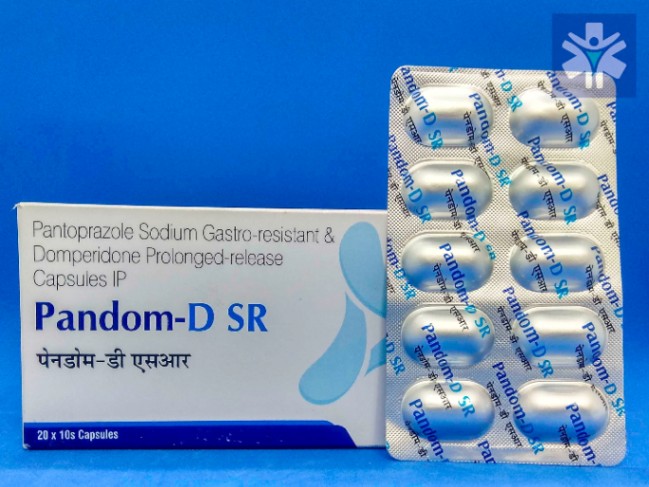
Price: Rs.160.00
10% off
In stock
Loose stock: 7
Description
Pandom-D SR CAP 10
Details
Composition
DOMPERIDONE 30 MG,PANTOPRAZOLE 40 MG
# Domperidone 30 mg + Pantoprazole 40 mg
## Short Description
**Domperidone 30 mg + Pantoprazole 40 mg** is a combination medicine containing a **prokinetic/antiemetic (domperidone)** and a **proton pump inhibitor (pantoprazole)**. It may be prescribed for conditions involving **acid reflux, heartburn, indigestion, nausea, vomiting and delayed gastric emptying**.
* **Pantoprazole** reduces stomach acid production.
* **Domperidone** improves upper gastrointestinal motility and helps control nausea and vomiting.
> **Important:** Domperidone can affect the heart's electrical rhythm and is subject to important dose and duration restrictions in many guidelines. A 30 mg domperidone dose should be used only when specifically prescribed.
---
## Key Benefits
* Helps reduce **excess stomach acid**.
* Provides relief from **heartburn and acid reflux symptoms**.
* May help reduce **acid-related indigestion**.
* Domperidone can help relieve **nausea and vomiting**.
* May improve symptoms associated with **delayed gastric emptying**.
* The combination can address both **acid production and gastrointestinal motility** when both are clinically relevant.
---
## Uses / Indications
Domperidone + Pantoprazole may be prescribed for:
### Gastroesophageal Reflux Disease (GERD)
* Heartburn
* Acid reflux
* Regurgitation
* Acid-related upper abdominal discomfort
### Acid-Related Dyspepsia
May help relieve symptoms such as:
* Indigestion
* Upper abdominal discomfort
* Acid-related burning
* Post-meal fullness
### Nausea and Vomiting
Domperidone may help control **nausea and vomiting** associated with certain gastrointestinal conditions.
### Delayed Gastric Emptying
Domperidone may improve gastrointestinal motility in selected patients with symptoms related to **delayed gastric emptying**.
> **Important:** Domperidone is not appropriate for every cause of nausea or vomiting, and treatment should generally be limited to situations where the expected benefit outweighs cardiovascular risks.
---
## How It Works
### Pantoprazole 40 mg
Pantoprazole is a **proton pump inhibitor (PPI)**.
It blocks the **H⁺/K⁺-ATPase proton pump** in stomach parietal cells, reducing the final step of gastric acid secretion.
**Result:** Lower stomach acid → reduced acid reflux and irritation → improvement in heartburn and acid-related symptoms.
### Domperidone 30 mg
Domperidone is primarily a **dopamine D2-receptor antagonist** that acts mainly outside the brain.
It can:
* Increase upper gastrointestinal motility
* Promote gastric emptying
* Increase lower esophageal sphincter tone
* Reduce nausea and vomiting
### Combined Action
**Pantoprazole → reduces stomach acid**
**Domperidone → improves gastrointestinal movement and reduces nausea**
Together, they may provide symptom relief when both **acid reflux and gastrointestinal motility symptoms** are present.
---
## Dosage & Administration
### Important Dose Consideration
A product containing **domperidone 30 mg** requires particular caution.
For adults, many regulatory recommendations restrict domperidone to the **lowest effective dose for the shortest possible duration**, commonly **10 mg up to three times daily (maximum 30 mg/day)**.
Therefore, a product labeled **Domperidone 30 mg** may represent a formulation intended for a particular dosing schedule or may require careful interpretation of the product's labeling.
### Pantoprazole
A common adult dose for acid-related disorders is:
**Pantoprazole 40 mg once daily**, although the dose and duration depend on the diagnosis.
### Administration
* Take the medicine exactly as prescribed.
* Pantoprazole is generally taken **before a meal**, commonly before breakfast.
* Swallow delayed-release tablets whole.
* Do not crush, chew or split enteric-coated/delayed-release tablets unless the product specifically allows it.
* If domperidone is prescribed, it is generally taken **before meals**.
> **Do not self-adjust domperidone to 30 mg per dose.** The maximum recommended daily amount in many safety guidelines is 30 mg, divided into doses, because higher exposure increases cardiac risk.
---
## Side Effects
### Common Side Effects
Possible side effects include:
* Headache
* Diarrhea
* Constipation
* Abdominal discomfort
* Nausea
* Dry mouth
* Dizziness
* Gas or bloating
### Domperidone-Related Effects
Domperidone may occasionally cause:
* Increased prolactin levels
* Breast tenderness
* Breast enlargement
* Milk production outside breastfeeding
* Menstrual changes
### Pantoprazole-Related Effects
Possible effects include:
* Headache
* Diarrhea
* Abdominal pain
* Nausea
* Flatulence
### Serious Side Effects
Seek urgent medical attention for:
* Fast or irregular heartbeat
* Fainting
* Severe dizziness
* Seizures
* Severe allergic reaction
* Difficulty breathing
* Facial, lip or throat swelling
**Cardiac rhythm problems are an important safety concern with domperidone.**
---
## Precautions & Warnings
### Heart Rhythm Risk
Domperidone can increase the risk of **QT prolongation and serious ventricular arrhythmias**, particularly at higher doses or in susceptible individuals.
Domperidone should generally be avoided in patients with:
* Known QT prolongation
* Significant electrolyte abnormalities
* Certain cardiac disorders
* Moderate or severe liver impairment
* A history of serious cardiac arrhythmias
### Important: Drug Interactions
Domperidone should not be combined with certain medicines that:
* Strongly inhibit CYP3A4
* Prolong the QT interval
Examples include certain macrolide antibiotics and azole antifungals.
### Liver Disease
Pantoprazole and domperidone require consideration in patients with liver disease. Domperidone is particularly restricted in **moderate to severe hepatic impairment**.
### Long-Term Pantoprazole Use
Prolonged PPI therapy may be associated with:
* Vitamin B12 deficiency
* Low magnesium levels
* Increased risk of certain fractures in susceptible patients
* Increased risk of gastrointestinal infections, including *C. difficile*
* Rebound acid hypersecretion after abrupt discontinuation following prolonged use
Long-term treatment should be periodically reviewed.
### Pregnancy
Consult a healthcare professional before using this combination during pregnancy.
### Breastfeeding
Domperidone passes into breast milk in small amounts and may affect milk production. Discuss use during breastfeeding with a healthcare professional.
### Children
Domperidone has important age and weight restrictions and should **not be routinely given to children without specialist medical advice**.
---
## Drug Interactions
### Important Domperidone Interactions
Avoid or use only under specialist guidance with medicines that prolong the QT interval or significantly increase domperidone concentrations.
Examples can include certain:
* Macrolide antibiotics
* Azole antifungals
* Antiarrhythmic medicines
* Certain antipsychotic medicines
* Some antidepressants
### CYP3A4 Inhibitors
Strong CYP3A4 inhibitors can increase domperidone levels and potentially increase cardiac risk.
### Antacids and Acid-Suppressing Medicines
The timing of some antacid products may matter depending on the formulation. Follow product-specific instructions.
### Methotrexate
High-dose methotrexate may interact with PPIs such as pantoprazole and can require medical monitoring.
### Warfarin
Pantoprazole may occasionally affect anticoagulation control. Patients taking **warfarin** should follow appropriate INR monitoring.
### Other Medicines
Tell your healthcare professional if you take:
* Heart medicines
* Antibiotics
* Antifungals
* Antidepressants
* Antipsychotics
* Blood thinners
* Seizure medicines
* Other acid-reducing medicines
---
## Storage Information
* Store at **room temperature**, according to the manufacturer's instructions.
* Keep tablets in their original packaging.
* Protect from excessive heat, moisture and direct sunlight.
* Keep the container tightly closed.
* Keep out of reach of children.
* Do not use after the expiry date.
* Do not use tablets if the packaging is damaged.
---
## Prescription Status
**Domperidone + Pantoprazole is prescription-only in many countries**, particularly because domperidone has important cardiovascular safety restrictions.
The legal status varies by country and formulation. Use only under the direction of a qualified healthcare professional.
---
## Genuine Medicine Assurance
When purchasing **Domperidone 30 mg + Pantoprazole 40 mg**:
* Purchase from a **licensed and reputable pharmacy**.
* Check that the packaging is sealed and undamaged.
* Verify both active ingredients and their strengths.
* Check the manufacturer's name, batch/lot number and expiry date.
* Confirm that the product is approved for the intended route of administration.
* Avoid medicines with suspicious packaging or altered labels.
* Do not purchase prescription medicines from unauthorized sellers.
* Store the medicine according to the manufacturer's instructions.
* If counterfeit medicine is suspected, contact the manufacturer, licensed pharmacy or relevant medicines regulatory authority.
---
# Frequently Asked Questions (FAQ)
### 1. What is Domperidone 30 mg + Pantoprazole 40 mg used for?
This combination may be prescribed for **acid reflux, GERD, heartburn, acid-related indigestion and associated nausea or delayed gastric emptying** when both acid suppression and improved gastrointestinal motility are clinically appropriate.
### 2. What does Pantoprazole 40 mg do?
Pantoprazole reduces stomach acid by blocking the **H⁺/K⁺-ATPase proton pump** in gastric parietal cells.
### 3. What does Domperidone do?
Domperidone blocks dopamine D2 receptors and can **increase upper gastrointestinal motility and reduce nausea and vomiting**.
### 4. Can this medicine treat acid reflux?
Yes. Pantoprazole is commonly used to treat **GERD and acid reflux** by reducing gastric acid production.
### 5. Does Domperidone reduce stomach acid?
**No.** Domperidone primarily affects gastrointestinal motility and nausea. Pantoprazole is the acid-suppressing component.
### 6. Can Domperidone help nausea and vomiting?
Yes. Domperidone has antiemetic activity and may help control nausea and vomiting in selected gastrointestinal conditions.
### 7. Is Domperidone 30 mg safe?
Domperidone has **dose-dependent cardiovascular risks**. Many regulatory recommendations limit the total adult dose to **30 mg per day**, divided into doses, and recommend the shortest appropriate treatment duration.
A 30 mg strength therefore requires careful attention to the product's formulation and dosing instructions.
### 8. Can I take one 30 mg Domperidone tablet three times a day?
**No, not unless specifically prescribed.** That would total 90 mg/day and is substantially above the commonly recommended maximum adult daily dose of 30 mg.
### 9. When should Pantoprazole 40 mg be taken?
It is commonly taken **before a meal**, often before breakfast. Follow the specific instructions provided with your prescription.
### 10. Can I take this medicine on an empty stomach?
Pantoprazole is generally most effective when taken before food. Domperidone is also generally administered before meals when prescribed for gastrointestinal symptoms.
### 11. Can this combination be used for gastritis?
Pantoprazole may be used for acid-related gastritis symptoms when clinically appropriate. Domperidone may be added when nausea or motility symptoms are present.
### 12. Can Domperidone + Pantoprazole cure GERD?
The combination can help **control GERD symptoms**, but long-term management depends on the underlying cause, lifestyle measures and medical evaluation.
### 13. Can this medicine cause heart problems?
Domperidone can increase the risk of **QT prolongation and serious abnormal heart rhythms**, especially at higher doses or when combined with interacting medicines.
### 14. Who should avoid Domperidone?
People with certain heart rhythm disorders, significant electrolyte abnormalities, moderate/severe liver impairment or those taking certain interacting medicines may need to avoid domperidone.
### 15. Can I take Domperidone with antibiotics?
Some antibiotics, particularly certain **macrolides**, can significantly interact with domperidone and increase cardiac risk. Always tell your doctor that you take domperidone.
### 16. Can I take Domperidone with antifungal medicines?
Some azole antifungals can strongly increase domperidone exposure and may increase the risk of cardiac arrhythmias. Medical advice is essential.
### 17. Can Pantoprazole be used long term?
Pantoprazole can be used long term when medically indicated, but prolonged therapy should be **periodically reviewed** because long-term PPI use has potential risks.
### 18. Can this medicine be used during pregnancy?
Consult a healthcare professional before use during pregnancy. The combination should be used only when the expected benefits justify the potential risks.
### 19. Can I take this medicine while breastfeeding?
Consult a healthcare professional. Domperidone can enter breast milk and may affect milk production, so its use should be individually assessed.
### 20. What should I do if I develop palpitations or fainting?
Stop and seek **urgent medical evaluation**, particularly if you are taking domperidone. Palpitations, fainting or severe dizziness can indicate a potentially serious heart rhythm problem.
---
## Medical Disclaimer
This information about **Domperidone 30 mg + Pantoprazole 40 mg** is provided for educational and general informational purposes only. It is **not a substitute for professional medical advice, diagnosis or treatment**.
Domperidone has important **cardiovascular safety risks**, including QT prolongation and potentially serious arrhythmias. It should be used at the **lowest effective dose for the shortest appropriate duration**, according to current local prescribing guidance. A product containing 30 mg of domperidone should not be interpreted as authorization to take 30 mg multiple times per day.
Patients with heart disease, abnormal heart rhythm, electrolyte disturbances, liver disease or those taking interacting medicines should consult a healthcare professional before using domperidone.
**Do not start, stop or change the dose of this combination without medical advice.** Seek urgent medical attention for fainting, severe dizziness, rapid/irregular heartbeat, chest pain or difficulty breathing.