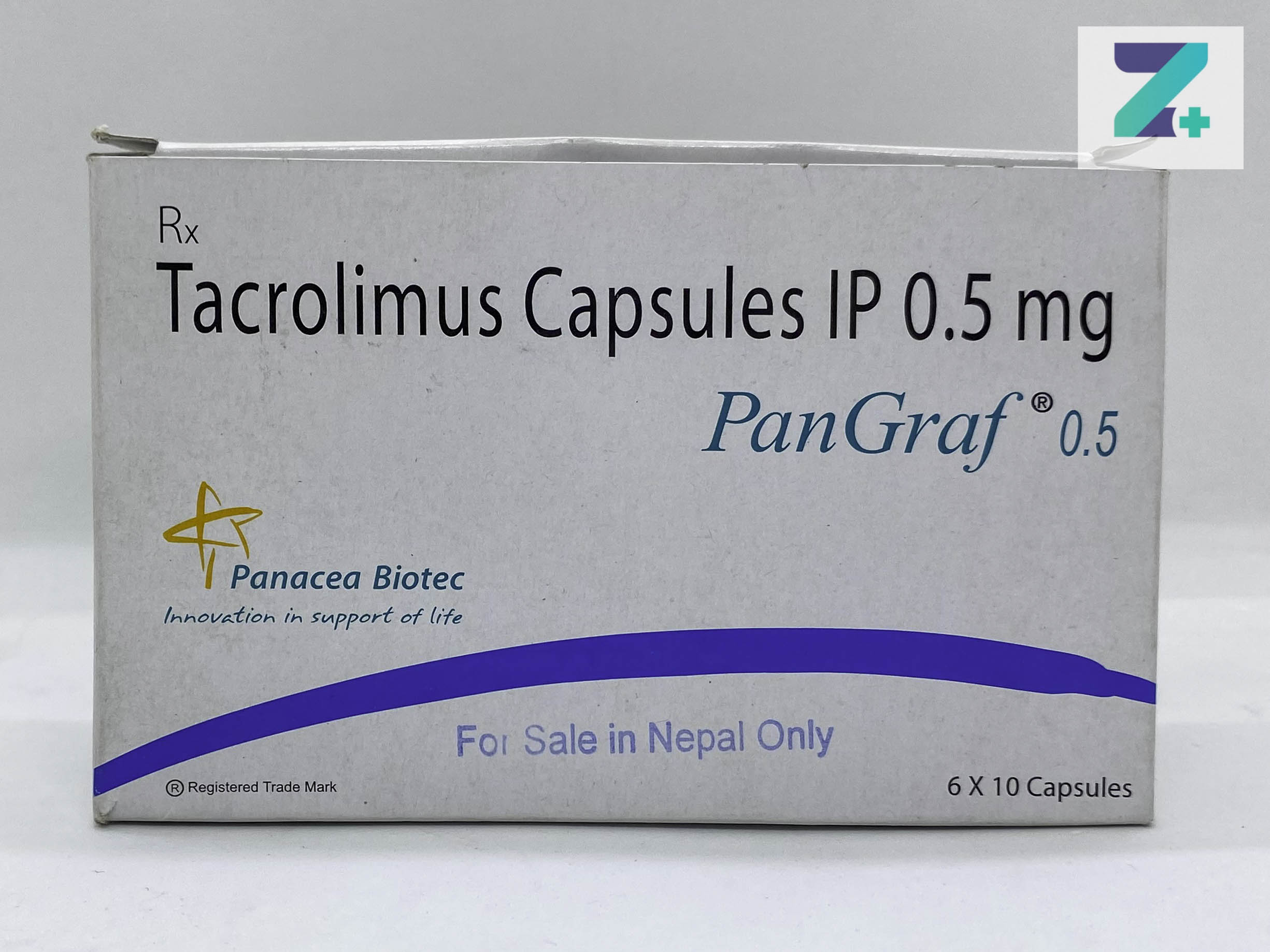
PANGRAF 0.5MG
Price: Rs.369.60
10% off
In stock
Loose stock: 0
Description
PANGRAF 0.5MG CAP 10
Details
Composition
TACROLIMUS 0.5 MG
# Tacrolimus 0.5 mg
## SHORT DESCRIPTION
Tacrolimus 0.5 mg is a **prescription immunosuppressant medicine** used primarily to prevent organ rejection after transplantation. It may be prescribed after kidney, liver, heart, or other solid-organ transplantation depending on the clinical situation.
Tacrolimus suppresses certain immune-system responses, helping prevent the body's immune system from attacking a transplanted organ. Because it has a **narrow therapeutic range**, blood-level monitoring and regular medical supervision are important.
## KEY BENEFITS
* Helps prevent organ rejection after transplantation
* Suppresses excessive immune-system activity
* Helps protect transplanted organs from immune-mediated damage
* Can be used as part of combination immunosuppressive therapy
* Available in different strengths to allow individualized dosing
## USES / INDICATIONS
Tacrolimus 0.5 mg may be prescribed for:
* Prevention of kidney transplant rejection
* Prevention of liver transplant rejection
* Prevention of heart transplant rejection
* Prevention of rejection following certain other solid-organ transplants
* Other specialist-directed immunosuppressive uses in selected circumstances
The exact indication, formulation, and treatment regimen are determined by the transplant specialist.
## HOW IT WORKS
Tacrolimus is a **calcineurin inhibitor**.
After entering immune cells, tacrolimus binds to an intracellular protein called FKBP-12. This complex inhibits calcineurin, reducing the production and release of **interleukin-2 and other cytokines** involved in T-cell activation.
By suppressing T-cell activity, tacrolimus reduces the immune response responsible for attacking a transplanted organ.
## DOSAGE & ADMINISTRATION
* Take Tacrolimus 0.5 mg **exactly as prescribed by your transplant specialist**.
* The dose is individualized according to the transplanted organ, time since transplantation, blood tacrolimus levels, kidney and liver function, age, and other medicines.
* Tacrolimus is commonly taken **twice daily**, approximately 12 hours apart, but follow your specific prescription.
* Take it at the same times each day.
* Take it consistently either with or without food; food can affect absorption.
* Swallow capsules whole with water unless your product instructions say otherwise.
* Do not change the dose based on how you feel or on a single blood-test result without medical advice.
* Tacrolimus blood levels may need regular monitoring.
* Do not stop tacrolimus suddenly, as this can increase the risk of organ rejection.
* If you miss a dose, contact your transplant team or follow the missed-dose instructions provided to you. **Do not double the next dose.**
## SIDE EFFECTS
Possible side effects include:
* Headache
* Tremor or shaking
* Nausea
* Diarrhoea
* Abdominal discomfort
* Increased blood pressure
* Increased blood glucose
* Insomnia
* Increased potassium levels
* Reduced magnesium levels
More serious adverse effects may include:
* Kidney impairment
* Serious infections
* Neurotoxicity
* Seizures
* Confusion
* Severe tremors
* Diabetes or significant blood glucose elevation
* Electrolyte abnormalities
* Liver problems
* Increased risk of certain cancers, including skin cancer and lymphoma
* Severe allergic reactions
Seek urgent medical attention for severe infection symptoms, seizures, confusion, significant reduction in urine, severe swelling, breathing difficulty, or other serious symptoms.
## PRECAUTIONS & WARNINGS
* Tacrolimus can **reduce your immune response**, increasing susceptibility to infections.
* Regular blood tests are important to monitor tacrolimus levels and kidney/liver function.
* Tacrolimus can affect kidney function; adequate monitoring is particularly important.
* It may increase blood pressure and blood glucose.
* Avoid excessive exposure to sunlight and ultraviolet radiation because immunosuppression increases the risk of skin cancer.
* Use sunscreen and protective clothing as advised by your healthcare professional.
* Do not receive live vaccines unless specifically approved by your transplant team.
* Avoid grapefruit and grapefruit juice because they can significantly increase tacrolimus blood levels.
* Inform your doctor if you have kidney, liver, heart, or electrolyte problems.
* Tell your doctor if you develop fever, sore throat, persistent cough, painful urination, or other signs of infection.
* Do not stop treatment without speaking to your transplant team.
* Different tacrolimus formulations may not be interchangeable on a milligram-for-milligram basis. Always use the exact formulation prescribed.
## DRUG INTERACTIONS
Tacrolimus has **many clinically important drug interactions**.
Medicines and substances that may increase tacrolimus levels include:
* Clarithromycin and erythromycin
* Certain azole antifungals such as ketoconazole, itraconazole, and voriconazole
* Some HIV and antiviral medicines
* Diltiazem and verapamil
* Grapefruit and grapefruit juice
* Certain other CYP3A4 inhibitors
Medicines that may decrease tacrolimus levels include:
* Rifampicin
* Carbamazepine
* Phenytoin
* Phenobarbital
* St John's wort
Medicines that may increase the risk of kidney damage when combined with tacrolimus include certain:
* NSAIDs
* Aminoglycoside antibiotics
* Vancomycin
* Amphotericin B
* Other nephrotoxic medicines
Tacrolimus can also interact with medicines that increase potassium levels.
**Always tell your transplant team or pharmacist before starting, stopping, or changing any medicine, supplement, or herbal product.**
## STORAGE INFORMATION
* Store Tacrolimus 0.5 mg according to the manufacturer's instructions.
* Keep at room temperature unless the product label specifies otherwise.
* Protect from excessive heat, moisture, and direct sunlight.
* Keep the capsules in their original packaging.
* Keep out of reach and sight of children.
* Do not use after the expiry date.
* Do not transfer capsules to another container unless specifically advised by your pharmacist.
## PRESCRIPTION STATUS
Tacrolimus 0.5 mg is a **prescription-only medicine** and should be used strictly under the supervision of a transplant specialist or other qualified healthcare professional.
Because tacrolimus has a narrow therapeutic range and serious potential adverse effects, regular monitoring is essential.
## GENUINE MEDICINE ASSURANCE
For genuine medicine assurance:
* Purchase Tacrolimus 0.5 mg only from a licensed and reputable pharmacy.
* Check the medicine name, strength, manufacturer, batch number, and expiry date.
* Confirm that you have received the **same tacrolimus formulation and manufacturer** prescribed by your transplant team.
* Do not switch brands or formulations without consulting your transplant specialist.
* Ensure the packaging and seal are intact.
* Do not use products with damaged, altered, or suspicious packaging.
* Consult your pharmacist if you have concerns about authenticity.
## FAQ
### What is Tacrolimus 0.5 mg used for?
Tacrolimus 0.5 mg is primarily used to prevent rejection of transplanted organs such as kidneys, liver, and heart. It suppresses the immune system's response against the transplanted organ.
### Is Tacrolimus an immunosuppressant?
Yes. Tacrolimus is a potent immunosuppressant belonging to the calcineurin inhibitor class.
### How does Tacrolimus work?
Tacrolimus inhibits calcineurin inside immune cells, reducing T-cell activation and the production of inflammatory cytokines. This suppresses the immune response that can cause organ rejection.
### Why is Tacrolimus blood-level monitoring necessary?
Tacrolimus has a narrow therapeutic range. Blood levels that are too low may increase the risk of organ rejection, while levels that are too high can increase the risk of toxicity, including kidney damage and neurological effects.
### How should I take Tacrolimus 0.5 mg?
Take it exactly as prescribed, at the same times every day. It is commonly taken twice daily, but the correct schedule depends on your transplant regimen and formulation.
### Can I stop taking Tacrolimus if I feel well?
No. Feeling well does not mean that the transplanted organ no longer needs protection. Stopping tacrolimus without medical supervision can cause serious organ rejection.
### Can I take Tacrolimus with food?
Tacrolimus can generally be taken with or without food, but food can affect absorption. Take it consistently in relation to meals and follow your transplant team's instructions.
### Can I drink grapefruit juice while taking Tacrolimus?
No. Grapefruit and grapefruit juice can increase tacrolimus blood concentrations and potentially increase toxicity.
### Does Tacrolimus affect the kidneys?
Yes. Kidney toxicity is an important potential adverse effect of tacrolimus. Kidney function and tacrolimus blood levels should therefore be monitored regularly.
### Can Tacrolimus increase blood pressure?
Yes. Increased blood pressure is a common potential adverse effect. Your healthcare professional may monitor your blood pressure regularly.
### Can Tacrolimus increase blood sugar?
Yes. Tacrolimus can increase blood glucose and may contribute to diabetes after transplantation. Regular blood glucose monitoring may be required.
### Does Tacrolimus weaken the immune system?
Yes. Tacrolimus intentionally suppresses immune activity to prevent organ rejection. However, this also increases susceptibility to infections.
### Can I receive vaccines while taking Tacrolimus?
Some vaccines may be appropriate, but **live vaccines may not be recommended** during significant immunosuppression. Always consult your transplant team before receiving any vaccine.
### Can I take antibiotics with Tacrolimus?
Some antibiotics can significantly increase or decrease tacrolimus blood levels. Never start an antibiotic without informing your transplant team or pharmacist.
### Can Tacrolimus be taken with painkillers?
Some pain medicines, particularly certain NSAIDs, can increase the risk of kidney problems when combined with tacrolimus. Consult your doctor or pharmacist before taking painkillers regularly.
### Can I switch from one Tacrolimus brand to another?
Do not switch brands or formulations without medical supervision. Different tacrolimus products can have different absorption characteristics, and switching may require additional blood-level monitoring.
### What happens if I miss a Tacrolimus dose?
Follow the missed-dose instructions provided by your transplant team. Do not take a double dose unless specifically instructed by your healthcare professional.
### Can Tacrolimus cause infections?
Yes. Because tacrolimus suppresses the immune system, infections may occur more easily or become more serious. Contact your healthcare professional promptly if you develop symptoms of infection.
### Can Tacrolimus increase the risk of cancer?
Long-term immunosuppression is associated with an increased risk of certain cancers, including skin cancers and lymphomas. Sun protection and regular medical follow-up are important.
### Can Tacrolimus be used during pregnancy?
Tacrolimus may be used during pregnancy when the benefits of preventing transplant rejection outweigh potential risks. Pregnancy should be managed closely by a transplant specialist and obstetric team.
### Can Tacrolimus be taken while breastfeeding?
Tacrolimus may sometimes be used during breastfeeding under specialist supervision. Discuss breastfeeding with your transplant team before making any changes to treatment.
## MEDICAL DISCLAIMER
This information is provided for educational and informational purposes only and is not a substitute for professional medical advice, diagnosis, or treatment. Tacrolimus 0.5 mg is a potent prescription immunosuppressant with a narrow therapeutic range and potentially serious adverse effects. **Never change the dose, switch formulations or brands, or stop tacrolimus without guidance from your transplant specialist.** Regular blood-level monitoring and kidney, liver, blood pressure, glucose, and electrolyte monitoring may be required. Always read the product information and consult your transplant team or pharmacist for personalized medical advice.