PANPRAZ
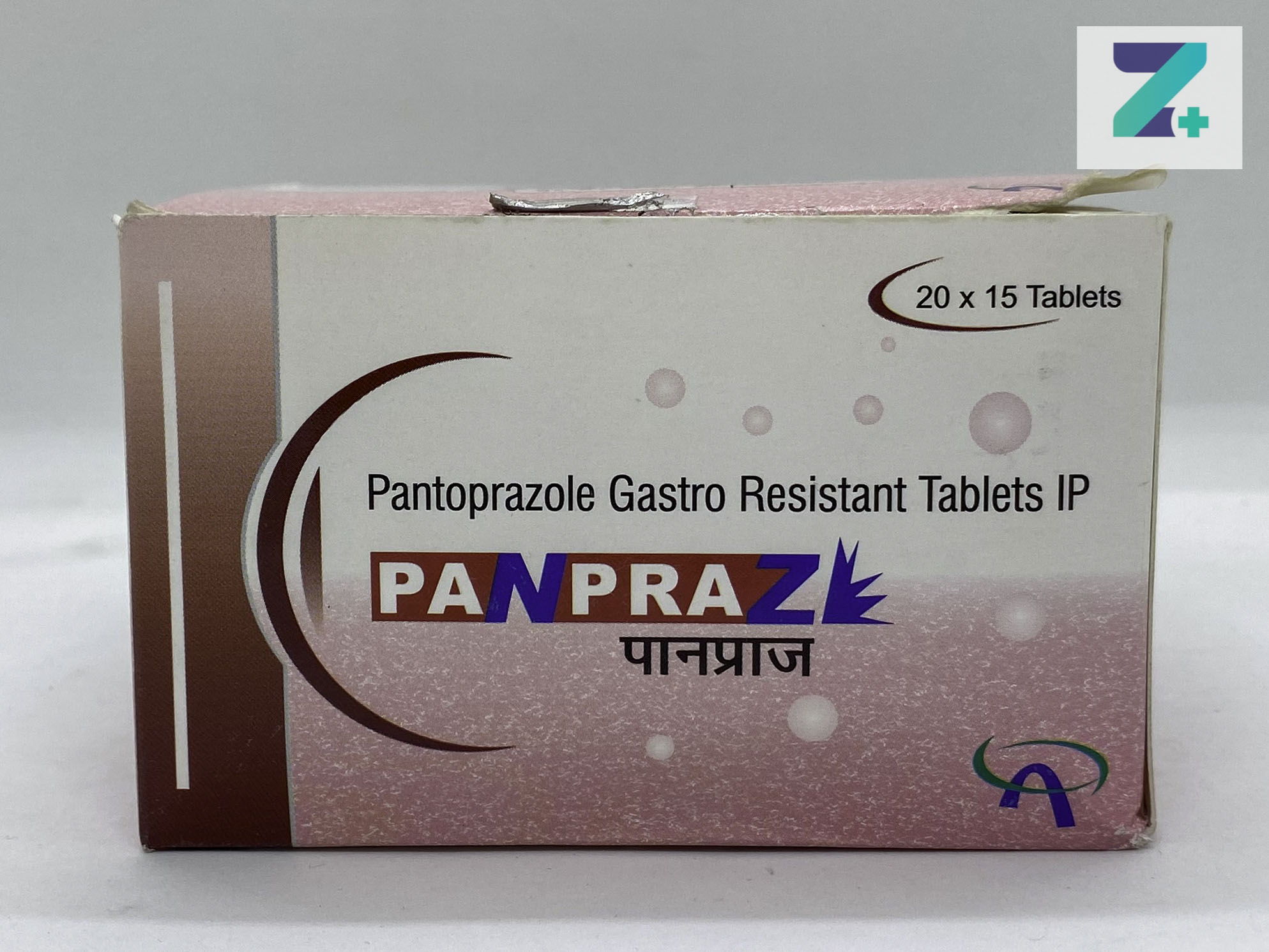
Price: Rs.120.00
10% off
In stock
Loose stock: 14
Description
PANPRAZ TAB 15
Details
Composition
PANTOPRAZOLE 40MG
# Pantoprazole 40 mg
## SHORT DESCRIPTION
Pantoprazole 40 mg is a **proton pump inhibitor (PPI)** medicine used to reduce excessive stomach acid. It is commonly prescribed for **acid reflux, gastroesophageal reflux disease (GERD), erosive esophagitis, stomach and duodenal ulcers**, and other acid-related conditions.
Pantoprazole provides longer-lasting acid suppression by reducing the amount of acid produced by the stomach.
## KEY BENEFITS
* Helps reduce **excess stomach acid**
* Provides relief from **heartburn and acid reflux**
* Helps manage symptoms of **GERD**
* Supports healing of acid-related damage to the esophagus
* Helps treat and prevent certain **stomach and duodenal ulcers**
* May be used as part of treatment for **H. pylori infection** along with appropriate antibiotics
* Can help protect the stomach in selected patients requiring acid suppression
## USES / INDICATIONS
Pantoprazole 40 mg may be prescribed for:
* **Gastroesophageal reflux disease (GERD)**
* **Erosive esophagitis**
* Frequent heartburn associated with acid reflux
* **Peptic ulcers**
* **Duodenal ulcers**
* **Gastric ulcers**
* Part of combination therapy for **Helicobacter pylori (H. pylori)** eradication
* Conditions involving excessive gastric acid production, such as **Zollinger-Ellison syndrome**
* Prevention or treatment of certain NSAID-associated ulcers when clinically appropriate
## HOW IT WORKS
Pantoprazole is a **proton pump inhibitor (PPI)**.
It blocks the **H⁺/K⁺-ATPase proton pump** in the acid-producing cells of the stomach. This significantly reduces the final stage of gastric acid production.
Lower stomach acid helps relieve acid-related symptoms and allows damaged tissues, particularly the esophagus and stomach lining, to heal.
## DOSAGE & ADMINISTRATION
* Take Pantoprazole 40 mg exactly as prescribed by your doctor.
* It is commonly taken **once daily**, although the dose and frequency depend on the condition being treated.
* For optimal effect, it is generally taken **30–60 minutes before a meal**, usually before breakfast when taken once daily.
* Swallow the tablet whole with water.
* Do not crush, chew or split delayed-release tablets unless the product specifically allows it.
* Follow the prescribed duration of treatment even if symptoms improve.
* Do not increase the dose or use it for longer than recommended without medical advice.
### Missed Dose
Take the missed dose when remembered unless it is almost time for the next dose. Do not take two doses together.
## SIDE EFFECTS
Common side effects may include:
* Headache
* Diarrhea
* Nausea
* Abdominal pain
* Vomiting
* Flatulence
* Constipation
* Dizziness
### Long-Term or Serious Side Effects
Long-term or high-dose PPI use may be associated with an increased risk of:
* **Vitamin B12 deficiency**
* **Low magnesium levels**
* Certain bone fractures, particularly in people with other risk factors
* **Clostridioides difficile-associated diarrhea**
* Rare kidney inflammation
* Certain infections due to reduced stomach acid
Seek medical attention for severe or persistent diarrhea, reduced urination, swelling, severe weakness, muscle cramps or symptoms of an allergic reaction.
## PRECAUTIONS & WARNINGS
* Tell your doctor if you have **liver disease**.
* Inform your doctor if you have unexplained weight loss, persistent vomiting, difficulty swallowing or vomiting blood.
* Seek medical evaluation for black or tarry stools.
* Long-term treatment may require monitoring of **magnesium, Vitamin B12 or bone health** in patients at risk.
* Do not use pantoprazole for persistent symptoms without appropriate medical evaluation.
* Tell your doctor if you have a history of osteoporosis or fractures.
* Inform your doctor if you develop severe or persistent diarrhea.
* Tell your doctor if you are pregnant, planning pregnancy or breastfeeding.
* Do not stop long-term treatment suddenly without discussing it with your healthcare professional, as acid-related symptoms can sometimes return.
## DRUG INTERACTIONS
Pantoprazole may interact with:
* **Clopidogrel** — pantoprazole is generally considered less likely than omeprazole or esomeprazole to interfere with clopidogrel activation, but the combination should still be reviewed by a healthcare professional.
* **Warfarin** — may require monitoring in some patients.
* **Methotrexate**, particularly high-dose therapy — PPIs may increase methotrexate exposure.
* **Digoxin** — changes in stomach acidity may affect absorption and long-term PPI use may contribute to low magnesium.
* **Certain antifungal medicines** such as ketoconazole or itraconazole — reduced stomach acidity can affect absorption.
* **Iron supplements** — reduced stomach acid may affect absorption of some iron preparations.
* **HIV medicines** whose absorption depends on stomach acidity — interactions may occur.
* Other prescription and non-prescription medicines may also interact.
Always inform your doctor or pharmacist about all prescription medicines, over-the-counter medicines, vitamins and herbal supplements you use.
## STORAGE INFORMATION
* Store according to the manufacturer's instructions.
* Keep the tablets in their original packaging.
* Store at the recommended room temperature.
* Protect from excessive heat, moisture and direct sunlight.
* Keep the container tightly closed where applicable.
* Keep out of reach of children.
* Do not use after the expiry date.
* Do not use tablets if the packaging is damaged.
## PRESCRIPTION STATUS
**Prescription medicine.**
Pantoprazole 40 mg should be used according to the advice of a qualified healthcare professional. Prescription requirements may vary by country and formulation.
## GENUINE MEDICINE ASSURANCE
For safe and genuine Pantoprazole 40 mg:
* Purchase from a licensed and reputable pharmacy.
* Check the medicine name and strength.
* Verify the manufacturer's details.
* Check the batch number and expiry date.
* Ensure the packaging and seal are intact.
* Avoid products with damaged or suspicious packaging.
* Check the expiry date before use.
* Follow the manufacturer's storage instructions.
* Consult a pharmacist if you have concerns about product authenticity.
## FAQ
### What is Pantoprazole 40 mg used for?
Pantoprazole 40 mg is used to reduce stomach acid and treat conditions such as **GERD, erosive esophagitis, peptic ulcers and other acid-related disorders**.
### Is Pantoprazole 40 mg used for acidity?
Yes. Pantoprazole reduces stomach acid and may help relieve symptoms such as **heartburn, acid reflux and indigestion caused by excess acid**.
### How does Pantoprazole work?
Pantoprazole blocks the stomach's **proton pumps**, which are responsible for producing gastric acid. This significantly reduces acid production.
### When should I take Pantoprazole 40 mg?
It is generally taken **30–60 minutes before a meal**, commonly before breakfast when prescribed once daily. Follow your doctor's instructions.
### Can Pantoprazole be taken after food?
Pantoprazole works most effectively when taken before a meal. If you have already eaten, follow your prescribed schedule rather than taking an extra dose.
### Can Pantoprazole cure GERD?
Pantoprazole can effectively control acid production and help heal acid-related esophageal damage, but GERD may require ongoing lifestyle measures and medical management.
### How long does Pantoprazole take to work?
Some people experience symptom improvement within a few days, while healing of acid-related damage may take longer. Follow the prescribed treatment duration.
### Can Pantoprazole be taken every day?
It can be taken daily when prescribed. The appropriate duration depends on the underlying condition. Long-term use should be periodically reviewed by a healthcare professional.
### What are the common side effects of Pantoprazole?
Common side effects include **headache, diarrhea, nausea, abdominal pain, vomiting, gas and constipation**.
### Can Pantoprazole cause diarrhea?
Yes. Diarrhea can occur. Severe, persistent or watery diarrhea should be medically evaluated because acid-suppressing medicines can be associated with certain intestinal infections.
### Can Pantoprazole cause Vitamin B12 deficiency?
Long-term acid suppression may reduce Vitamin B12 absorption in some people. Your doctor may recommend monitoring if you are at increased risk.
### Can Pantoprazole cause low magnesium?
Long-term PPI use can rarely lead to **low magnesium levels**, particularly in susceptible patients or those taking treatment for an extended period.
### Can Pantoprazole be taken with Clopidogrel?
Pantoprazole is generally considered to have less interaction with clopidogrel than some other PPIs, but patients taking both medicines should follow their doctor's advice.
### Can Pantoprazole be taken during pregnancy?
Tell your doctor if you are pregnant or planning pregnancy. Your healthcare professional will determine whether pantoprazole is appropriate for you.
### Can Pantoprazole be taken while breastfeeding?
Consult your healthcare professional before using pantoprazole while breastfeeding.
### Can I take Pantoprazole with painkillers?
Pantoprazole is sometimes prescribed to reduce the risk of acid-related stomach complications in people taking NSAIDs. However, you should not use NSAIDs unnecessarily and should discuss regular painkiller use with your doctor.
### Can Pantoprazole be used for stomach ulcers?
Yes. Pantoprazole can be used to help heal certain **gastric and duodenal ulcers** by reducing stomach acid.
### Is Pantoprazole an antibiotic?
No. Pantoprazole is an **acid-reducing medicine**, not an antibiotic. It may be used alongside antibiotics as part of certain H. pylori eradication regimens.
### Can Pantoprazole treat H. pylori infection?
Pantoprazole alone does not eradicate H. pylori. It may be combined with appropriate antibiotics and other medicines as part of an H. pylori treatment regimen.
### What should I do if I miss a Pantoprazole dose?
Take it when remembered unless it is nearly time for the next dose. Do not take two doses together.
### Can I stop Pantoprazole suddenly?
If you have been taking it for a long time, stopping suddenly may cause increased acid production and return of symptoms in some people. Discuss discontinuation with your healthcare professional.
### How should Pantoprazole 40 mg be stored?
Store according to the manufacturer's instructions, generally at room temperature away from excessive heat and moisture. Keep it in its original packaging and out of reach of children.
## MEDICAL DISCLAIMER
This information is provided for educational and informational purposes only and does not replace professional medical advice, diagnosis or treatment. **Pantoprazole 40 mg is an acid-reducing medicine used for several gastrointestinal conditions, including GERD and acid-related ulcers.** The appropriate dose and treatment duration depend on the underlying condition and individual patient factors. Persistent heartburn, difficulty swallowing, unexplained weight loss, vomiting blood or black stools requires medical evaluation rather than prolonged self-treatment. Long-term PPI therapy should be periodically reviewed by a healthcare professional. Always follow the specific product label and your doctor's instructions.