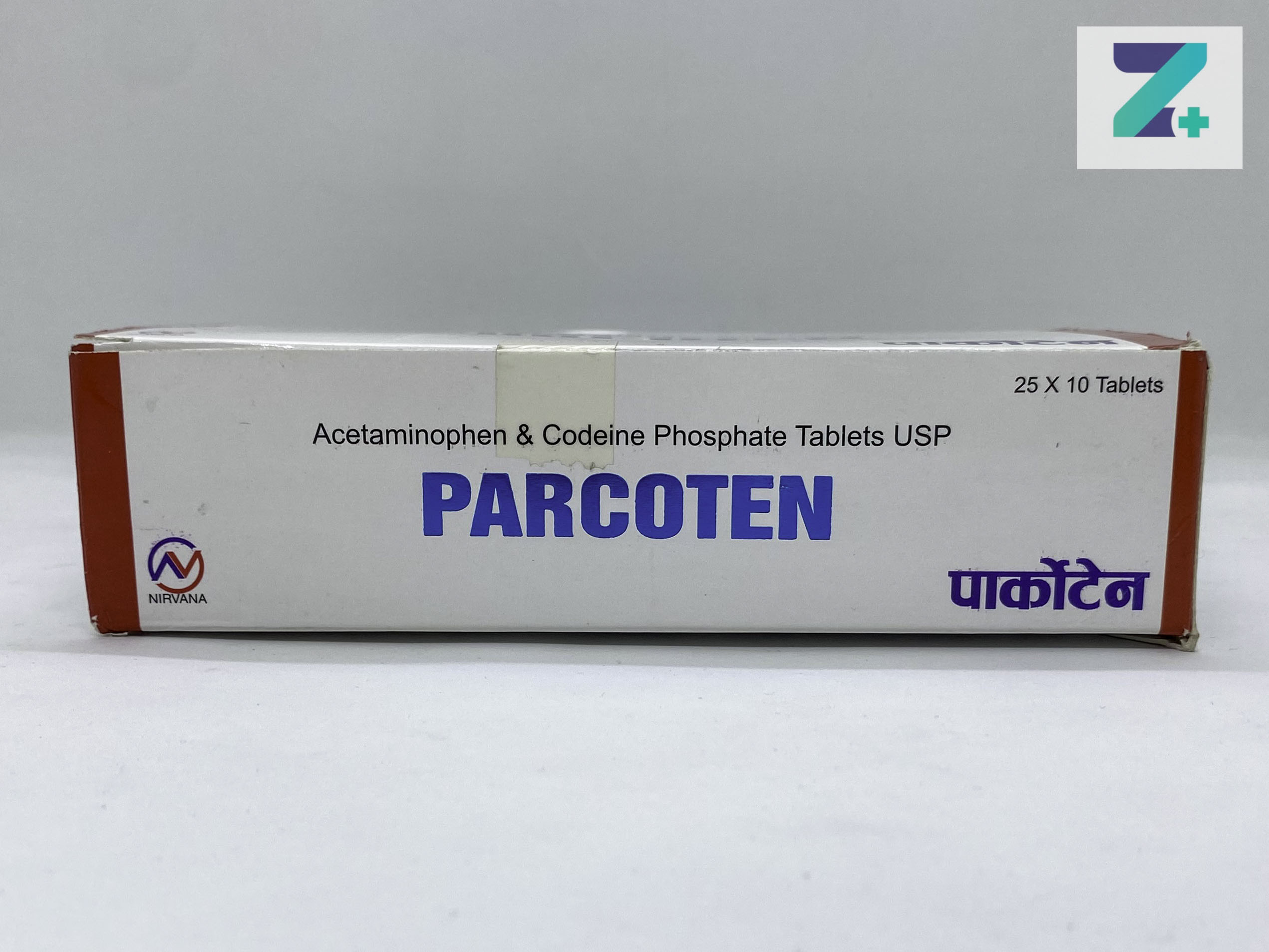
PARCOTEN
Price: Rs.80.00
10% off
In stock
Loose stock: 9
Description
PARCOTEN TAB 10
Details
Composition
ACETAMINOPHEN 500 MG,CODEINE PHOSPHATE 10 MG
# Acetaminophen 500 mg + Codeine Phosphate 10 mg
## Short Description
**Acetaminophen 500 mg + Codeine Phosphate 10 mg** is a combination pain-relieving medicine containing **acetaminophen (paracetamol)** and the opioid analgesic **codeine**. It may be prescribed for pain when an opioid-containing medicine is considered appropriate and alternative treatments are inadequate. Codeine carries important risks including **sedation, respiratory depression, misuse, dependence, and addiction**. ([U.S. Food and Drug Administration][1])
## Key Benefits
* Provides **analgesic (pain-relieving) effects** through two complementary mechanisms.
* Acetaminophen helps reduce pain and fever.
* Codeine provides additional pain relief through opioid activity.
* May be used for **mild to moderate pain** when prescribed and clinically appropriate.
* Combining ingredients may provide pain relief while allowing the amount of opioid to be kept relatively low.
## Uses / Indications
Acetaminophen 500 mg + Codeine Phosphate 10 mg may be prescribed for:
* **Mild to moderate acute pain**
* Pain that has not been adequately controlled with non-opioid treatments alone
* Certain short-term painful conditions where an opioid combination is considered appropriate
The exact indication depends on the patient's condition and the prescribing information applicable in the country where the medicine is supplied.
## How It Works
### Acetaminophen
Acetaminophen (paracetamol) produces analgesic and antipyretic effects, helping reduce pain and fever.
### Codeine
Codeine is an **opioid analgesic**. It is metabolized partly into morphine and acts on opioid receptors, altering the perception and response to pain.
People differ in how efficiently they metabolize codeine because of genetic differences in the **CYP2D6** enzyme. This can affect both pain relief and the risk of opioid-related adverse effects. ([FDA Access Data][2])
## Dosage & Administration
* Take this medicine **exactly as prescribed**.
* Use the **lowest effective dose for the shortest appropriate duration**.
* Swallow the tablet with water.
* It may be taken with or without food; taking it with food may help reduce stomach discomfort.
* **Do not take more frequently or in larger amounts than prescribed.**
* Do not combine it with other medicines containing **acetaminophen/paracetamol** unless your healthcare professional confirms that it is safe.
* Do not abruptly change or extend opioid treatment without medical advice, particularly after regular use.
Because this product contains only **10 mg of codeine**, its dosing instructions can differ from other acetaminophen/codeine products. **Follow the specific product label and prescription rather than using a dosing schedule for another strength.**
## Side Effects
### Common Side Effects
Possible side effects include:
* Drowsiness
* Dizziness
* Lightheadedness
* Nausea
* Vomiting
* Constipation
* Stomach discomfort
* Sweating
* Dry mouth
* Sedation
Codeine-containing medicines can cause central nervous system depression and respiratory depression. ([FDA Access Data][2])
### Serious Side Effects
Seek **urgent medical attention** for:
* Slow, shallow, difficult, or irregular breathing
* Extreme sleepiness or inability to stay awake
* Confusion or loss of consciousness
* Severe allergic reaction
* Seizures
* Severe weakness or fainting
* Signs of liver injury, such as yellowing of the skin/eyes, dark urine, or severe persistent abdominal symptoms
Taking excessive acetaminophen can cause **potentially life-threatening liver injury**. ([FDA Access Data][3])
## Precautions & Warnings
### Opioid-related risks
Codeine can cause **addiction, abuse, misuse, overdose, and potentially fatal respiratory depression**, even when taken as prescribed. ([FDA Access Data][2])
* Never share this medicine with another person.
* Keep it securely away from children and other people who could accidentally take it.
* Avoid driving or operating machinery until you know how the medicine affects you.
* Avoid alcohol because it can increase sedation and respiratory-depression risks.
* Extra caution is needed in elderly or debilitated patients and people with respiratory disorders.
* Tell your doctor about any history of substance-use problems before treatment.
### Acetaminophen-related precautions
* Do not take additional acetaminophen/paracetamol-containing products without checking the total daily amount.
* Excessive acetaminophen can cause severe liver damage.
* Tell your doctor if you have **liver disease** or regularly consume significant amounts of alcohol.
### Children and adolescents
Codeine has important age-related safety restrictions. In the United States, codeine-containing medicines are contraindicated in children under 12 years and after tonsillectomy/adenoidectomy in patients under 18 years. ([FDA Access Data][2])
## Drug Interactions
Important interactions may occur with:
* **Alcohol** — may substantially increase sedation and respiratory depression.
* **Benzodiazepines** and other CNS depressants — may cause profound sedation, respiratory depression, coma, or death. ([FDA Access Data][2])
* Other **opioids or sedatives** — may increase central nervous system depression.
* Certain medicines affecting **CYP2D6 or CYP3A4** — may alter codeine metabolism and its effects. ([FDA Access Data][2])
* **MAO inhibitors** and certain other medicines may require special consideration.
* Other products containing **acetaminophen/paracetamol** — can increase the risk of acetaminophen overdose and liver injury.
Always provide your doctor or pharmacist with a complete list of prescription medicines, OTC products, supplements, and herbal products you use.
## Storage Information
* Store according to the manufacturer's recommended conditions, generally at **room temperature**.
* Keep in the original, tightly closed packaging.
* Protect from excessive heat and moisture.
* Keep away from direct sunlight.
* Store **securely and out of reach of children** because accidental opioid ingestion can be fatal.
* Do not use after the expiry date.
* Dispose of unused opioid-containing medicine according to local pharmacy or medicine-disposal guidance.
## Prescription Status
**Acetaminophen + Codeine Phosphate is a prescription opioid medicine in many jurisdictions.** The exact legal classification and dispensing requirements vary by country.
Because codeine is an opioid with risks of misuse, dependence, addiction, and respiratory depression, it should be used only under appropriate medical supervision. ([FDA Access Data][2])
## Genuine Medicine Assurance
When purchasing Acetaminophen 500 mg + Codeine Phosphate 10 mg, obtain it from a **licensed pharmacy or authorized medicine supplier**.
Before using the medicine, check:
* Manufacturer details
* Active ingredients and strengths
* Batch/lot number
* Manufacturing and expiry dates
* Packaging and seal integrity
* Product registration or authorization information where applicable
Avoid products from unknown sources, particularly those with damaged packaging, missing batch information, or suspiciously low prices.
# Frequently Asked Questions (FAQs)
### 1. What is Acetaminophen 500 mg + Codeine Phosphate 10 mg used for?
It is a prescription pain-relieving combination used for certain cases of **mild to moderate pain** when an opioid-containing medicine is considered appropriate.
### 2. Is Acetaminophen 500 mg + Codeine 10 mg a strong painkiller?
It combines acetaminophen with a relatively low dose of codeine. The overall effect varies between individuals because people metabolize codeine differently.
### 3. Is codeine an opioid?
Yes. **Codeine is an opioid analgesic** and can cause drowsiness, respiratory depression, tolerance, dependence, and addiction. ([U.S. Food and Drug Administration][1])
### 4. What is the difference between acetaminophen and codeine?
Acetaminophen is a non-opioid pain reliever, while codeine is an opioid. They work through different mechanisms and can provide complementary pain relief.
### 5. Can I take paracetamol with this medicine?
Be careful. **Acetaminophen is also known as paracetamol**, so this medicine already contains 500 mg of acetaminophen per tablet. Taking additional paracetamol-containing products can unintentionally increase the total dose.
### 6. Can Acetaminophen + Codeine make me sleepy?
Yes. Drowsiness, dizziness, and sedation are common possible effects. Avoid driving or operating machinery if affected.
### 7. Can I drink alcohol while taking Acetaminophen + Codeine?
Alcohol should generally be **avoided** because it can increase sedation and potentially dangerous respiratory depression when combined with codeine. ([FDA Access Data][2])
### 8. Can this medicine cause constipation?
Yes. **Constipation is a common opioid-related side effect**. Maintaining appropriate fluid and dietary fiber intake may help, but persistent constipation should be discussed with a healthcare professional.
### 9. Can Acetaminophen + Codeine cause addiction?
Yes. Codeine is an opioid and can cause **addiction, abuse, misuse, tolerance, and physical dependence**. The risk increases with prolonged or inappropriate use. ([FDA Access Data][2])
### 10. Can I drive after taking Acetaminophen + Codeine?
Do not drive or operate machinery if the medicine causes drowsiness, dizziness, blurred vision, or impaired alertness.
### 11. Can children take Acetaminophen + Codeine?
Codeine has important pediatric restrictions. In the U.S., codeine is contraindicated in children younger than 12 years and for postoperative pain following tonsillectomy/adenoidectomy in patients younger than 18 years. ([FDA Access Data][2])
### 12. Can I take this medicine during pregnancy?
Codeine may cause opioid-related effects in the newborn, including **neonatal opioid withdrawal syndrome**, with prolonged opioid exposure during pregnancy. Discuss pregnancy or plans for pregnancy with your healthcare professional before using this medicine. ([FDA Access Data][2])
### 13. Can I take Acetaminophen + Codeine while breastfeeding?
Codeine can pose serious risks to breastfed infants because some people metabolize codeine to morphine more rapidly than expected. Discuss breastfeeding with your healthcare professional before taking codeine-containing medicines. ([U.S. Food and Drug Administration][1])
### 14. What happens if I take too much Acetaminophen + Codeine?
Overdose can cause **severe respiratory depression from codeine and potentially severe liver injury from acetaminophen**. Suspected overdose requires urgent medical evaluation, even if the person initially feels well.
### 15. Can I take another painkiller with this medicine?
Do not add another painkiller without checking with your doctor or pharmacist, especially if it contains **acetaminophen/paracetamol, another opioid, or a sedating medicine**.
### 16. Is Acetaminophen 500 mg + Codeine 10 mg available without a prescription?
Because it contains codeine, it is generally subject to prescription or controlled-medicine requirements, depending on the country and formulation.
### 17. How long can I take Acetaminophen + Codeine?
Use it for the **shortest duration necessary** as prescribed. Long-term or repeated opioid use increases the risk of tolerance, dependence, and addiction.
### 18. What should I do if I miss a dose?
Follow your prescription instructions. Do not take extra tablets to compensate for a missed dose, and never exceed the prescribed frequency or amount.
## Medical Disclaimer
This information about **Acetaminophen 500 mg + Codeine Phosphate 10 mg** is provided for educational and SEO purposes only and does not replace professional medical advice, diagnosis, or treatment. Codeine is an opioid with potentially serious risks, including respiratory depression, overdose, dependence, and addiction. Acetaminophen overdose can cause severe and potentially fatal liver injury. Always use this medicine exactly as prescribed and consult a qualified healthcare professional before starting, stopping, or changing treatment. ([FDA Access Data][2])
[1]: https://www.fda.gov/drugs/postmarket-drug-safety-information-patients-and-providers/codeine-information?utm_source=chatgpt.com "Codeine Information | FDA"
[2]: https://www.accessdata.fda.gov/drugsatfda_docs/label/2021/022402s014lbl.pdf?utm_source=chatgpt.com "Codeine Sulfate Tablets Highlights of Prescribing Information"
[3]: https://www.accessdata.fda.gov/drugsatfda_docs/label/2023/020232s047lbl.pdf?utm_source=chatgpt.com "Butalbital, Acetaminophen, Caffeine, and Codeine Phosphate Capsules — Highlights of Prescribing Information"