PEXEP CR-25
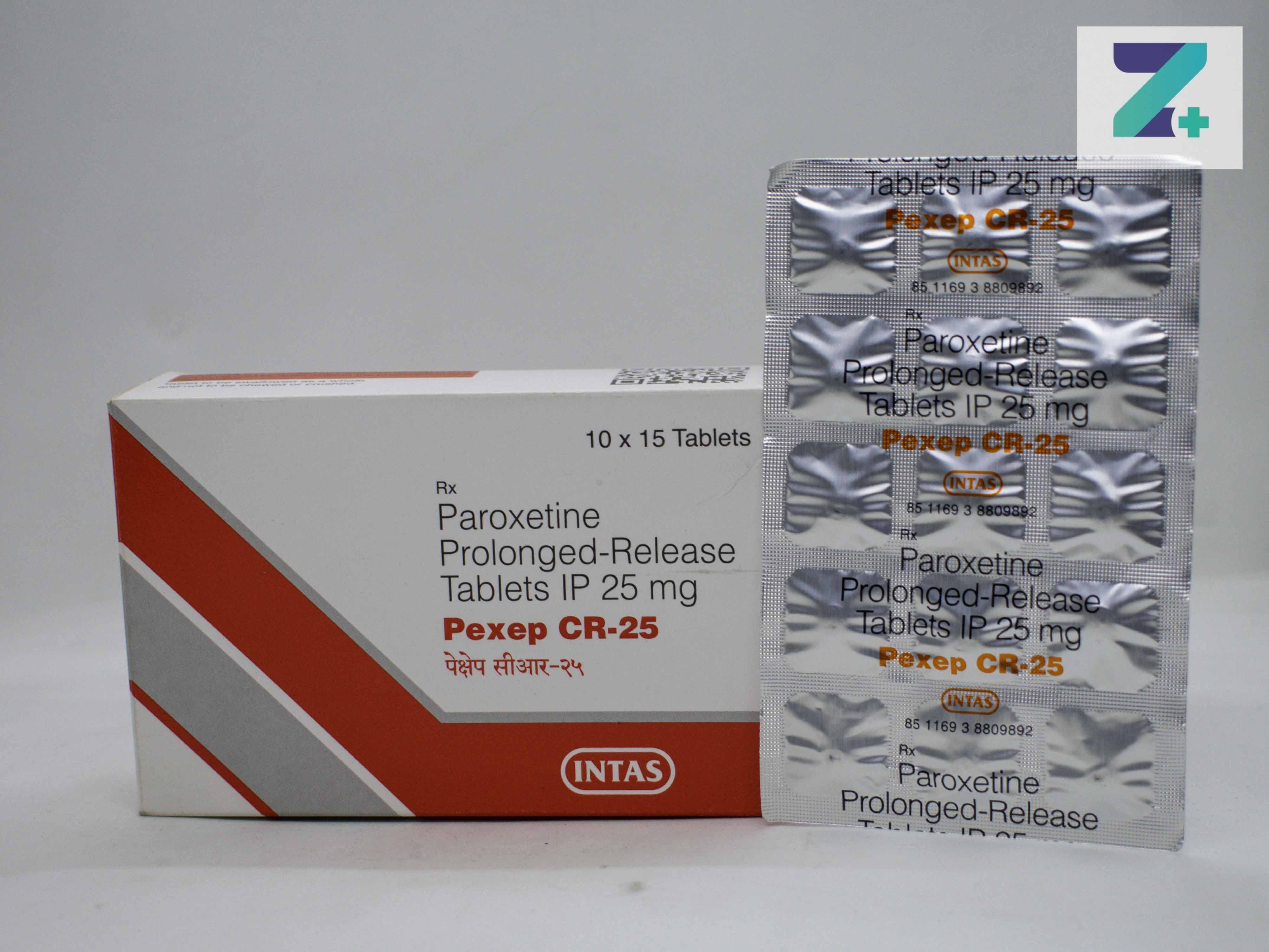
Price: Rs.432.00
13% off
In stock
Loose stock: 0
Description
PEXEP CR-25 TAB 15
Details
Composition
PAROXETINE 25 MG
# Paroxetine 25 mg
## Short Description
**Paroxetine 25 mg** is a prescription **selective serotonin reuptake inhibitor (SSRI)** antidepressant. It is used to treat several mental health conditions, including **depression, panic disorder, obsessive-compulsive disorder (OCD), social anxiety disorder, generalized anxiety disorder, and post-traumatic stress disorder (PTSD)**, depending on the specific formulation and local approvals.
Paroxetine works mainly by increasing the availability of **serotonin** in the brain, which can help regulate mood, anxiety and related symptoms.
> **Important:** Paroxetine 25 mg is commonly available as a **controlled-release (CR/ER) formulation** in some markets. The dosing and administration instructions differ from immediate-release paroxetine, so always follow the instructions for the specific product.
---
## Key Benefits
* Helps improve symptoms of **depression**.
* Reduces excessive anxiety and worry.
* Can help manage **panic attacks and panic disorder**.
* Helps reduce obsessive thoughts and compulsive behaviors in OCD.
* May improve symptoms of **social anxiety disorder**.
* Can be used for **generalized anxiety disorder** in appropriate patients.
* May help manage symptoms of **post-traumatic stress disorder (PTSD)**.
* Provides longer-term control of symptoms when taken regularly as prescribed.
---
## Uses / Indications
Paroxetine may be prescribed for:
### 1. Depression
Helps manage symptoms such as:
* Persistent sadness
* Loss of interest
* Low motivation
* Sleep disturbances
* Changes in appetite
* Feelings of worthlessness
### 2. Panic Disorder
May reduce:
* Recurrent panic attacks
* Fear of future panic attacks
* Avoidance associated with panic disorder
### 3. Obsessive-Compulsive Disorder (OCD)
Helps reduce unwanted intrusive thoughts and repetitive compulsive behaviors.
### 4. Social Anxiety Disorder
Can help reduce excessive fear or anxiety in social and performance situations.
### 5. Generalized Anxiety Disorder
May help reduce persistent and excessive anxiety and worry.
### 6. Post-Traumatic Stress Disorder
Paroxetine may be prescribed for PTSD symptoms in appropriate patients.
> Approved indications vary depending on the country and formulation.
---
## How It Works
Paroxetine is an **SSRI antidepressant**.
It selectively inhibits the reuptake of **serotonin (5-hydroxytryptamine)** by nerve cells in the brain. This increases serotonin availability within neuronal synapses.
Over time, changes in serotonin signaling can help regulate:
* Mood
* Anxiety
* Fear responses
* Obsessive thoughts
* Emotional stability
### Simple Mechanism
**Paroxetine → inhibits serotonin reuptake → increases serotonin signaling → helps regulate mood and anxiety.**
The full therapeutic effect usually develops gradually rather than immediately.
---
## Dosage & Administration
> **The correct dose depends on the condition, formulation, age, response to treatment and other medicines being taken.**
### Paroxetine 25 mg Controlled-Release
For some adult conditions, **25 mg once daily** may be a maintenance dose of the controlled-release formulation. Treatment is generally started at a lower dose when appropriate and adjusted by the healthcare professional.
### How to Take
* Take exactly as prescribed.
* Usually taken **once daily**.
* It may be taken with or without food, depending on the specific formulation.
* Take it at approximately the same time each day.
* **Swallow controlled-release tablets whole.**
* Do not crush, chew or split CR/ER tablets unless the product specifically allows it.
### Missed Dose
Take the missed dose when remembered unless it is close to the next scheduled dose.
**Do not double the dose.**
### Do Not Stop Suddenly
Paroxetine should generally **not be stopped abruptly**, particularly after regular or prolonged use.
Sudden discontinuation can cause withdrawal/discontinuation symptoms such as:
* Dizziness
* Nausea
* Headache
* Irritability
* Anxiety
* Sleep disturbances
* Electric-shock-like sensations
* Flu-like feelings
A healthcare professional can gradually reduce the dose when discontinuation is appropriate.
---
## Side Effects
### Common Side Effects
Possible side effects include:
* Nausea
* Diarrhea or constipation
* Dry mouth
* Headache
* Dizziness
* Fatigue
* Sleepiness
* Insomnia
* Increased sweating
* Tremor
* Changes in appetite
* Sexual dysfunction
Some side effects may improve as the body adjusts to treatment.
### Sexual Side Effects
Paroxetine can cause:
* Reduced sexual desire
* Difficulty reaching orgasm
* Erectile or ejaculation problems
These effects should be discussed with a healthcare professional if persistent.
### Serious Side Effects
Seek medical attention for:
* Severe allergic reaction
* Significant mood or behavioral changes
* Suicidal thoughts or worsening depression
* Severe agitation or confusion
* Seizures
* Unusual bleeding
* Severe weakness, confusion or muscle rigidity
### Serotonin Syndrome
Rarely, excessive serotonin activity can cause **serotonin syndrome**, particularly when paroxetine is combined with other serotonergic medicines.
Symptoms may include:
* Agitation
* Confusion
* Sweating
* Fever
* Rapid heartbeat
* Tremor
* Muscle rigidity
* Diarrhea
This requires urgent medical attention.
---
## Precautions & Warnings
### Suicidal Thoughts and Behavioral Changes
Antidepressants can increase the risk of **suicidal thoughts or unusual behavioral changes in some children, adolescents and young adults**, particularly during the early stages of treatment or after dose changes.
Close monitoring is important, especially when treatment is started or adjusted.
### Bipolar Disorder
Paroxetine can potentially trigger **mania or hypomania** in people with bipolar disorder. Tell your healthcare professional if you have a history of bipolar disorder or manic episodes.
### Serotonin Syndrome
Do not combine paroxetine with certain serotonergic medicines without medical supervision.
### Bleeding Risk
SSRIs can increase bleeding risk, particularly when combined with:
* Aspirin
* Ibuprofen
* Naproxen
* Diclofenac
* Anticoagulants
### Hyponatremia
Paroxetine can rarely cause **low blood sodium**, particularly in older adults or people taking diuretics.
Symptoms can include:
* Headache
* Confusion
* Weakness
* Unsteadiness
* Seizures in severe cases
### Seizure Disorders
Use cautiously in patients with a history of seizures.
### Pregnancy
Paroxetine should be used during pregnancy only after discussing the potential benefits and risks with a healthcare professional. Exposure during pregnancy may be associated with specific neonatal and pregnancy-related risks.
### Breastfeeding
Paroxetine passes into breast milk. Discuss treatment with a healthcare professional before breastfeeding while taking this medicine.
### Driving and Machinery
Paroxetine may cause dizziness, drowsiness or impaired concentration in some patients. Avoid driving or operating machinery until you know how it affects you.
---
## Drug Interactions
### MAO Inhibitors
Paroxetine must **not be combined with MAO inhibitors** because of the risk of serious reactions, including serotonin syndrome.
An appropriate washout period is required when switching between paroxetine and certain MAO inhibitors.
### Other Serotonergic Medicines
The risk of serotonin syndrome may increase with:
* Tramadol
* Certain other antidepressants
* Lithium
* Some migraine medicines such as triptans
* St. John's wort
* Other serotonergic medicines
### NSAIDs and Aspirin
Combining paroxetine with NSAIDs or aspirin can increase the risk of **bleeding**.
### Anticoagulants
Medicines such as **warfarin and other anticoagulants** may increase bleeding risk when combined with paroxetine.
### Tamoxifen
Paroxetine strongly inhibits **CYP2D6** and may reduce the conversion of tamoxifen to its active metabolite. Alternative antidepressants may be preferred in patients receiving tamoxifen.
### Pimozide and Thioridazine
Paroxetine can interact with certain medicines that affect cardiac rhythm, and some combinations are contraindicated.
### Alcohol
Alcohol may worsen drowsiness, impaired judgment or other central nervous system effects.
> Always provide your doctor or pharmacist with a complete list of prescription medicines, OTC medicines, vitamins and herbal supplements you take.
---
## Storage Information
* Store at **room temperature**, according to the manufacturer's instructions.
* Protect from excessive heat and moisture.
* Keep away from direct sunlight.
* Keep tablets in their original packaging.
* Keep the container tightly closed.
* Keep out of reach of children.
* Do not use after the expiry date.
* Do not use tablets if the packaging is damaged or the tablets appear abnormal.
---
## Prescription Status
**Paroxetine 25 mg is generally a prescription-only medicine.**
Because paroxetine affects the central nervous system and has important interactions and discontinuation effects, treatment should be initiated and monitored by an appropriately qualified healthcare professional.
---
## Genuine Medicine Assurance
When purchasing **Paroxetine 25 mg**:
* Purchase only from a **licensed and reputable pharmacy**.
* Verify the active ingredient and **25 mg strength**.
* Check whether the product is **immediate-release or controlled-release (CR/ER)**.
* Verify the manufacturer's name and regulatory information.
* Check the batch/lot number and expiry date.
* Ensure the packaging is properly sealed and undamaged.
* Check tablets and packaging against the manufacturer's information.
* Avoid products with altered labels, spelling errors or suspicious packaging.
* Do not purchase prescription antidepressants from unauthorized sellers.
* Keep the medicine in its original packaging.
* If counterfeit medicine is suspected, contact the manufacturer, licensed pharmacy or relevant medicines regulatory authority.
---
# Frequently Asked Questions (FAQ)
### 1. What is Paroxetine 25 mg used for?
Paroxetine 25 mg is an SSRI antidepressant used for conditions such as **depression, panic disorder, OCD, social anxiety disorder, generalized anxiety disorder and PTSD**, depending on the formulation and local approval.
### 2. Is Paroxetine 25 mg an antidepressant?
Yes. Paroxetine is a **selective serotonin reuptake inhibitor (SSRI) antidepressant**.
### 3. How does Paroxetine work?
It increases serotonin signaling in the brain by preventing serotonin from being rapidly reabsorbed by nerve cells.
### 4. Does Paroxetine help with anxiety?
Yes. Paroxetine is used to treat several anxiety-related disorders, including **panic disorder, social anxiety disorder and generalized anxiety disorder**.
### 5. How long does Paroxetine take to work?
Some symptoms may begin improving within the first few weeks, but the **full therapeutic effect can take several weeks**. Continue taking it as prescribed unless your healthcare professional advises otherwise.
### 6. Does Paroxetine make you sleepy?
It can cause **sleepiness or fatigue** in some people, while others may experience insomnia. Avoid driving until you know how the medicine affects you.
### 7. Can Paroxetine cause weight gain?
Weight changes can occur. Some people experience increased appetite or weight gain, particularly during longer-term treatment.
### 8. Can Paroxetine cause sexual problems?
Yes. Sexual side effects, including reduced libido, delayed orgasm and erectile or ejaculation difficulties, can occur.
### 9. Can Paroxetine be stopped suddenly?
It is generally recommended **not to stop paroxetine suddenly**. Gradual dose reduction under medical supervision can reduce discontinuation symptoms.
### 10. What happens if I miss a dose of Paroxetine?
Take it when remembered unless it is nearly time for your next dose. **Do not take two doses together.**
### 11. Can Paroxetine be taken with alcohol?
Alcohol may worsen drowsiness, dizziness and impaired judgment. Discuss alcohol consumption with your healthcare professional.
### 12. Can Paroxetine be taken with Ibuprofen?
The combination may increase the risk of **gastrointestinal or other bleeding**. Consult your healthcare professional before regularly using NSAIDs with paroxetine.
### 13. Can Paroxetine be taken with Tramadol?
This combination can increase the risk of **serotonin syndrome and seizures** and should only be used under appropriate medical supervision.
### 14. Can Paroxetine be taken with other antidepressants?
Some combinations are unsafe, particularly combinations involving **MAO inhibitors or other serotonergic antidepressants**. Never combine antidepressants without medical guidance.
### 15. Is Paroxetine addictive?
Paroxetine is **not considered an addictive drug**, but physical dependence-like discontinuation symptoms can occur if treatment is stopped abruptly.
### 16. Can Paroxetine be used during pregnancy?
Paroxetine may sometimes be used during pregnancy when clinically necessary, but potential benefits and risks should be carefully discussed with a healthcare professional.
### 17. Can Paroxetine be used while breastfeeding?
Paroxetine passes into breast milk. A healthcare professional should assess whether it is appropriate for the breastfeeding individual and infant.
### 18. Is Paroxetine 25 mg the same as Paroxetine 20 mg?
No. They contain different strengths. Also, **controlled-release and immediate-release formulations are not necessarily interchangeable**.
### 19. Can Paroxetine be used for panic attacks?
Yes. Paroxetine is an established treatment option for **panic disorder**, but it is not intended to provide immediate relief from an individual panic attack.
### 20. Is Paroxetine 25 mg available without a prescription?
Paroxetine is generally a **prescription medicine**, although exact dispensing regulations vary by country.
---
## Medical Disclaimer
This information about **Paroxetine 25 mg** is provided for educational and general informational purposes only. It is **not a substitute for professional medical advice, diagnosis or treatment**.
Paroxetine affects serotonin signaling and has important precautions and drug interactions. Seek medical attention for **suicidal thoughts, severe behavioral changes, severe allergic reactions, seizures, unusual bleeding or symptoms suggestive of serotonin syndrome**.
Do not start, stop or change the dose of paroxetine without professional medical guidance. **Do not discontinue treatment abruptly**, particularly after regular or prolonged use.
Always inform your healthcare professional about all prescription medicines, OTC medicines, supplements and herbal products you use, and follow the **specific product label and prescribed treatment plan**.