PIOZ 15MG
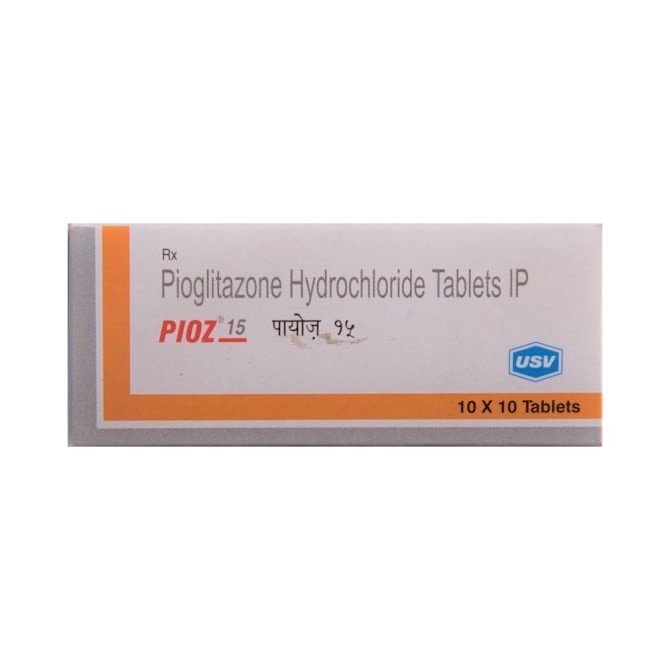
Price: Rs.65.00
13% off
In stock
Loose stock: 0
Description
PIOZ 15MG TAB 10
Details
Composition
PIOGLITAZONE 15 MG
# PIOGLITAZONE 15 MG
## Short Description
**Pioglitazone 15 mg** is an oral antidiabetic medicine belonging to the **thiazolidinedione (TZD)** class. It is used to improve blood glucose control in adults with **type 2 diabetes mellitus**.
Pioglitazone works primarily by increasing the body's sensitivity to insulin, allowing glucose to move more effectively from the blood into tissues. It is generally used together with diet and exercise and may be prescribed alone or with other diabetes medicines.
## Key Benefits
* Helps improve **blood sugar control** in type 2 diabetes.
* Increases the body's sensitivity to insulin.
* Helps reduce **insulin resistance**.
* Can be used alone or in combination with other antidiabetic medicines.
* Provides glucose-lowering effects without directly stimulating the pancreas to release insulin.
* May help improve long-term glycemic control when used as part of an appropriate diabetes management plan.
## Uses / Indications
Pioglitazone 15 mg may be prescribed for:
* **Type 2 diabetes mellitus**.
* Insulin resistance associated with type 2 diabetes.
* Combination therapy with medicines such as metformin, sulfonylureas, or insulin when additional glucose control is required.
Pioglitazone is **not used to treat type 1 diabetes or diabetic ketoacidosis**.
## How It Works
Pioglitazone activates **peroxisome proliferator-activated receptor gamma (PPAR-γ)**, a receptor involved in glucose and fat metabolism.
This increases insulin sensitivity in tissues such as:
* Skeletal muscle.
* Adipose tissue.
* The liver.
As insulin sensitivity improves, the body can use glucose more effectively and the liver may produce less glucose.
Unlike sulfonylureas, pioglitazone does **not directly stimulate insulin secretion**, so it generally has a lower risk of hypoglycemia when used alone.
## Dosage & Administration
* The usual starting dose for adults is often **15 mg or 30 mg once daily**.
* Your doctor may adjust the dose based on blood glucose response and tolerability.
* The maximum recommended daily dose is generally **45 mg**.
* Pioglitazone may be taken **with or without food**.
* Take it at approximately the same time each day.
* Swallow the tablet with water.
* Continue recommended diet and exercise unless your healthcare professional advises otherwise.
* Do not change the dose without medical advice.
* If you miss a dose, take it when remembered unless it is nearly time for the next dose. Do not double the next dose.
### Important
Pioglitazone does not usually provide immediate blood sugar reduction. Its glucose-lowering effect develops gradually over **several weeks**, and maximum benefit may take longer.
## Side Effects
Common side effects may include:
* Weight gain.
* Fluid retention or swelling of the ankles and legs.
* Headache.
* Upper respiratory symptoms.
* Muscle or joint discomfort.
* Increased risk of hypoglycemia when combined with insulin or certain other diabetes medicines.
### Serious Side Effects
Seek medical attention if you develop:
* Significant or rapidly worsening swelling.
* Shortness of breath or difficulty breathing.
* Rapid unexplained weight gain.
* Chest discomfort.
* Severe fatigue.
* Yellowing of the skin or eyes.
* Dark urine.
* Severe abdominal pain.
* Blood in the urine or painful urination.
Pioglitazone can cause or worsen **heart failure due to fluid retention** and should be used carefully in people with cardiovascular disease.
## Precautions & Warnings
* Pioglitazone can cause **fluid retention and weight gain**.
* It may worsen or precipitate **congestive heart failure**.
* It is generally contraindicated in patients with symptomatic heart failure and should not be initiated in certain severe heart-failure situations.
* Tell your doctor if you have heart failure, heart disease, liver disease, or bladder problems.
* Liver function may be evaluated before and during treatment when clinically appropriate.
* Report unexplained fatigue, loss of appetite, abdominal pain, dark urine, or yellowing of the skin or eyes.
* Pioglitazone may increase the risk of **bone fractures**, particularly in some women.
* It can restore ovulation in some women with insulin resistance, potentially increasing the possibility of pregnancy.
* Tell your doctor if you are pregnant, planning pregnancy, or breastfeeding.
* Pioglitazone is not intended for treatment of type 1 diabetes or diabetic ketoacidosis.
* Monitor blood glucose regularly as recommended.
* If used with insulin or insulin-releasing medicines, the risk of hypoglycemia may increase.
## Drug Interactions
Pioglitazone may interact with several medicines.
### Important interactions include:
* **Insulin:** may increase the risk of fluid retention, edema, and heart failure.
* **Sulfonylureas** such as glimepiride or gliclazide: may increase the risk of hypoglycemia.
* **Gemfibrozil:** may increase pioglitazone exposure.
* **Rifampicin (rifampin):** may decrease pioglitazone exposure and potentially reduce its effectiveness.
* Other medicines affecting liver enzymes may alter pioglitazone concentrations.
Tell your doctor or pharmacist about all prescription medicines, OTC medicines, vitamins, and herbal supplements you use.
## Storage Information
* Store at room temperature according to the manufacturer's instructions.
* Keep tablets in their original packaging.
* Protect from excessive heat, moisture, and direct sunlight.
* Keep the container tightly closed.
* Keep out of reach of children.
* Do not use after the expiry date.
* Dispose of unused or expired medicine according to local pharmacy guidance.
## Prescription Status
**Pioglitazone 15 mg is a prescription medicine in many countries.**
It should be used under medical supervision because treatment requires consideration of **blood glucose control, fluid retention, heart function, liver health, and other individual risk factors**.
Prescription requirements may vary by country.
## Genuine Medicine Assurance
When purchasing Pioglitazone 15 mg, obtain it from a **licensed pharmacy or authorized medicine supplier**.
Before using the medicine, verify:
* Correct medicine name and **15 mg strength**.
* Manufacturer information.
* Batch or lot number.
* Manufacturing and expiry dates.
* Intact packaging and seals.
* Clear labeling and dosage instructions.
Do not use tablets if the packaging appears damaged, tampered with, incorrectly labeled, or suspicious.
## Frequently Asked Questions (FAQ)
### 1. What is Pioglitazone 15 mg used for?
Pioglitazone 15 mg is used to improve blood glucose control in adults with **type 2 diabetes mellitus**, particularly when insulin resistance is an important component of the condition.
### 2. Is pioglitazone an insulin medicine?
No. Pioglitazone is not insulin. It is a **thiazolidinedione antidiabetic medicine** that makes the body's tissues more sensitive to insulin.
### 3. How does pioglitazone lower blood sugar?
It activates PPAR-γ receptors, improving **insulin sensitivity** in muscle, fat, and the liver. This allows the body to use glucose more efficiently.
### 4. Is Pioglitazone 15 mg a starting dose?
Yes. **15 mg once daily is a commonly used starting dose** for some adults, although the appropriate starting dose depends on the patient's medical condition and other diabetes medicines.
### 5. Can pioglitazone be taken with metformin?
Yes. Pioglitazone may be prescribed together with **metformin** when additional glucose control is needed. Combination therapy should be supervised by a healthcare professional.
### 6. Can pioglitazone be taken with insulin?
It can sometimes be combined with insulin, but the combination can increase the risk of **fluid retention, edema, and heart failure**. Medical supervision is essential.
### 7. Does pioglitazone cause weight gain?
Yes. **Weight gain is a recognized side effect** and may result from increased fluid retention and changes in fat distribution.
### 8. Can pioglitazone cause swelling?
Yes. Pioglitazone can cause **edema (fluid retention)**, particularly when combined with insulin. Significant or rapidly worsening swelling should be evaluated by a healthcare professional.
### 9. Is pioglitazone safe for the heart?
Pioglitazone can improve some aspects of insulin resistance, but it can also cause fluid retention and **worsen or trigger heart failure** in susceptible individuals. It should be used cautiously in people with heart problems.
### 10. Can pioglitazone cause low blood sugar?
When used alone, pioglitazone generally has a **low risk of hypoglycemia**. The risk increases when it is combined with insulin or medicines that stimulate insulin release, such as sulfonylureas.
### 11. How long does pioglitazone take to work?
Pioglitazone works gradually. Blood glucose improvement may become noticeable over **several weeks**, with the full effect taking longer.
### 12. Can pioglitazone cure type 2 diabetes?
No. Pioglitazone does not cure diabetes. It helps manage blood glucose and insulin resistance as part of a comprehensive treatment plan that may include diet, exercise, and other medicines.
### 13. Can pioglitazone be used for type 1 diabetes?
No. Pioglitazone is **not indicated for the treatment of type 1 diabetes or diabetic ketoacidosis**.
### 14. Can pioglitazone affect the liver?
Rarely, pioglitazone can be associated with liver injury. Contact your healthcare professional if you develop **dark urine, yellow skin or eyes, unusual fatigue, or persistent abdominal discomfort**.
### 15. Can pioglitazone increase the risk of fractures?
Yes. Long-term treatment has been associated with an increased risk of **bone fractures**, particularly in some women.
### 16. Can pioglitazone cause bladder cancer?
Studies have investigated a possible association between pioglitazone and bladder cancer. The evidence has not established a simple cause-and-effect relationship, but people with **active bladder cancer or a history of bladder cancer** should discuss the risks with their healthcare professional.
### 17. Can pioglitazone cause pregnancy?
Pioglitazone may restore ovulation in some women who previously had irregular ovulation due to insulin resistance. This can increase the possibility of pregnancy.
### 18. Can pioglitazone be taken during pregnancy?
Pioglitazone is generally **not preferred during pregnancy** for diabetes management. If you are pregnant or planning pregnancy, discuss your treatment with your healthcare professional.
### 19. What should I do if I miss a dose of pioglitazone?
Take the missed dose when remembered unless it is almost time for your next dose. **Do not take two doses together** to make up for a missed dose.
### 20. Is Pioglitazone 15 mg available without a prescription?
Pioglitazone is generally a **prescription-only medicine**. Availability and prescription requirements can vary by country.
### 21. What happens if I take too much pioglitazone?
An overdose may not always cause immediate symptoms, but excessive use can contribute to adverse effects such as hypoglycemia when combined with other medicines and fluid retention. Contact a healthcare professional or poison/emergency service if an overdose is suspected.
## Medical Disclaimer
This information about **Pioglitazone 15 mg** is provided for general educational and informational purposes only. It is not a substitute for professional medical advice, diagnosis, or treatment.
Pioglitazone can cause **fluid retention, weight gain, and potentially serious heart failure**, particularly in susceptible patients or when combined with insulin. Treatment should be individualized based on your medical history and other medicines.
Always take pioglitazone exactly as prescribed and continue appropriate diet, exercise, and blood-glucose monitoring. Seek medical attention for severe swelling, shortness of breath, rapid unexplained weight gain, chest symptoms, jaundice, or other serious reactions.