RAB-20
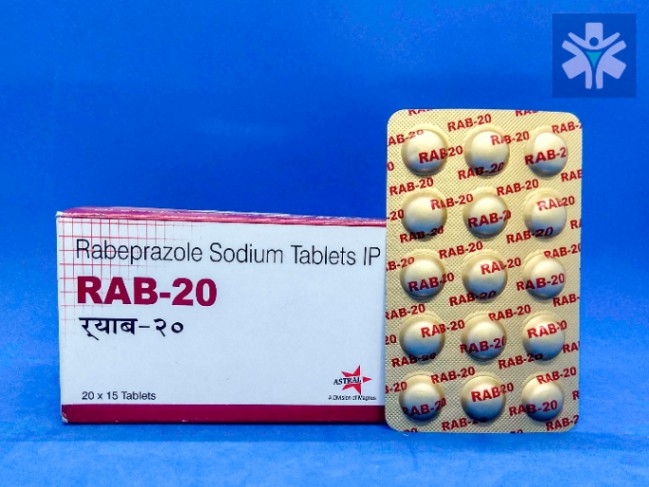
Price: Rs.210.00
10% off
In stock
Loose stock: 12
Description
RAB-20 TAB 15
Details
Composition
RABEPRAZOLE 20MG
# Rabeprazole 20 mg
## Short Description
**Rabeprazole 20 mg** is a **proton pump inhibitor (PPI)** used to reduce excessive stomach acid production. It is commonly prescribed for **acid reflux, gastroesophageal reflux disease (GERD), erosive esophagitis, peptic ulcers, and other acid-related conditions**.
Rabeprazole works by blocking the stomach's acid-producing proton pumps, providing longer-lasting suppression of gastric acid.
---
## Key Benefits
* Reduces excessive **stomach acid production**.
* Helps relieve **heartburn and acid reflux symptoms**.
* Promotes healing of **acid-damaged esophageal tissue**.
* Supports healing of certain **stomach and duodenal ulcers**.
* Helps maintain healing of acid-related conditions when used as prescribed.
* May be used in combination with antibiotics for **Helicobacter pylori (H. pylori) eradication**.
* Helps prevent acid-related complications in selected patients.
---
## Uses / Indications
Rabeprazole 20 mg may be prescribed for:
### 1. Gastroesophageal Reflux Disease (GERD)
Helps manage:
* Heartburn
* Acid reflux
* Regurgitation
* Acid-related irritation of the esophagus
### 2. Erosive Esophagitis
Rabeprazole reduces acid exposure and helps promote healing of inflammation and damage to the esophageal lining.
### 3. Peptic Ulcers
It may be used for the treatment of **duodenal or gastric ulcers**, depending on the underlying cause.
### 4. H. pylori Infection
Rabeprazole may be combined with appropriate antibiotics and other medicines as part of an **H. pylori eradication regimen**.
### 5. Zollinger–Ellison Syndrome
Higher or individualized doses may be used for conditions associated with excessive gastric acid secretion, such as Zollinger–Ellison syndrome.
### 6. Prevention of Certain Ulcers
In selected high-risk patients, acid suppression may be used to reduce the risk of ulcers associated with certain medicines, such as NSAIDs.
> Approved indications and treatment recommendations can vary by country and product.
---
## How It Works
Rabeprazole belongs to the **proton pump inhibitor (PPI)** class.
After absorption, rabeprazole reaches the acid-producing cells of the stomach and inhibits the **H⁺/K⁺-ATPase proton pump**.
This blocks the final stage of gastric acid secretion.
### Simple Mechanism
**Rabeprazole → inhibits stomach proton pumps → reduces gastric acid → relieves acid-related symptoms → supports healing of acid-damaged tissue.**
---
## Dosage & Administration
> **The appropriate dose depends on the condition being treated and the specific product.**
### Adults
A commonly prescribed dose for many acid-related conditions is:
**Rabeprazole 20 mg once daily.**
However, dosing may differ for:
* GERD
* Erosive esophagitis
* Peptic ulcers
* H. pylori infection
* Zollinger–Ellison syndrome
* Other acid-related conditions
### How to Take
* Take exactly as prescribed.
* Swallow the tablet **whole with water**.
* Do not crush, chew or break delayed-release tablets unless the specific product instructions allow it.
* Take at approximately the same time each day.
* Follow the product-specific instructions regarding food. Many rabeprazole delayed-release tablets are taken before food, although the exact instructions can vary by formulation.
### Missed Dose
Take the missed dose when remembered unless it is almost time for the next dose.
**Do not take two doses at once.**
### H. pylori Treatment
When rabeprazole is prescribed as part of H. pylori therapy, it should be taken together with the **full prescribed antibiotic regimen**. Do not use rabeprazole alone to treat H. pylori infection.
---
## Side Effects
### Common Side Effects
Possible side effects include:
* Headache
* Nausea
* Diarrhea
* Constipation
* Abdominal pain
* Gas or flatulence
* Dizziness
Many people tolerate rabeprazole well.
### Long-Term or Prolonged Use
Long-term PPI therapy may be associated with increased risks of:
* Vitamin B12 deficiency
* Low magnesium levels
* Reduced calcium absorption in some patients
* Bone fractures, particularly in people with other osteoporosis risk factors
* Certain intestinal infections, including **Clostridioides difficile-associated diarrhea**
* Fundic gland polyps
### Serious Side Effects
Seek medical attention for:
* Severe or persistent diarrhea
* Severe allergic reaction
* Difficulty breathing or facial swelling
* Severe skin reactions
* Muscle spasms, tremors or abnormal heart rhythm that may indicate significant electrolyte disturbance
* Signs of kidney inflammation, such as reduced urine output or blood in urine
---
## Precautions & Warnings
### Persistent Symptoms
Do not assume persistent heartburn is simply acid reflux. Seek medical evaluation if symptoms are severe, recurrent or associated with:
* Difficulty swallowing
* Painful swallowing
* Unexplained weight loss
* Persistent vomiting
* Vomiting blood
* Black/tarry stools
* Chest pain
### Long-Term Use
If long-term treatment is required, your healthcare professional may periodically reassess whether continued PPI therapy is necessary.
### Vitamin B12
Prolonged acid suppression may reduce absorption of vitamin B12 in some people, particularly those with other risk factors for deficiency.
### Magnesium
Long-term PPI use can rarely cause **low magnesium levels**, especially in susceptible patients or those taking other medicines that lower magnesium.
### Bone Health
People at increased risk of osteoporosis should discuss prolonged PPI use with their healthcare professional.
### Kidney Problems
Rarely, PPIs can cause **acute tubulointerstitial nephritis**, an inflammatory kidney reaction. Seek medical advice if you develop unexplained fatigue, rash, fever or changes in urination.
### Liver Disease
Tell your healthcare professional if you have significant liver disease. Dose adjustment or additional monitoring may be appropriate.
### Pregnancy
Tell your healthcare professional if you are pregnant or planning pregnancy before using rabeprazole.
### Breastfeeding
Discuss rabeprazole use with your healthcare professional if breastfeeding.
---
## Drug Interactions
Rabeprazole can interact with certain medicines.
### Medicines Requiring Stomach Acid for Absorption
Reducing stomach acid can affect the absorption of certain medicines, including some formulations of:
* Ketoconazole
* Itraconazole
* Atazanavir and some other medicines whose absorption depends on gastric acidity
### Methotrexate
High-dose methotrexate may interact with PPIs, potentially increasing methotrexate exposure. Tell your healthcare professional if you receive high-dose methotrexate.
### Warfarin
PPIs may affect anticoagulation control in some patients taking **warfarin**. Appropriate monitoring may be required.
### Clopidogrel
Rabeprazole has less CYP2C19 inhibition than some other PPIs, but interactions with antiplatelet therapy should still be reviewed by a healthcare professional.
### Digoxin
Changes in gastric acidity may affect digoxin exposure in some circumstances, particularly in patients receiving long-term therapy.
### Tacrolimus
Rabeprazole may alter tacrolimus concentrations in some patients. Monitoring may be appropriate.
> Always tell your doctor or pharmacist about all prescription medicines, OTC medicines, vitamins and herbal supplements you take.
---
## Storage Information
* Store at **room temperature**, according to the manufacturer's instructions.
* Protect from excessive heat and moisture.
* Keep away from direct sunlight.
* Keep tablets in their original packaging.
* Keep the container tightly closed.
* Keep out of reach of children.
* Do not use after the expiry date.
* Do not remove delayed-release tablets from protective packaging unless necessary.
---
## Prescription Status
**Rabeprazole 20 mg may be prescription-only or available without a prescription depending on the country, formulation and intended use.**
For persistent or severe acid-related symptoms, professional medical evaluation is recommended rather than prolonged self-treatment.
---
## Genuine Medicine Assurance
When purchasing **Rabeprazole 20 mg**:
* Purchase from a **licensed and reputable pharmacy**.
* Verify the active ingredient and **20 mg strength**.
* Check the manufacturer's name and regulatory information.
* Verify the batch/lot number and expiry date.
* Ensure the packaging is sealed and undamaged.
* Check that tablets and packaging correspond with the manufacturer's information.
* Avoid products with altered labels, spelling errors or suspicious packaging.
* Do not purchase medicines from unauthorized online sellers.
* Keep the medicine in its original packaging.
* If counterfeit medicine is suspected, contact the manufacturer, licensed pharmacy or relevant medicines regulatory authority.
---
# Frequently Asked Questions (FAQ)
### 1. What is Rabeprazole 20 mg used for?
Rabeprazole 20 mg is used to reduce stomach acid and treat conditions such as **GERD, acid reflux, erosive esophagitis and peptic ulcers**. It can also be included in combination therapy for H. pylori infection.
### 2. Is Rabeprazole a proton pump inhibitor?
Yes. Rabeprazole is a **proton pump inhibitor (PPI)** that blocks the stomach's acid-producing proton pumps.
### 3. How does Rabeprazole 20 mg work?
It inhibits the **H⁺/K⁺-ATPase proton pump** in stomach acid-producing cells, reducing gastric acid secretion.
### 4. Does Rabeprazole help with heartburn?
Yes. By reducing stomach acid, rabeprazole can relieve **acid-related heartburn and reflux symptoms**.
### 5. Is Rabeprazole used for GERD?
Yes. Rabeprazole is commonly prescribed for **gastroesophageal reflux disease (GERD)** and acid-related esophageal inflammation.
### 6. Can Rabeprazole heal stomach ulcers?
Rabeprazole can help promote healing of certain **gastric and duodenal ulcers** by reducing acid exposure. If an ulcer is caused by H. pylori, antibiotics are also required for eradication.
### 7. Can Rabeprazole treat H. pylori?
Rabeprazole can be part of an **H. pylori eradication regimen**, but it must be combined with the appropriate antibiotics and other medicines prescribed by a healthcare professional.
### 8. When is the best time to take Rabeprazole 20 mg?
Follow the instructions for your specific product. Rabeprazole delayed-release tablets are commonly taken **before a meal**, but product instructions can vary.
### 9. Can Rabeprazole be taken every day?
Yes, it can be prescribed daily for certain conditions. The appropriate duration depends on the diagnosis and treatment plan.
### 10. Can Rabeprazole be taken long term?
Long-term treatment may be appropriate for some conditions, but prolonged PPI therapy should be **periodically reviewed by a healthcare professional**.
### 11. What are the common side effects of Rabeprazole?
Commonly reported side effects include **headache, nausea, diarrhea, constipation, abdominal discomfort and flatulence**.
### 12. Does Rabeprazole cause diarrhea?
Diarrhea can occur. Persistent or severe diarrhea should be evaluated because acid-suppressing medicines may increase susceptibility to certain intestinal infections.
### 13. Can Rabeprazole cause vitamin B12 deficiency?
Long-term acid suppression may reduce vitamin B12 absorption in some patients. People at increased risk may require medical monitoring.
### 14. Can Rabeprazole cause low magnesium?
Rarely, prolonged PPI treatment can cause **hypomagnesemia (low magnesium)**. Risk may be greater in people taking certain other medicines.
### 15. Can Rabeprazole be taken with other medicines?
Often yes, but rabeprazole can interact with certain medicines. Always inform your healthcare professional about all medicines and supplements you use.
### 16. Is Rabeprazole the same as Pantoprazole?
No. Both are **proton pump inhibitors**, but they are different active medicines. They should not be substituted without appropriate medical advice.
### 17. Can Rabeprazole be taken during pregnancy?
Consult your healthcare professional before using rabeprazole during pregnancy. The decision should consider the potential benefits and risks.
### 18. Can Rabeprazole be taken while breastfeeding?
Discuss its use with your healthcare professional if you are breastfeeding.
### 19. Can I stop Rabeprazole suddenly?
For short courses, stopping may be straightforward, but after prolonged use some people may experience **rebound acid secretion**. Discuss discontinuation with your healthcare professional, particularly after long-term therapy.
### 20. Is Rabeprazole 20 mg available without a prescription?
Availability varies by country and formulation. Some rabeprazole products may require a prescription, while others may be available without one.
---
## Medical Disclaimer
This information about **Rabeprazole 20 mg** is provided for educational and general informational purposes only. It is **not a substitute for professional medical advice, diagnosis or treatment**.
Persistent heartburn or reflux symptoms may sometimes indicate a more serious condition. Seek medical evaluation for **difficulty swallowing, unexplained weight loss, persistent vomiting, vomiting blood, black stools or significant chest pain**.
Long-term PPI therapy should be periodically reviewed because prolonged acid suppression can be associated with complications such as nutrient deficiencies, low magnesium, certain infections and bone-related risks in susceptible individuals.
Do not start, stop or change the dose of rabeprazole without appropriate medical guidance. Always follow the **specific product label and your healthcare professional's instructions**.