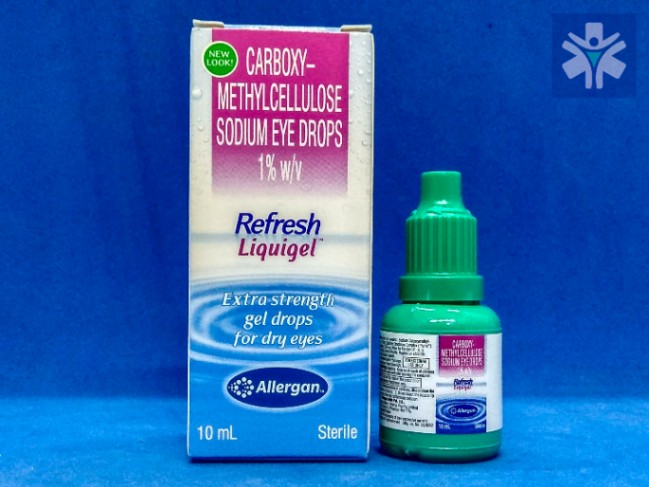
REFRESH LIQUIGEL
Price: Rs.297.10
10% off
In stock
Loose stock: 0
Description
REFRESH LIQUIGEL EYE DROPS 10ML
Details
Composition
SODIUM CARBOXYMETHYLCELLULOSE 10 MG
# Sodium Carboxymethylcellulose 10 mg
## Short Description
**Sodium Carboxymethylcellulose 10 mg** is a **lubricating ophthalmic medicine (artificial tear)** used to relieve symptoms of dry eyes. It helps moisturize and lubricate the surface of the eye, providing temporary relief from **dryness, burning, irritation, and discomfort**.
It is commonly used when the eyes do not produce enough natural tears or when tears evaporate too quickly.
---
## Key Benefits
* Provides **lubrication and moisture** to dry eyes
* Helps relieve **eye dryness and irritation**
* Reduces sensations of **burning, stinging, or grittiness**
* Provides temporary relief from discomfort caused by dry eyes
* Helps protect the ocular surface from excessive dryness
* Can be useful for dry-eye symptoms associated with **screen use, environmental conditions, or reduced tear production**
* Artificial tears may help improve overall eye comfort
---
## Uses / Indications
Sodium Carboxymethylcellulose ophthalmic preparations may be used for:
* **Dry eyes (xerophthalmia)**
* Eye irritation caused by dryness
* Burning or stinging associated with dry eyes
* Gritty or sandy sensations in the eyes
* Temporary discomfort caused by wind, dust, smoke, air conditioning, or prolonged screen use
* Lubrication of the eye surface when natural tear production is insufficient
It is generally used for **symptomatic relief** and does not treat the underlying cause of chronic dry-eye disease.
---
## How It Works
Sodium Carboxymethylcellulose is a **viscosity-enhancing ocular lubricant**.
When applied to the eye, it spreads across the surface and helps retain moisture. It forms a protective lubricating layer over the tear film, reducing friction between the eyelid and the eye surface.
This helps relieve symptoms such as:
* Dryness
* Burning
* Irritation
* Grittiness
* Discomfort
The medicine works locally on the surface of the eye and has minimal systemic absorption when used appropriately.
---
## Dosage & Administration
> **Important:** The exact number of drops and frequency may vary according to the specific product and severity of dry-eye symptoms. Follow the product label or your healthcare professional's instructions.
### General Directions
* Wash and dry your hands before use.
* Tilt your head back and gently pull down the lower eyelid.
* Instill the prescribed number of drops into the affected eye(s).
* Close your eyes gently for a short period after application.
* Avoid touching the dropper tip to the eye, eyelids, eyelashes, or other surfaces.
* Replace the cap immediately after use.
* Use regularly as directed when symptoms occur or according to your prescribed schedule.
### If You Use Other Eye Drops
If using more than one ophthalmic medicine, generally allow an appropriate interval between different eye drops as advised by your doctor or pharmacist.
If an **eye ointment** is also being used, it is generally applied after eye drops.
### Contact Lenses
If your particular product contains preservatives, you may need to remove contact lenses before applying the drops and wait before reinserting them. **Follow the instructions on your specific product**, as preservative-free formulations may have different requirements.
---
## Side Effects
Sodium Carboxymethylcellulose eye drops are generally well tolerated.
### Common Side Effects
Temporary effects may include:
* Mild stinging or burning after application
* Temporary blurred vision
* Mild eye irritation
* Redness
* Watery eyes
These effects generally resolve quickly.
### Serious or Unusual Reactions
Stop using the product and seek medical advice if you experience:
* Severe or persistent eye pain
* Significant redness or swelling
* Vision changes that do not resolve
* Severe irritation
* Signs of an allergic reaction
If your symptoms worsen or persist despite regular use, an eye examination may be necessary.
---
## Precautions & Warnings
Before using Sodium Carboxymethylcellulose eye drops:
* Tell your healthcare professional if you have a known allergy to **carboxymethylcellulose or any ingredient** in the product.
* Do not touch the dropper tip to your eye or other surfaces because this can contaminate the solution.
* Do not share eye drops with another person.
* Do not use the product if the solution appears **cloudy, discolored, or contaminated**, unless the product labeling specifically permits it.
* If you experience persistent eye pain, marked redness, light sensitivity, or vision changes, seek professional eye care rather than relying solely on artificial tears.
* If symptoms are frequent or severe, consult an eye-care professional to identify the underlying cause.
### Contact Lens Precaution
Follow the product-specific instructions regarding contact lenses, particularly if the formulation contains preservatives.
---
## Drug Interactions
Sodium Carboxymethylcellulose ophthalmic preparations generally have **very few clinically significant systemic drug interactions** because they primarily act locally on the eye.
However:
* Inform your doctor or pharmacist about all other eye medicines you use.
* Using several eye drops together may require appropriate spacing between products.
* Some ophthalmic medicines can dilute or interfere with the contact time of another product if administered immediately one after another.
Always follow your ophthalmologist's instructions if you are using prescription eye drops.
---
## Storage Information
* Store according to the temperature specified on the product label.
* Keep away from excessive heat and direct sunlight.
* Keep the container tightly closed when not in use.
* Do not freeze unless specifically stated by the manufacturer.
* Keep out of reach and sight of children.
* Avoid contaminating the dropper tip.
* Discard the bottle according to the manufacturer's instructions after opening, particularly for **multi-dose bottles**.
For single-use or preservative-free products, follow the package instructions regarding disposal after opening.
---
## Prescription Status
**Sodium Carboxymethylcellulose ophthalmic preparations are often available without a prescription**, although availability and classification can vary by country and formulation.
Prescription-strength or combination ophthalmic products may have different requirements.
For persistent, severe, or unexplained dry-eye symptoms, professional eye evaluation is recommended.
---
## Genuine Medicine Assurance
When purchasing Sodium Carboxymethylcellulose 10 mg eye drops:
* Purchase from a **licensed and reputable pharmacy**.
* Check that the packaging is intact and properly sealed.
* Verify the **medicine name, strength, batch number, and expiry date**.
* Check that the bottle or single-dose container is undamaged.
* Do not use a product if the solution looks contaminated, unusually cloudy, or discolored.
* Do not use expired eye drops.
* Avoid sharing eye drops with other people.
* Follow the manufacturer's instructions regarding the period of use after opening.
If you suspect that a product may be counterfeit, consult a pharmacist or contact the manufacturer using the information provided on the original packaging.
---
# FAQ – Sodium Carboxymethylcellulose 10 mg
### 1. What is Sodium Carboxymethylcellulose 10 mg used for?
Sodium Carboxymethylcellulose 10 mg is an **artificial tear and ocular lubricant** used to temporarily relieve dry-eye symptoms such as dryness, burning, irritation, and a gritty sensation.
### 2. Is Sodium Carboxymethylcellulose an artificial tear?
Yes. Sodium Carboxymethylcellulose is commonly used as an **artificial tear/lubricating eye drop** to moisturize the ocular surface.
### 3. How does Sodium Carboxymethylcellulose eye drops work?
It forms a lubricating layer over the surface of the eye and helps retain moisture, reducing friction and relieving symptoms associated with dry eyes.
### 4. Can Sodium Carboxymethylcellulose be used for dry eyes?
Yes. It is commonly used to provide temporary relief from **dry, irritated, burning, or gritty eyes**.
### 5. Can Sodium Carboxymethylcellulose be used every day?
Artificial tears may be used regularly depending on the severity of symptoms and the specific formulation. If you need eye drops very frequently or continuously, consult an eye-care professional to evaluate the cause of your dry eyes.
### 6. Does Sodium Carboxymethylcellulose cure dry eyes?
It primarily provides **symptomatic relief and lubrication**. It does not necessarily cure the underlying cause of chronic dry-eye disease.
### 7. Can Sodium Carboxymethylcellulose cause blurred vision?
Temporary blurred vision can occur immediately after applying thicker lubricating eye drops. Vision should generally clear shortly afterward. Avoid driving until your vision becomes clear.
### 8. Can I use Sodium Carboxymethylcellulose with contact lenses?
This depends on the formulation. Some products contain preservatives that may require contact lenses to be removed before application. **Always follow the specific product instructions.**
### 9. Can Sodium Carboxymethylcellulose be used with other eye drops?
Yes, it can often be used with other ophthalmic medicines. If you use multiple eye drops, your doctor or pharmacist may recommend spacing them apart to ensure proper absorption and effectiveness.
### 10. What should I do if I accidentally use too many drops?
Using an extra drop occasionally is usually unlikely to cause serious harm, although temporary blurred vision or irritation may occur. If significant discomfort develops or a large amount is accidentally used, contact a healthcare professional.
### 11. Can children use Sodium Carboxymethylcellulose eye drops?
Some formulations may be suitable for children, but suitability depends on the specific product and the child's age. Consult a healthcare professional before using it in young children.
### 12. Can Sodium Carboxymethylcellulose be used during pregnancy?
Because it is an ophthalmic lubricant with minimal systemic absorption, significant systemic exposure is generally expected to be low. Nevertheless, pregnant or breastfeeding individuals should consult a healthcare professional if they have concerns or require frequent long-term use.
### 13. How often should I use Sodium Carboxymethylcellulose 10 mg?
The frequency depends on the specific formulation and severity of dry-eye symptoms. **Follow the product label or your healthcare professional's instructions.**
### 14. Does Sodium Carboxymethylcellulose have any major drug interactions?
It has few significant systemic interactions. However, if you use other eye medicines, proper spacing between different ophthalmic products may be necessary.
### 15. Can I share my Sodium Carboxymethylcellulose eye drops?
**No.** Eye drops should not be shared because sharing can spread infections and contaminate the bottle.
### 16. How should I store Sodium Carboxymethylcellulose eye drops?
Store them according to the manufacturer's instructions, protect them from excessive heat and direct sunlight, and keep the container properly closed. Follow specific instructions regarding how long the product can be used after opening.
### 17. When should I see a doctor for dry eyes?
Seek professional eye care if you have **persistent or severe dryness, significant eye pain, marked redness, light sensitivity, discharge, or changes in vision**, or if artificial tears do not adequately control your symptoms.
### 18. Can Sodium Carboxymethylcellulose be used for red eyes?
It may relieve redness caused by **dryness or irritation**, but it is not a general treatment for unexplained red eyes. Persistent or painful redness should be evaluated by an eye-care professional.
---
## Medical Disclaimer
This information is provided for **educational and informational purposes only** and is not a substitute for professional medical advice, diagnosis, or treatment. Sodium Carboxymethylcellulose 10 mg should be used according to the specific product label and the advice of a qualified healthcare professional.
The exact formulation, concentration, preservative content, dosing instructions, and contact-lens recommendations can vary between products. Always check the packaging of your specific medicine.
Seek professional eye care if you experience **persistent eye pain, significant redness, discharge, light sensitivity, worsening symptoms, or changes in vision**. Do not use lubricating eye drops as a substitute for evaluation of potentially serious eye conditions.