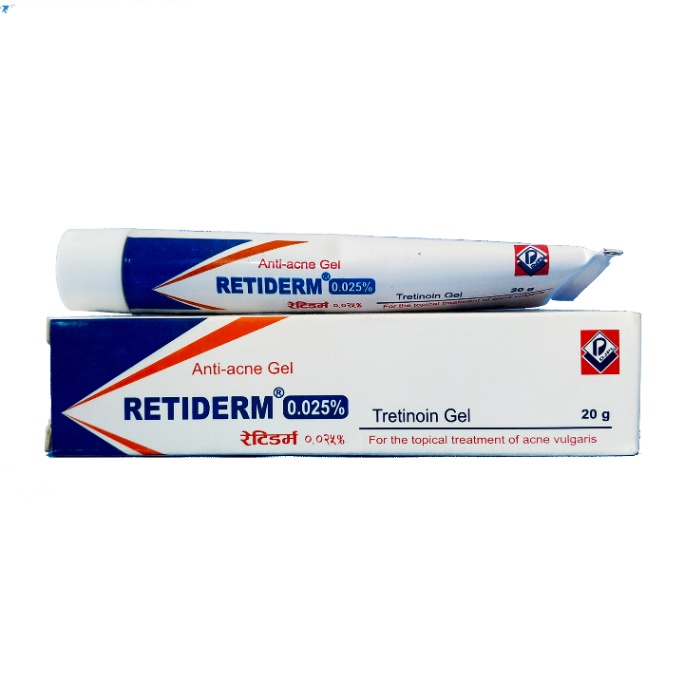
RETIDERM 0.025%
Price: Rs.175.00
10% off
In stock
Loose stock: 0
Description
RETIDERM 0.025% GEL 20GM
Details
Composition
TRETINOIN 0.025 % W/W
# TRETINOIN 0.025% W/W
## SHORT DESCRIPTION
**Tretinoin 0.025% w/w** is a topical retinoid derived from vitamin A. It is commonly used in the management of **acne vulgaris** and may also be prescribed for certain signs of **photoaged skin**, depending on the formulation and local approval.
Tretinoin works by increasing skin-cell turnover, helping prevent clogged pores and promoting more even shedding of skin cells. It may initially cause dryness, peeling, redness, or increased acne before improvement becomes apparent.
> **Important:** Tretinoin can make the skin more sensitive to sunlight. Consistent sun protection is an important part of treatment.
---
## KEY BENEFITS
* Helps treat **acne and clogged pores**.
* Helps prevent formation of new comedones.
* Promotes normal shedding of dead skin cells.
* Can gradually improve **skin texture and smoothness**.
* May help reduce the appearance of fine lines and uneven pigmentation when prescribed for photoaging.
* Supports clearer-looking skin with consistent use.
---
## USES / INDICATIONS
Tretinoin 0.025% may be prescribed for:
* **Acne vulgaris**
* Blackheads and whiteheads (comedonal acne)
* Certain inflammatory acne conditions
* Photoaged skin and fine lines, where specifically indicated
* Uneven skin texture associated with sun damage
### Important
Tretinoin is **not an antibiotic** and does not directly kill acne-causing bacteria. It is primarily used to normalize follicular cell turnover and prevent pore blockage.
---
## HOW IT WORKS
Tretinoin binds to **retinoic acid receptors** in skin cells and changes the expression of certain genes involved in cell growth and differentiation.
For acne, it:
* Normalizes shedding of cells inside hair follicles.
* Helps prevent formation of comedones.
* Promotes removal of existing clogged pores.
* Helps reduce the formation of new acne lesions.
For photoaged skin, continued use may promote collagen-related changes and improve skin-cell turnover, which can gradually improve the appearance of **fine lines, texture, and uneven pigmentation**.
---
## DOSAGE & ADMINISTRATION
Use tretinoin exactly as directed by your healthcare professional or according to the specific product instructions.
### General Application
1. Wash the affected area gently with a mild cleanser.
2. Pat the skin dry.
3. Allow the skin to become completely dry before application if your product instructions recommend this.
4. Apply a **thin layer** of tretinoin to the affected area, usually in the evening.
5. Avoid the eyes, lips, nostril openings, and mucous membranes.
6. Wash your hands after application.
### Amount
A **small pea-sized amount** is generally sufficient for the entire face when treating facial acne, but follow your prescriber's specific instructions.
Using more does **not** make tretinoin work faster and can substantially increase irritation.
### Starting Treatment
Some people may be advised to begin with less frequent application, such as every other night, and gradually increase frequency as the skin becomes accustomed to treatment.
### During the Day
Use a **broad-spectrum sunscreen** and protective clothing because tretinoin-treated skin can be more susceptible to sun-related irritation.
### Missed Application
If you forget an application, skip it if it is close to the next scheduled application. **Do not apply extra tretinoin** to compensate.
---
## SIDE EFFECTS
### Common Side Effects
Especially during the first few weeks, tretinoin may cause:
* Dryness
* Peeling
* Flaking
* Redness
* Burning
* Stinging
* Itching
* Increased skin sensitivity
These effects may improve as the skin adjusts.
### Initial Acne Flare
Some users may experience an apparent increase in acne during the early phase of treatment. This does not necessarily mean the medicine is failing, but severe or persistent worsening should be discussed with a healthcare professional.
### Serious Skin Reactions
Stop use and seek medical advice if you experience:
* Severe swelling
* Significant blistering
* Severe burning
* Extensive skin peeling
* Severe irritation or allergic reaction
---
## PRECAUTIONS & WARNINGS
### Sun Sensitivity
Tretinoin can make the skin more sensitive to sunlight and environmental irritation.
Use:
* Broad-spectrum sunscreen
* Protective clothing
* Shade when possible
Avoid excessive sun exposure and tanning beds.
### Irritated or Damaged Skin
Do not apply to:
* Sunburned skin
* Severely irritated skin
* Cuts or abrasions
* Eczema-affected areas unless specifically directed
### Eyes and Mucous Membranes
Avoid contact with:
* Eyes
* Eyelids
* Lips
* Corners of the nose
* Inside of the nostrils
If accidental contact occurs, rinse thoroughly with water.
### Waxing and Hair Removal
Tretinoin may increase skin sensitivity. Avoid waxing treated areas or discuss appropriate hair-removal methods with a healthcare professional.
### Pregnancy
**Tretinoin should generally be avoided during pregnancy.** If you become pregnant while using tretinoin, stop treatment and contact your healthcare professional for advice.
### Breastfeeding
Discuss use with a healthcare professional. Avoid applying tretinoin to areas that could come into direct contact with an infant.
### Children
Use in children only when specifically recommended for their age and condition.
---
## DRUG INTERACTIONS
Tretinoin has relatively limited systemic drug interactions when used topically, but **combined topical products can significantly increase skin irritation**.
Tell your healthcare professional about all skin products and medicines you use.
Use caution with:
* Benzoyl peroxide
* Other topical retinoids
* Salicylic acid
* Sulfur-containing preparations
* Resorcinol
* Strong exfoliants
* Alcohol-containing or highly drying products
* Abrasive cleansers
* Products containing alpha-hydroxy acids (AHAs)
### Benzoyl Peroxide
Benzoyl peroxide can be used with tretinoin in some acne treatment regimens, but applying them at the same time may increase irritation. Some tretinoin formulations can also be affected by benzoyl peroxide.
Follow your healthcare professional's instructions regarding **timing and formulation**.
---
## STORAGE INFORMATION
* Store according to the manufacturer's instructions.
* Keep at room temperature unless the product label specifies otherwise.
* Protect from excessive heat and direct sunlight.
* Keep the container tightly closed.
* Protect from moisture.
* Keep out of reach of children.
* Do not use after the expiry date.
---
## PRESCRIPTION STATUS
**Usually prescription-only**, although regulatory status varies depending on the country, concentration, formulation, and intended use.
---
## GENUINE MEDICINE ASSURANCE
When purchasing **Tretinoin 0.025% w/w**, obtain it from a **licensed pharmacy or authorized medicine supplier**.
Check the packaging for:
* Correct medicine name and strength
* Active ingredient information
* Manufacturer details
* Batch/lot number
* Manufacturing and expiry dates
* Intact seal and packaging
* Appropriate regulatory information
Avoid products with damaged packaging, altered labels, missing batch information, or questionable authenticity.
---
# FAQ – TRETINOIN 0.025%
### 1. What is Tretinoin 0.025% used for?
Tretinoin 0.025% is primarily used to treat **acne vulgaris**, including clogged pores, blackheads, and whiteheads. Some formulations are also used for photoaged skin.
### 2. Is tretinoin a retinoid?
Yes. Tretinoin is a **topical retinoid derived from vitamin A**.
### 3. Does tretinoin remove acne?
Tretinoin helps prevent clogged pores and reduces the formation of new acne lesions. It is generally part of a longer-term acne-management routine rather than an instant acne treatment.
### 4. How long does tretinoin take to work?
Acne improvement generally takes **several weeks**, with more noticeable results often requiring several months of consistent treatment.
### 5. Can tretinoin make acne worse at first?
Some people experience an initial worsening or increased visibility of acne during the early treatment period. Severe or persistent worsening should be evaluated by a healthcare professional.
### 6. Can tretinoin remove acne scars?
Tretinoin may help improve **post-acne discoloration and skin texture** over time, but it does not reliably remove deep or structural acne scars. Procedures or other treatments may be required for significant scarring.
### 7. Can tretinoin lighten dark spots?
Tretinoin can help improve some forms of **post-inflammatory hyperpigmentation and uneven pigmentation** by increasing skin turnover, but results vary.
### 8. Can tretinoin be used every day?
Many people eventually use it once daily, usually in the evening, but sensitive skin may require less frequent application initially. Follow your healthcare professional's instructions.
### 9. Can I use tretinoin during the day?
Tretinoin is commonly applied in the **evening**. Daytime use can increase concerns about irritation and sun exposure, so follow the specific product instructions.
### 10. Why does tretinoin make my skin peel?
Peeling occurs because tretinoin changes skin-cell turnover. Mild peeling can occur during the adjustment period, but severe peeling or burning indicates excessive irritation.
### 11. Should I moisturize while using tretinoin?
Yes. A gentle, non-comedogenic moisturizer can help reduce dryness and irritation.
### 12. Can I use tretinoin with sunscreen?
Yes. **Daily sunscreen is strongly recommended** because tretinoin-treated skin can be more sensitive to sunlight.
### 13. Can I use tretinoin with benzoyl peroxide?
Yes, these medicines are sometimes combined for acne treatment. However, the timing and formulation matter because simultaneous use can increase irritation and may affect some tretinoin formulations.
### 14. Can I use tretinoin with vitamin C?
They can sometimes be included in the same skincare routine, but combining potentially irritating products may increase dryness or irritation. Introduce products carefully and follow professional advice.
### 15. Can tretinoin be used for wrinkles?
Some tretinoin formulations are used to improve the appearance of **fine lines and photoaged skin** with long-term use.
### 16. Can I use tretinoin during pregnancy?
Tretinoin is generally **avoided during pregnancy**. If you are pregnant, planning pregnancy, or become pregnant while using it, discuss the treatment with your healthcare professional.
### 17. Can tretinoin be used while breastfeeding?
Discuss it with a healthcare professional and avoid application where the infant could come into direct contact with the medicine.
### 18. Can tretinoin be used on sensitive skin?
It can sometimes be used, but sensitive skin may require a gradual introduction, lower frequency, and regular moisturizing.
### 19. Should I stop tretinoin if my skin becomes irritated?
Mild irritation can occur during treatment, but significant burning, swelling, blistering, or severe peeling requires medical advice. Your healthcare professional may recommend reducing frequency or temporarily stopping treatment.
### 20. Is Tretinoin 0.025% available without a prescription?
In many countries, tretinoin is **prescription-only**, although regulations vary by location and formulation.
---
## MEDICAL DISCLAIMER
This information about **Tretinoin 0.025% w/w** is provided for general educational purposes only and does not replace professional medical advice, diagnosis, or treatment.
Tretinoin is a potent topical retinoid that can cause significant skin irritation, particularly when treatment is started or when combined with other irritating skincare products. It should be used according to the specific product instructions and healthcare professional's advice.
**Avoid tretinoin during pregnancy unless a qualified healthcare professional specifically determines otherwise.** Use appropriate sun protection during treatment and seek medical advice for severe irritation, allergic reactions, or persistent worsening of the skin condition.