RISDONE 3MG
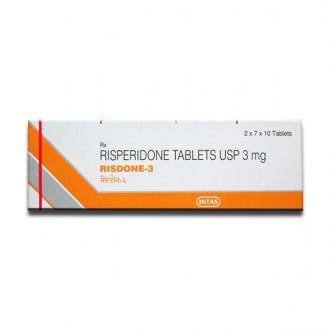
Price: Rs.128.60
13% off
In stock
Loose stock: 0
Description
RISDONE 3MG TAB 10
Details
Composition
RISPERIDONE 3 MG
# RISPERIDONE 3 MG
## SHORT DESCRIPTION
**Risperidone 3 mg** is an atypical antipsychotic medicine used to manage certain psychiatric conditions, including **schizophrenia** and **bipolar mania or mixed episodes**. It may also be prescribed for specific behavioral symptoms associated with autism in appropriate patients.
Risperidone works mainly by regulating **dopamine and serotonin activity in the brain**, helping reduce symptoms such as hallucinations, delusions, disorganized thinking, agitation, and mood disturbances.
> **Important:** Risperidone is a prescription medicine and should be taken only under the supervision of a qualified healthcare professional.
---
## KEY BENEFITS
* Helps reduce **hallucinations and delusions**.
* Helps manage symptoms of **schizophrenia**.
* Can help control **manic or mixed episodes associated with bipolar disorder**.
* May reduce severe agitation, aggression, and behavioral disturbances in specific approved indications.
* Helps regulate dopamine and serotonin signaling in the brain.
* Can help improve thinking, mood, and behavioral symptoms when used as prescribed.
* Provides a **3 mg strength** for individualized treatment plans.
---
## USES / INDICATIONS
### 1. Schizophrenia
Risperidone is used to treat schizophrenia and may help reduce:
* Hallucinations
* Delusions
* Disorganized thinking
* Suspiciousness
* Social withdrawal
* Agitation
### 2. Bipolar Disorder
It may be prescribed for **acute manic or mixed episodes associated with bipolar disorder**, including symptoms such as:
* Elevated or irritable mood
* Excessive activity
* Reduced need for sleep
* Racing thoughts
* Impulsivity
* Agitation
### 3. Autism-Associated Irritability
In certain age groups, risperidone may be prescribed for **irritability associated with autistic disorder**, including significant aggression, tantrums, or self-injurious behavior, according to local approved indications.
### Important
Risperidone should be used for a specific diagnosed condition and should not be used simply as a general sedative.
---
## HOW IT WORKS
Risperidone is an **atypical (second-generation) antipsychotic**.
It primarily works by affecting two neurotransmitter systems:
### Dopamine
Risperidone blocks **dopamine D2 receptors** in the brain.
This helps reduce excessive dopamine signaling associated with psychotic symptoms such as:
* Hallucinations
* Delusions
* Disorganized thoughts
### Serotonin
It also blocks certain **serotonin 5-HT2A receptors**.
This contributes to its overall antipsychotic effects and influences the balance between positive and negative symptoms.
### Simple Explanation
**Risperidone → regulates dopamine + serotonin signaling → reduces psychotic and mood-related symptoms.**
---
## DOSAGE & ADMINISTRATION
### Typical Adult Dosing
The appropriate dose depends on the condition, age, response to treatment, and other medical factors.
For schizophrenia, adults are commonly started at a **lower dose and gradually adjusted**. A total daily dose of **3 mg** may be an appropriate maintenance or treatment dose for some patients, but it is not necessarily the correct starting dose.
For bipolar mania, dosing is similarly individualized.
**Do not start with 3 mg unless this is the dose specifically prescribed for you.**
### How to Take
* Take exactly as prescribed.
* Take at the same time each day if possible.
* It can generally be taken with or without food.
* Swallow the tablet with water.
* Do not change the dose without medical advice.
* Continue treatment even if you begin feeling better unless your doctor advises otherwise.
### Missed Dose
Take the missed dose when remembered unless it is nearly time for the next dose.
**Do not take two doses together.**
### Stopping Treatment
Do not stop risperidone suddenly without medical advice. Your healthcare professional may gradually reduce the dose when discontinuing treatment.
---
## SIDE EFFECTS
### Common Side Effects
Possible side effects include:
* Drowsiness
* Dizziness
* Headache
* Fatigue
* Increased appetite
* Weight gain
* Constipation
* Dry mouth
* Nausea
* Restlessness
### Movement-Related Side Effects
Risperidone may cause extrapyramidal symptoms, including:
* Tremor
* Muscle stiffness
* Slowed movements
* Restlessness or inability to sit still
* Abnormal involuntary movements
### Hormonal Effects
Risperidone can increase **prolactin levels**, potentially causing:
* Breast enlargement
* Breast tenderness
* Milk production unrelated to breastfeeding
* Menstrual irregularities
* Sexual dysfunction
* Reduced fertility in some patients
### Serious Side Effects
Seek urgent medical attention for:
* Severe muscle rigidity with fever or confusion
* Uncontrolled or abnormal body movements
* Fainting or severe dizziness
* Seizures
* Severe allergic reaction
* Severe difficulty swallowing or breathing
* Significant changes in heartbeat
A rare but serious reaction called **neuroleptic malignant syndrome (NMS)** can cause fever, severe muscle stiffness, confusion, and autonomic instability and requires emergency medical treatment.
---
## PRECAUTIONS & WARNINGS
### Increased Risk of Death in Elderly Patients With Dementia-Related Psychosis
Risperidone is **not approved for the treatment of dementia-related psychosis** and antipsychotic medicines are associated with an increased risk of death in elderly patients with dementia-related psychosis.
It should not be used for this purpose unless specifically justified by a qualified specialist under applicable regulations.
### Stroke Risk
Older adults with dementia-related psychosis may also have an increased risk of cerebrovascular events, including stroke.
### Cardiovascular Disease
Tell your doctor if you have:
* Heart disease
* Irregular heartbeat
* Low blood pressure
* History of stroke
* Fainting episodes
Risperidone may cause **orthostatic hypotension**, especially when treatment is started or the dose is increased.
### Diabetes and Blood Sugar
Risperidone can affect blood glucose and may increase the risk of **hyperglycemia and diabetes**.
Patients with diabetes or risk factors for diabetes may require periodic monitoring.
### Weight Gain
Risperidone may increase:
* Appetite
* Body weight
* Blood glucose
* Cholesterol and triglycerides
Weight and metabolic parameters may need monitoring during long-term treatment.
### Movement Disorders
Long-term treatment may cause **tardive dyskinesia**, characterized by repetitive involuntary movements, particularly involving the face or tongue.
Report unusual involuntary movements to your doctor.
### Seizures
Use caution if you have a history of seizures or conditions that lower the seizure threshold.
### Parkinson's Disease
Risperidone can worsen parkinsonian symptoms in susceptible individuals.
### Pregnancy
Tell your healthcare professional if you are pregnant, planning pregnancy, or become pregnant during treatment.
Antipsychotic use during pregnancy requires an individualized assessment of benefits and potential risks.
### Breastfeeding
Risperidone can pass into breast milk. Discuss breastfeeding with your healthcare professional before use.
### Driving and Machinery
Risperidone may cause **drowsiness, dizziness, or impaired alertness**.
Avoid driving or operating machinery until you know how the medicine affects you.
---
## DRUG INTERACTIONS
### Alcohol
Alcohol may increase:
* Drowsiness
* Dizziness
* Impaired coordination
Avoid or limit alcohol unless your healthcare professional advises otherwise.
### CNS Depressants
Other medicines that depress the central nervous system may increase sedation.
Examples include:
* Benzodiazepines
* Opioids
* Sleeping medicines
* Sedating antihistamines
### Levodopa and Dopamine Agonists
Risperidone can oppose the effects of **levodopa and dopamine agonists** and may therefore be problematic in patients being treated for Parkinson's disease.
### Carbamazepine
Carbamazepine can increase the metabolism of risperidone and reduce its blood concentration, potentially reducing effectiveness.
### Other CYP3A4 Inducers
Other enzyme-inducing medicines may also reduce risperidone exposure.
### Fluoxetine and Paroxetine
These medicines can inhibit the metabolism of risperidone and may increase its concentration.
Dose adjustment or monitoring may be required.
### Blood Pressure Medicines
Risperidone can enhance the blood-pressure-lowering effects of some antihypertensive medicines and increase the risk of dizziness or low blood pressure.
### QT-Prolonging Medicines
Combining risperidone with other medicines that can prolong the **QT interval** may increase the risk of abnormal heart rhythms.
Always tell your doctor or pharmacist about all prescription medicines, OTC products, vitamins, and herbal supplements you use.
---
## STORAGE INFORMATION
* Store Risperidone 3 mg according to the manufacturer's instructions.
* Keep the tablets in their original packaging.
* Protect from excessive moisture and heat.
* Keep away from direct sunlight.
* Keep out of reach and sight of children.
* Keep the container tightly closed where applicable.
* Do not use after the expiry date.
* Do not use tablets if the packaging is damaged or tampered with.
---
## PRESCRIPTION STATUS
**Prescription Medicine**
Risperidone 3 mg is a **prescription-only medicine** and should be used under the supervision of a qualified healthcare professional.
Because risperidone can affect movement, hormones, metabolism, blood pressure, and heart rhythm, regular clinical monitoring may be necessary during treatment.
---
## GENUINE MEDICINE ASSURANCE
For safe treatment, purchase **Risperidone 3 mg** only from a licensed pharmacy or authorized medicine supplier.
Before use, verify:
* Product name and strength
* Active ingredient
* Manufacturer
* Batch/lot number
* Manufacturing and expiry dates
* Packaging and seal integrity
* Regulatory information where applicable
Do not use the medicine if it is:
* Expired
* Damaged
* Tampered with
* Missing batch or expiry information
* Unusual in appearance
If you are uncertain about product authenticity, consult a licensed pharmacist or the relevant medicine regulatory authority.
---
# FAQ – RISPERIDONE 3 MG
### 1. What is Risperidone 3 mg used for?
Risperidone is used primarily to treat **schizophrenia** and **manic or mixed episodes associated with bipolar disorder**. In certain age groups, it may also be used for irritability associated with autistic disorder.
### 2. What type of medicine is Risperidone?
Risperidone is an **atypical antipsychotic (second-generation antipsychotic)** medicine.
### 3. How does Risperidone work?
It primarily blocks **dopamine D2 and serotonin 5-HT2A receptors**, helping regulate neurotransmitter activity associated with psychosis and mood symptoms.
### 4. Is Risperidone 3 mg a strong dose?
Three milligrams can be an appropriate therapeutic dose for some patients, but the appropriate dose depends on the diagnosis, age, response, and other factors. It is **not necessarily an appropriate starting dose** for everyone.
### 5. Can Risperidone treat schizophrenia?
Yes. Risperidone is an established treatment for **schizophrenia** and can help reduce hallucinations, delusions, disorganized thinking, and other symptoms.
### 6. Can Risperidone be used for bipolar disorder?
Yes. It may be prescribed for **acute manic or mixed episodes associated with bipolar disorder**.
### 7. Does Risperidone make you sleepy?
Yes. **Drowsiness and sedation** can occur, particularly when starting treatment or changing the dose.
### 8. Can Risperidone cause weight gain?
Yes. Weight gain and increased appetite can occur. Long-term treatment may also affect blood glucose and lipid levels.
### 9. Does Risperidone increase prolactin?
Yes. Risperidone can increase **prolactin levels**, which may cause breast enlargement, milk production, menstrual changes, or sexual dysfunction.
### 10. Can Risperidone cause movement problems?
Yes. It can cause movement-related side effects such as tremor, stiffness, restlessness, and, with longer-term use, **tardive dyskinesia**.
### 11. Can Risperidone be stopped suddenly?
Do not stop risperidone suddenly unless instructed by your healthcare professional. Abrupt discontinuation may lead to withdrawal symptoms or return of psychiatric symptoms.
### 12. Can I drink alcohol while taking Risperidone?
Alcohol may increase drowsiness and dizziness. It is generally best to **avoid alcohol** unless your healthcare professional advises otherwise.
### 13. Can I drive while taking Risperidone?
Risperidone can cause drowsiness, dizziness, and impaired alertness. Avoid driving or operating machinery until you know how it affects you.
### 14. Can Risperidone be taken with antidepressants?
Some antidepressants can interact with risperidone. For example, **fluoxetine and paroxetine** may increase risperidone concentrations. Medical supervision is recommended.
### 15. Can Risperidone be taken with sleeping tablets?
Sedating medicines, including sleeping tablets and benzodiazepines, may increase drowsiness when combined with risperidone. Consult your doctor before combining them.
### 16. Can Risperidone be used during pregnancy?
It may be used during pregnancy when medically necessary after an individualized assessment of potential benefits and risks. Tell your doctor if you are pregnant or planning pregnancy.
### 17. Can Risperidone be used while breastfeeding?
Risperidone can pass into breast milk. Discuss breastfeeding with your doctor before using this medicine.
### 18. Does Risperidone cure schizophrenia?
Risperidone helps **control the symptoms of schizophrenia**, but it is not considered a permanent cure. Long-term treatment may be necessary to reduce the risk of relapse.
### 19. How long does Risperidone take to work?
Some symptoms may begin improving within days, while other symptoms can take **several weeks** to improve substantially. Continue taking it as prescribed unless your doctor changes the treatment.
### 20. What happens if I miss a dose of Risperidone?
Take it when remembered unless it is nearly time for your next dose. **Do not take two doses together.**
### 21. Can Risperidone cause dizziness?
Yes. Dizziness can occur, particularly when standing up quickly because risperidone may cause **orthostatic hypotension**.
### 22. Does Risperidone affect blood sugar?
It can. Risperidone may increase blood glucose in some patients, so people with diabetes or diabetes risk factors may require monitoring.
### 23. Can Risperidone cause high prolactin?
Yes. Increased prolactin is a known effect of risperidone and can lead to menstrual changes, breast enlargement, milk production, or sexual problems.
### 24. Is Risperidone 3 mg available without a prescription?
Risperidone 3 mg is generally a **prescription-only medicine**.
### 25. What should I do if I develop severe muscle stiffness and fever while taking Risperidone?
Seek **urgent medical attention**. Severe muscle rigidity, high fever, confusion, sweating, and changes in heart rate or blood pressure can indicate a rare but serious reaction called **neuroleptic malignant syndrome**.
---
## MEDICAL DISCLAIMER
This information about **Risperidone 3 mg** is provided for general educational and informational purposes only. It is **not a substitute for professional medical advice, diagnosis, or treatment**.
Risperidone is a prescription antipsychotic medicine that should be used under appropriate medical supervision. The correct dose varies according to the patient's condition, age, response to treatment, other medicines, and overall health.
Do not start, stop, or change the dose without consulting your doctor. Patients receiving long-term treatment may require monitoring of **weight, blood glucose, lipids, blood pressure, movement symptoms, and other relevant clinical parameters**.
Seek urgent medical attention for severe muscle stiffness with fever, seizures, severe allergic reactions, fainting, serious heart symptoms, or severe uncontrolled involuntary movements.
**Always read the product label/package insert and follow the instructions provided by your doctor or pharmacist.**