RIVAROX 2.5
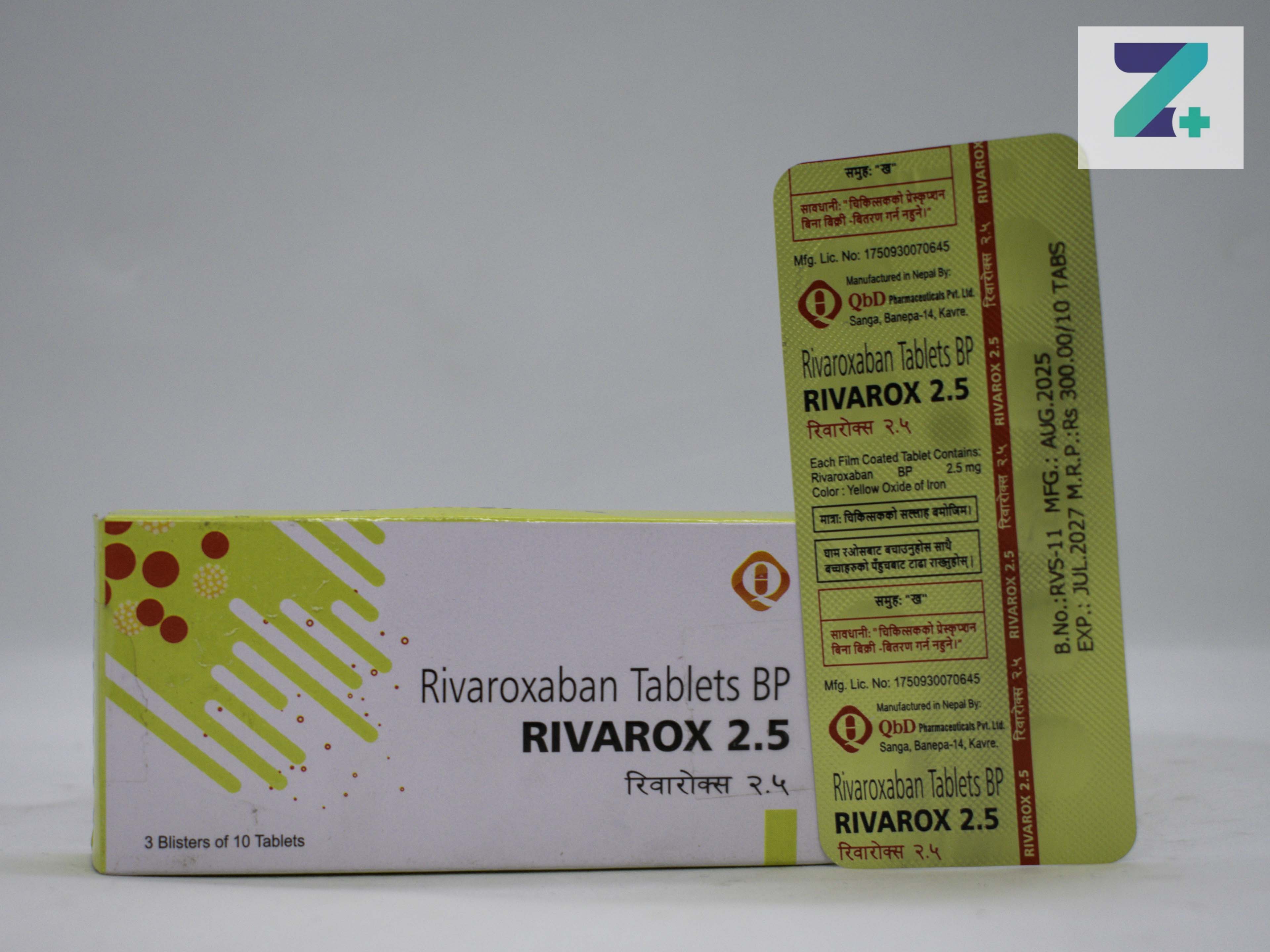
Price: Rs.300.00
15% off
In stock
Loose stock: 0
Description
RIVAROX 2.5 TAB 10
Details
Composition
RIVAROXABAN 2.5
# Rivaroxaban 2.5 mg
## SHORT DESCRIPTION
**Rivaroxaban 2.5 mg** is an oral **anticoagulant (blood thinner)** belonging to the direct oral anticoagulant (DOAC) group. It is a **direct Factor Xa inhibitor** that reduces the formation of blood clots.
The **2.5 mg strength is generally used in combination with low-dose aspirin** for specific cardiovascular conditions, such as reducing the risk of major cardiovascular events in selected patients with **coronary artery disease (CAD) or peripheral artery disease (PAD)**. It may also be used with aspirin in certain patients after specific lower-limb revascularization procedures.
## KEY BENEFITS
* Helps reduce the formation of harmful blood clots
* Helps reduce the risk of certain cardiovascular events in appropriate patients
* May reduce the risk of heart attack and ischemic stroke in selected patients with CAD or PAD
* Helps reduce thrombotic complications in certain patients with peripheral artery disease
* Provides targeted inhibition of **Factor Xa**
* Convenient oral administration when prescribed appropriately
## USES / INDICATIONS
Rivaroxaban 2.5 mg may be prescribed, together with low-dose aspirin, for:
* **Coronary artery disease (CAD)** in selected patients at increased risk of major cardiovascular events
* **Peripheral artery disease (PAD)** in selected patients
* Reduction of thrombotic cardiovascular complications following certain **lower-extremity revascularization procedures**
* Other specific cardiovascular indications when determined appropriate by a healthcare professional
> **Important:** Rivaroxaban 2.5 mg has different indications and dosing from higher-strength rivaroxaban tablets such as 10 mg, 15 mg, and 20 mg. The strengths are **not interchangeable**.
## HOW IT WORKS
Rivaroxaban selectively and directly inhibits **Factor Xa**, an important enzyme in the blood-clotting cascade.
Factor Xa is involved in the conversion of prothrombin to thrombin. Thrombin is needed to form fibrin, which helps create blood clots.
By inhibiting Factor Xa, rivaroxaban:
* Reduces thrombin generation
* Reduces fibrin formation
* Decreases the ability of blood to form clots
* Helps lower the risk of certain thrombotic cardiovascular events
## DOSAGE & ADMINISTRATION
For certain patients with CAD or PAD, the commonly used regimen is:
**Rivaroxaban 2.5 mg twice daily + low-dose aspirin once daily**, according to the prescribing healthcare professional.
For selected patients following lower-extremity revascularization, rivaroxaban 2.5 mg twice daily may also be prescribed with aspirin.
* Take exactly as prescribed.
* The 2.5 mg tablet can generally be taken **with or without food**.
* Take doses at approximately the same times each day.
* Do not change the dose or stop treatment without medical advice.
* Rivaroxaban 2.5 mg should generally be taken as part of the prescribed combination regimen when aspirin is indicated.
### Missed dose
If a dose is missed, take the next scheduled dose at the usual time. **Do not take an extra dose to compensate.**
### Important
Because rivaroxaban increases bleeding risk, take it only under appropriate medical supervision.
## SIDE EFFECTS
The most important potential adverse effect of rivaroxaban is **bleeding**.
Common or possible side effects include:
* Easy bruising
* Nosebleeds
* Bleeding gums
* Prolonged bleeding from minor cuts
* Gastrointestinal bleeding
* Anemia
* Nausea
* Dizziness
* Headache
### Serious side effects
Seek urgent medical attention for:
* Blood in the urine
* Black or tarry stools
* Vomiting blood or material resembling coffee grounds
* Coughing up blood
* Severe or persistent nosebleed
* Severe headache
* Unexplained weakness or dizziness
* Heavy or prolonged menstrual bleeding
* Significant or unexplained bruising
* Bleeding that does not stop
* Symptoms following a significant head injury
## PRECAUTIONS & WARNINGS
### Bleeding risk
Rivaroxaban can cause serious or potentially life-threatening bleeding. Contact your healthcare professional if unusual bleeding occurs.
### Active bleeding
Rivaroxaban should not generally be used in patients with **active pathological bleeding**.
### Kidney impairment
Kidney function can affect rivaroxaban exposure. Patients with significant kidney impairment may require an alternative treatment or careful medical assessment.
### Liver disease
Patients with significant liver disease, particularly conditions associated with coagulopathy and clinically relevant bleeding risk, may not be appropriate candidates for rivaroxaban.
### Surgery and dental procedures
Tell your doctor, surgeon, or dentist that you are taking rivaroxaban before any surgery, invasive procedure, or dental procedure. You may need specific instructions regarding when to stop and restart treatment.
**Do not stop rivaroxaban on your own.**
### Spinal or epidural procedures
Rivaroxaban can increase the risk of bleeding around the spinal cord during certain neuraxial procedures. Always inform the healthcare professional performing the procedure that you take rivaroxaban.
### Pregnancy
Rivaroxaban is generally **not recommended during pregnancy** unless specifically determined necessary by a specialist.
### Breastfeeding
Consult your healthcare professional before using rivaroxaban while breastfeeding.
### Falls and injuries
Because of the increased risk of bleeding, seek medical advice after significant injuries, particularly injuries involving the head.
## DRUG INTERACTIONS
Rivaroxaban has clinically important interactions with several medicines.
### Medicines that increase bleeding risk
These include:
* **Aspirin**
* Clopidogrel
* Other antiplatelet medicines
* Warfarin
* Heparin and other anticoagulants
* NSAIDs such as ibuprofen and naproxen
* Some medicines that affect platelet function
Aspirin is intentionally used with rivaroxaban 2.5 mg in certain approved cardiovascular regimens, but the combination should be taken **only when prescribed**.
### Strong CYP3A4 and P-gp inhibitors
Examples include:
* Ketoconazole
* Itraconazole
* Ritonavir
* Certain other strong antiviral or antifungal medicines
These can increase rivaroxaban levels and bleeding risk.
### CYP3A4 and P-gp inducers
Examples include:
* Rifampicin
* Carbamazepine
* Phenytoin
* Phenobarbital
* St. John's wort
These may reduce rivaroxaban exposure and potentially decrease its effectiveness.
Always tell your doctor or pharmacist about all prescription medicines, OTC medicines, vitamins, and herbal supplements you use.
## STORAGE INFORMATION
* Store Rivaroxaban 2.5 mg according to the manufacturer's instructions.
* Keep at room temperature unless the product label specifies otherwise.
* Protect from excessive heat and moisture.
* Keep tablets in their original packaging.
* Keep the container tightly closed.
* Keep out of reach and sight of children.
* Do not use after the expiry date.
* Do not use tablets if the packaging is damaged or the tablets appear abnormal.
## PRESCRIPTION STATUS
**Rivaroxaban 2.5 mg is a prescription medicine.**
It should only be used under the supervision of a qualified healthcare professional because the correct indication, combination with aspirin, kidney function, bleeding risk, and potential drug interactions must be assessed.
## GENUINE MEDICINE ASSURANCE
To help ensure you receive genuine Rivaroxaban 2.5 mg:
* Purchase only from a licensed and reputable pharmacy.
* Check the medicine name and **2.5 mg strength**.
* Verify the manufacturer and formulation.
* Check the batch number and expiry date.
* Ensure the packaging is sealed and undamaged.
* Confirm that the tablets correspond to the manufacturer's description.
* Avoid products with altered, suspicious, or damaged packaging.
* Consult a pharmacist if you have concerns about authenticity.
## FAQ SECTION
### What is Rivaroxaban 2.5 mg used for?
Rivaroxaban 2.5 mg is generally used with **low-dose aspirin** in selected patients with coronary artery disease or peripheral artery disease to reduce the risk of major cardiovascular and thrombotic events.
### Is Rivaroxaban 2.5 mg a blood thinner?
Yes. Rivaroxaban is an **anticoagulant**, commonly referred to as a blood thinner.
### How does Rivaroxaban 2.5 mg work?
It directly inhibits **Factor Xa**, reducing thrombin generation and the formation of fibrin blood clots.
### Is Rivaroxaban 2.5 mg the same as Rivaroxaban 20 mg?
No. They are different strengths used for different indications and dosing schedules. **Rivaroxaban 2.5 mg should not be substituted for 20 mg without medical advice.**
### Why is Rivaroxaban 2.5 mg given with aspirin?
In specific cardiovascular conditions, the combination of low-dose rivaroxaban and aspirin provides complementary antithrombotic effects and can reduce the risk of certain cardiovascular events.
### Can I take Rivaroxaban 2.5 mg without aspirin?
Do not add or remove aspirin from your treatment regimen without medical advice. For several approved uses of the 2.5 mg strength, it is specifically prescribed **in combination with aspirin**.
### Does Rivaroxaban 2.5 mg prevent heart attacks?
In selected patients with coronary artery disease or peripheral artery disease, rivaroxaban 2.5 mg plus aspirin can reduce the risk of certain cardiovascular events, including heart attack and ischemic stroke.
### Does Rivaroxaban 2.5 mg prevent stroke?
It can reduce the risk of certain ischemic cardiovascular events, including stroke, in specific approved patient populations. It is **not the standard rivaroxaban dose for prevention of stroke associated with atrial fibrillation**.
### Can Rivaroxaban 2.5 mg cause bleeding?
Yes. Bleeding is the most important potential adverse effect. Seek medical attention for severe, persistent, or unexplained bleeding.
### Can Rivaroxaban cause bruising?
Yes. Easy bruising can occur because rivaroxaban reduces the blood's ability to form clots.
### Can I take Ibuprofen with Rivaroxaban?
Ibuprofen and other NSAIDs may increase the risk of bleeding and may not be appropriate with rivaroxaban unless specifically recommended by a healthcare professional.
### Can I take Rivaroxaban with Paracetamol?
Paracetamol is generally considered to have a lower bleeding risk than NSAIDs, but you should still follow your healthcare professional's advice, particularly if frequent or long-term use is required.
### Can Rivaroxaban 2.5 mg be taken with Atorvastatin?
These medicines may be prescribed together when clinically appropriate. Your doctor or pharmacist should review your complete medication list.
### Can Rivaroxaban be taken with Itraconazole?
Itraconazole can significantly increase rivaroxaban exposure and bleeding risk. The combination requires medical assessment and may be inappropriate in some situations.
### Can Rivaroxaban be taken with Carbamazepine?
Carbamazepine can reduce rivaroxaban levels and potentially decrease its effectiveness. Do not combine them without medical supervision.
### Can Rivaroxaban be stopped suddenly?
Do not stop rivaroxaban without medical advice. Stopping anticoagulant treatment can increase the risk of blood clots and cardiovascular events in appropriately treated patients.
### What happens if I miss a dose of Rivaroxaban 2.5 mg?
Take your next scheduled dose at the usual time. Do not double the dose to make up for a missed dose.
### What happens if I take too much Rivaroxaban?
Taking too much can significantly increase the risk of bleeding. Seek urgent medical attention if an overdose is suspected, particularly if there are signs of bleeding.
### Can Rivaroxaban be used during pregnancy?
Rivaroxaban is generally not recommended during pregnancy unless specifically considered necessary by a specialist.
### Can Rivaroxaban be used while breastfeeding?
Consult your healthcare professional before using rivaroxaban while breastfeeding.
### Can I drink alcohol while taking Rivaroxaban?
Alcohol may increase bleeding risk, particularly with heavy or frequent consumption. Discuss alcohol use with your doctor or pharmacist.
### Does Rivaroxaban require regular INR blood tests?
Unlike warfarin, rivaroxaban does **not usually require routine INR monitoring** for dose adjustment. However, your doctor may monitor kidney function, liver function, hemoglobin, and other parameters when appropriate.
### Is Rivaroxaban a heparin?
No. Rivaroxaban is an oral **direct Factor Xa inhibitor**, whereas heparins are different anticoagulant medicines.
### Is Rivaroxaban the same as Apixaban?
No. Both are direct Factor Xa inhibitors, but they are different medicines with different dosing schedules and prescribing considerations.
### Is Rivaroxaban 2.5 mg available without a prescription?
No. Rivaroxaban 2.5 mg is generally a **prescription medicine**.
### How should I store Rivaroxaban 2.5 mg?
Store it according to the manufacturer's instructions, generally at room temperature and protected from excessive heat and moisture. Keep it out of reach of children.
## MEDICAL DISCLAIMER
This information about **Rivaroxaban 2.5 mg** is provided for educational and informational purposes only and is not a substitute for professional medical advice, diagnosis, or treatment.
Rivaroxaban is a potent anticoagulant and can cause **serious or potentially life-threatening bleeding**. The 2.5 mg strength has specific approved indications and is commonly used together with low-dose aspirin for selected cardiovascular conditions. It should not be substituted for other rivaroxaban strengths without medical advice.
**Do not start, stop, or change Rivaroxaban 2.5 mg or aspirin therapy without consulting a qualified healthcare professional.** Inform your doctor and dentist that you are taking rivaroxaban before procedures or surgery.
Seek urgent medical attention for severe or uncontrolled bleeding, blood in vomit or stool, black stools, coughing up blood, severe headache, fainting, or significant injury while taking this medicine.
Always follow the approved product information and the specific instructions provided by your doctor or pharmacist.