RYTHM 5
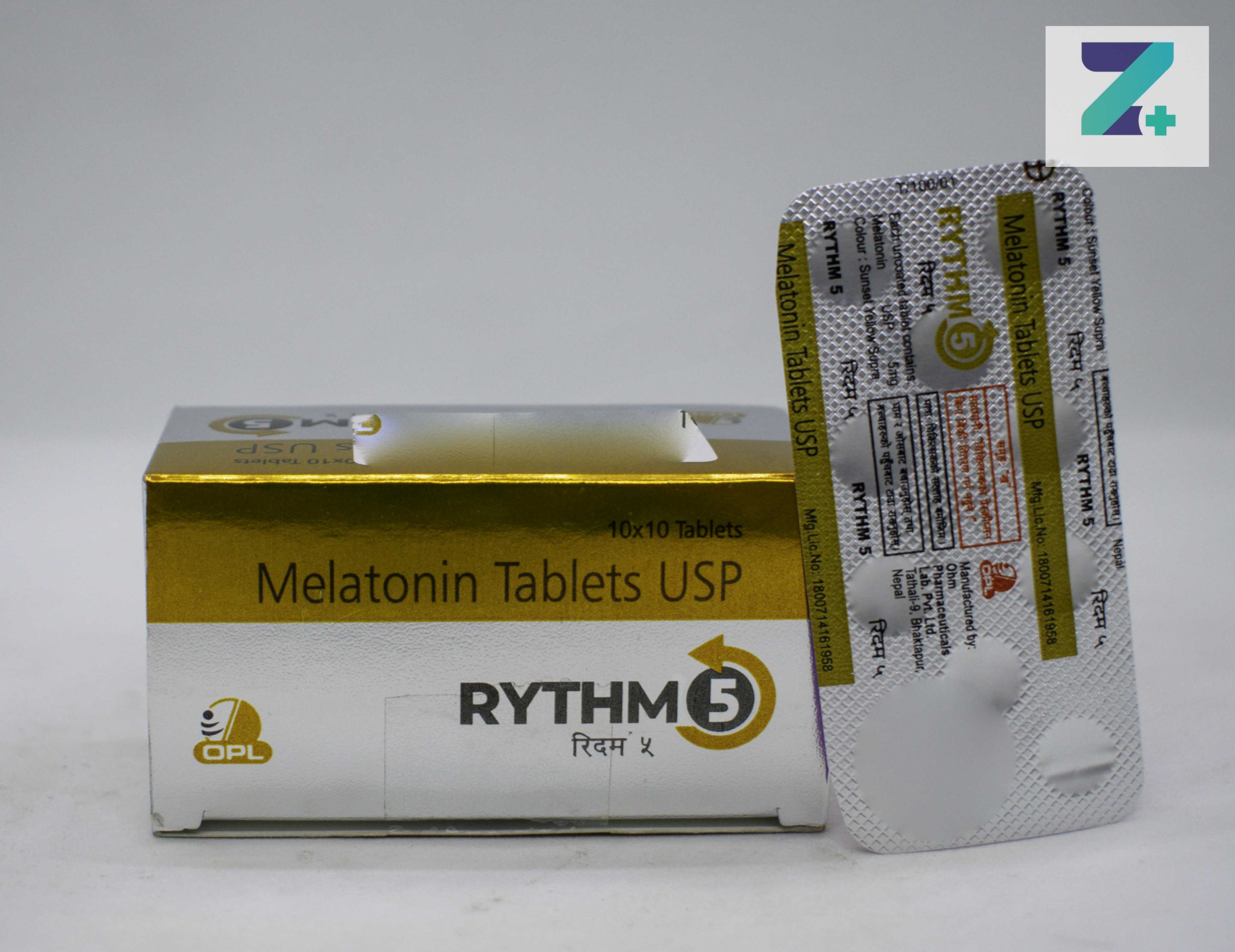
Price: Rs.120.00
10% off
In stock
Loose stock: 0
Description
RYTHM 5 TAB 10
Details
Composition
MELATONIN 5
# MELATONIN 5 MG
## SHORT DESCRIPTION
**Melatonin 5 mg** is a supplement or medicine containing melatonin, a hormone naturally produced by the body that helps regulate the **sleep-wake cycle (circadian rhythm)**. It is commonly used to support sleep onset and may be helpful when the normal sleep schedule is disrupted.
Melatonin is different from conventional sleeping pills because its primary role is to provide a signal to the body that it is time to prepare for sleep.
> **Note:** The regulatory status, approved indications, and recommended dosage of melatonin vary by country and product.
---
## KEY BENEFITS
* Supports the body's natural **sleep-wake cycle**.
* May help reduce the time needed to fall asleep.
* Can be useful when sleep timing is temporarily disrupted.
* May help with **jet lag** and changes in sleep schedule.
* Provides a melatonin signal that may promote sleepiness at the appropriate time.
* Generally does not produce the same type of dependence associated with some prescription sedative medicines.
---
## USES / INDICATIONS
Melatonin 5 mg may be used or recommended for:
1. **Difficulty falling asleep**
2. Temporary disruption of the sleep-wake cycle
3. **Jet lag**
4. Delayed or irregular sleep schedules
5. Sleep problems associated with altered working or travel schedules
6. Other circadian-rhythm-related sleep difficulties when medically appropriate
Melatonin is not suitable for every cause of insomnia. Persistent sleep problems should be evaluated to identify underlying causes.
---
## HOW IT WORKS
Melatonin is naturally released by the **pineal gland**, primarily in response to darkness.
It interacts with melatonin receptors in the brain, particularly **MT1 and MT2 receptors**, helping regulate circadian timing.
Taking melatonin at an appropriate time can provide the body with a signal that it is approaching the normal sleep period.
**Melatonin → acts on circadian receptors → helps regulate sleep timing → supports sleep onset.**
---
## DOSAGE & ADMINISTRATION
### Melatonin 5 mg
A 5 mg dose may be appropriate for some adults, but **more is not necessarily better**. The appropriate dose depends on the purpose of treatment, formulation, age, other medicines, and individual response.
### General Administration
* Take only as directed by the product label or healthcare professional.
* It is commonly taken **about 30 minutes to 1–2 hours before the intended bedtime**, depending on the formulation and purpose.
* Take at approximately the same time each night when using it for sleep scheduling.
* Swallow tablets according to the product instructions.
* Avoid driving or operating machinery after taking melatonin if you feel sleepy or impaired.
### Jet Lag
Timing is particularly important for jet lag. Melatonin should generally be taken according to the destination sleep schedule rather than simply at the same clock time used at home.
### Children
Do not give melatonin to children unless recommended by a qualified healthcare professional.
### Missed Dose
If you forget a bedtime dose, do not take an extra dose during the night unless specifically instructed.
---
## SIDE EFFECTS
### Common Side Effects
Possible side effects include:
* Headache
* Drowsiness
* Dizziness
* Nausea
* Fatigue
* Vivid dreams
* Changes in dreams
### Next-Day Drowsiness
Some people may experience sleepiness or reduced alertness the following morning, particularly with higher doses.
### Serious Side Effects
Serious reactions are uncommon, but seek medical attention for:
* Severe allergic reaction
* Significant confusion
* Fainting
* Severe or unusual symptoms after taking the product
---
## PRECAUTIONS & WARNINGS
### Drowsiness
Melatonin can cause sleepiness. Avoid driving, cycling, operating machinery, or performing hazardous activities if you feel drowsy or impaired.
### Alcohol
Avoid or limit alcohol because it can increase sedation and may interfere with normal sleep quality.
### Pregnancy
Melatonin should generally be used during pregnancy **only when specifically recommended by a healthcare professional**, because safety data are limited.
### Breastfeeding
Consult a healthcare professional before using melatonin while breastfeeding.
### Liver or Kidney Disease
People with significant liver or kidney problems should consult a healthcare professional before use.
### Autoimmune Conditions
Discuss melatonin use with a healthcare professional if you have an autoimmune disorder.
### Epilepsy
Melatonin may not be appropriate for everyone with seizure disorders. Discuss use with your healthcare professional.
### Depression or Psychiatric Conditions
Tell your healthcare professional if you have a significant psychiatric condition or take medicines affecting the central nervous system.
### Persistent Insomnia
Do not rely on melatonin indefinitely without investigating persistent sleep problems. Chronic insomnia can be associated with stress, anxiety, depression, sleep apnea, medication effects, or other medical conditions.
---
## DRUG INTERACTIONS
Melatonin may interact with medicines that affect the central nervous system or melatonin metabolism.
### Sedatives and Sleeping Medicines
Combining melatonin with:
* Benzodiazepines
* Prescription sleeping medicines
* Sedating antihistamines
* Opioids
* Other sedatives
may increase drowsiness and impairment.
### Anticoagulants
Melatonin may potentially affect bleeding risk when combined with anticoagulants such as **warfarin**. Medical supervision is recommended.
### Antidepressants
Some antidepressants may interact with melatonin or increase sedation.
### Blood-Pressure Medicines
Melatonin may influence blood pressure in some people and may interact with certain antihypertensive medicines.
### Fluvoxamine
Fluvoxamine can significantly increase melatonin exposure and may increase its effects.
### CYP1A2-Related Interactions
Medicines that inhibit or induce enzymes involved in melatonin metabolism can alter melatonin levels.
Tell your healthcare professional about all:
* Prescription medicines
* OTC medicines
* Vitamins
* Herbal products
* Sleep aids
* Supplements
you use.
---
## STORAGE INFORMATION
* Store according to the manufacturer's instructions.
* Keep at room temperature unless the label specifies otherwise.
* Protect from excessive heat, moisture, and direct sunlight.
* Keep the container tightly closed.
* Keep out of reach of children.
* Do not use after the expiry date.
* Keep the product in its original packaging.
---
## PRESCRIPTION STATUS
**Prescription status varies by country.**
Melatonin is available as a prescription medicine in some countries and as an OTC medicine or dietary supplement in others.
The approved strength, formulation, indications, and age restrictions can vary considerably between markets.
---
## GENUINE MEDICINE / PRODUCT ASSURANCE
When purchasing **Melatonin 5 mg**, obtain it from a **licensed pharmacy, reputable retailer, or authorized supplement supplier**, depending on local regulations.
Check the packaging for:
* Product name
* Melatonin strength
* Manufacturer
* Batch/lot number
* Expiry date
* Proper labeling
* Intact packaging and seal
* Applicable regulatory information
Avoid products with damaged packaging, missing labels, altered expiry dates, or questionable authenticity.
For supplements, remember that quality-control standards can differ between products and countries.
---
# FAQ – MELATONIN 5 MG
### 1. What is Melatonin 5 mg used for?
Melatonin 5 mg is used to support the **sleep-wake cycle** and may help with difficulty falling asleep, jet lag, or disrupted sleep timing.
### 2. Is melatonin a sleeping pill?
Melatonin is not a conventional sedative sleeping pill. It is a hormone involved in regulating the body's **circadian rhythm and sleep timing**.
### 3. How long does melatonin take to work?
Melatonin is commonly taken **30 minutes to 1–2 hours before bedtime**, depending on the formulation and intended use. Individual responses vary.
### 4. Is 5 mg of melatonin a high dose?
Five milligrams is a commonly available strength, but the ideal dose varies between individuals. Higher doses are not necessarily more effective and may increase side effects such as next-day drowsiness or vivid dreams.
### 5. Can I take Melatonin 5 mg every night?
Some people use melatonin regularly, but the appropriate duration depends on the reason for use and the specific product. Persistent insomnia should be discussed with a healthcare professional rather than treated indefinitely with supplements.
### 6. Does melatonin cause morning drowsiness?
It can. Morning sleepiness or reduced alertness is more likely in some people, particularly after higher doses or when melatonin is taken too late.
### 7. Can melatonin help with jet lag?
Yes. Melatonin may help adjust the **circadian rhythm** after crossing time zones, particularly when taken at an appropriate local bedtime.
### 8. Can I take melatonin with alcohol?
It is best to avoid alcohol because combining alcohol with melatonin may increase drowsiness and can interfere with sleep quality.
### 9. Can I take melatonin with other sleeping pills?
Do not combine melatonin with prescription sleeping medicines or other sedatives without medical advice because sedation and impairment may increase.
### 10. Can children take Melatonin 5 mg?
Children should not routinely be given 5 mg melatonin without guidance from a qualified healthcare professional. Pediatric dosing and suitability depend on age and the reason for use.
### 11. Can melatonin be used during pregnancy?
Consult a healthcare professional before using melatonin during pregnancy because adequate safety information is limited.
### 12. Can I take melatonin while breastfeeding?
Discuss melatonin use with your healthcare professional before taking it while breastfeeding.
### 13. Does melatonin cause dependence?
Melatonin is generally not considered addictive in the way some sedative medicines can be. However, long-term use should still be appropriate for the individual's circumstances.
### 14. Can melatonin interact with medicines?
Yes. It can interact with medicines such as **warfarin, fluvoxamine, sedatives, some antidepressants, and certain blood-pressure medicines**.
### 15. Does melatonin lower blood pressure?
Melatonin can influence blood pressure in some people and may interact with antihypertensive medicines. People taking blood-pressure treatment should discuss regular melatonin use with a healthcare professional.
### 16. What happens if I take too much melatonin?
Excessive amounts may cause increased sleepiness, dizziness, headache, nausea, or vivid dreams. If a large amount has been accidentally taken, seek appropriate medical advice.
### 17. Can I drive after taking Melatonin 5 mg?
Avoid driving or operating machinery after taking melatonin if you are sleepy, dizzy, or less alert than usual.
### 18. Does melatonin improve sleep quality?
It may help some people fall asleep more easily or adjust sleep timing, but its effectiveness varies depending on the underlying cause of the sleep problem.
### 19. Can melatonin cure insomnia?
Melatonin does not cure every form of insomnia. Persistent insomnia may require assessment and behavioral approaches such as **cognitive behavioral therapy for insomnia (CBT-I)**.
### 20. Is Melatonin 5 mg available without a prescription?
It depends on the country. Melatonin is regulated differently worldwide and may be sold as a prescription medicine, OTC medicine, or dietary supplement.
---
## MEDICAL DISCLAIMER
This information about **Melatonin 5 mg** is provided for general educational purposes only and does not replace professional medical advice, diagnosis, or treatment.
Melatonin may be useful for certain sleep-timing problems, but persistent insomnia can have underlying medical, psychological, or behavioral causes that require proper evaluation.
Avoid driving or operating machinery if melatonin causes drowsiness or impaired alertness. Consult a healthcare professional before use if you are **pregnant or breastfeeding, have significant medical conditions, or take prescription medicines**, particularly anticoagulants, sedatives, antidepressants, or medicines that affect blood pressure.
Always follow the **specific product label and your healthcare professional's instructions** regarding dosage, timing, duration, interactions, contraindications, and storage.