SAAZ-500
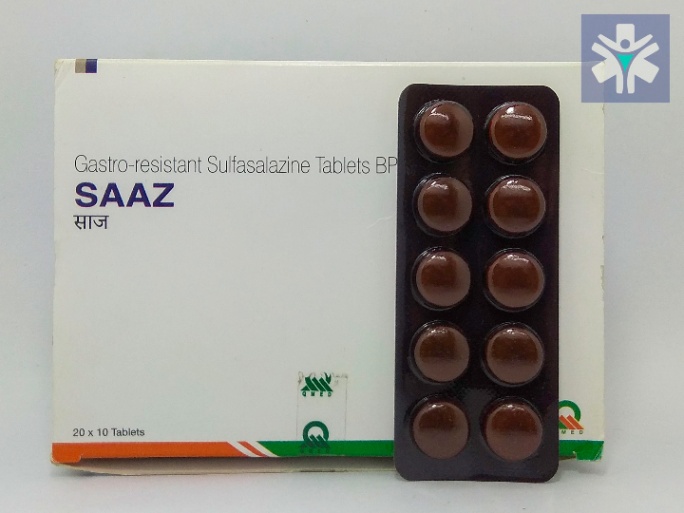
Price: Rs.100.00
15% off
In stock
Loose stock: 0
Description
SAAZ-500 TAB 10
Details
Composition
SULFASALAZINE 500 MG
# Sulfasalazine 500 mg
## Short Description
Sulfasalazine 500 mg is a **prescription medicine** used to reduce inflammation in conditions affecting the intestines and joints. It is commonly used for **ulcerative colitis, Crohn's disease in selected cases, rheumatoid arthritis and other inflammatory joint conditions**.
Sulfasalazine is often used as a long-term treatment to control inflammation and maintain remission rather than provide immediate pain relief.
## Key Benefits
* Helps reduce inflammation in the bowel and joints
* Helps control symptoms of ulcerative colitis
* May help maintain remission in inflammatory bowel disease
* Helps reduce pain, swelling and stiffness associated with inflammatory arthritis
* May reduce the need for other anti-inflammatory medicines in some patients
* Can be used as a long-term disease-modifying treatment under medical supervision
## Uses / Indications
Sulfasalazine 500 mg may be prescribed for:
* **Ulcerative colitis**
* Certain cases of Crohn's disease
* Rheumatoid arthritis
* Juvenile idiopathic arthritis
* Other inflammatory joint conditions where specifically recommended by a doctor
The approved indications may vary by country and formulation.
## How It Works
Sulfasalazine is converted in the intestine into two components, **sulfapyridine and 5-aminosalicylic acid (5-ASA/mesalazine)**.
The 5-ASA component has local anti-inflammatory effects in the bowel, while sulfapyridine contributes significantly to the systemic effects used in inflammatory joint diseases. The exact mechanism of sulfasalazine in rheumatoid arthritis is not completely understood.
## Dosage & Administration
* Take Sulfasalazine 500 mg exactly as prescribed
* The dose depends on the condition being treated and your response to treatment
* Treatment is often started at a lower dose and gradually increased to reduce stomach-related side effects
* Take tablets with plenty of water
* Enteric-coated or delayed-release tablets should generally be swallowed whole
* Do not crush or chew modified-release or enteric-coated tablets unless specifically instructed
* Taking the medicine after food may help reduce stomach discomfort
* Drink adequate fluids during treatment unless your doctor has advised fluid restriction
* If you miss a dose, take it when remembered unless it is nearly time for the next dose
* Do not take a double dose to compensate for a missed dose
* Do not stop long-term treatment without discussing it with your doctor
Regular blood tests may be recommended to monitor blood counts, liver function and kidney function.
## Side Effects
Common side effects may include:
* Nausea
* Vomiting
* Stomach pain or discomfort
* Indigestion
* Diarrhea
* Headache
* Dizziness
* Loss of appetite
* Skin rash
* Temporary orange-yellow discoloration of urine or other body fluids
Seek urgent medical attention if you develop:
* Severe skin rash, blistering or peeling
* Fever with sore throat or signs of infection
* Unusual bruising or bleeding
* Yellowing of the skin or eyes
* Severe weakness
* Difficulty breathing or facial swelling
* Severe abdominal pain
* Significant reduction in urine output
## Precautions & Warnings
* Tell your doctor if you are allergic to **sulfonamides or salicylates**, including aspirin
* Inform your doctor if you have kidney or liver disease
* Blood tests may be required before and during treatment
* Tell your doctor if you have a history of blood disorders
* Sulfasalazine can rarely cause serious blood, liver or kidney problems
* Drink sufficient fluids unless medically restricted
* Sulfasalazine may cause urine, sweat or tears to become yellow-orange
* Contact your doctor if you develop fever, sore throat, unusual bruising or persistent infection symptoms
* Tell your doctor if you have asthma or other significant allergies
* Inform your doctor if you are pregnant, planning pregnancy or breastfeeding
* Keep out of reach of children
## Drug Interactions
Sulfasalazine can interact with certain medicines, including:
* **Methotrexate** — may increase certain adverse effects and requires medical monitoring
* **Folic acid** — sulfasalazine may interfere with folate absorption or metabolism
* **Digoxin** — sulfasalazine may reduce digoxin absorption in some patients
* **Warfarin and other medicines affecting blood clotting** — monitoring may be required
* **Azathioprine or mercaptopurine** — may increase the risk of blood-related adverse effects
* Other medicines that can affect the kidneys or liver may require additional monitoring
Tell your doctor or pharmacist about all prescription medicines, OTC medicines, vitamins and herbal supplements you use.
## Storage Information
* Store according to the manufacturer's instructions
* Keep tablets in their original packaging
* Protect from excessive heat, moisture and direct sunlight
* Keep the container tightly closed
* Store at the temperature specified on the product label
* Keep out of reach and sight of children
* Do not use after the expiry date
* Follow the storage instructions printed on the packaging
## Prescription Status
Sulfasalazine 500 mg is generally a **prescription-only medicine**. It should be used under the supervision of a qualified healthcare professional, particularly when used for long-term inflammatory conditions.
Prescription requirements may vary by country.
## Genuine Medicine Assurance
* Purchase Sulfasalazine only from a licensed and reputable pharmacy
* Verify the active ingredient and strength: **Sulfasalazine 500 mg**
* Check the manufacturer, batch number and expiry date
* Ensure the packaging and seal are intact
* Confirm whether the product is immediate-release, enteric-coated or modified-release as prescribed
* Do not use tablets from damaged or suspicious packaging
* Purchase medicines from authorized sources
* If you suspect the medicine is counterfeit, consult a pharmacist or the appropriate medicine regulatory authority
## Frequently Asked Questions
### What is Sulfasalazine 500 mg used for?
Sulfasalazine 500 mg is used to treat inflammatory conditions such as **ulcerative colitis and rheumatoid arthritis**. It may also be used for selected cases of Crohn's disease and other inflammatory joint disorders.
### Is Sulfasalazine an antibiotic?
Sulfasalazine has antimicrobial properties, but it is primarily used as an **anti-inflammatory and disease-modifying medicine**, not as a routine antibiotic.
### Is Sulfasalazine a steroid?
No. Sulfasalazine is **not a corticosteroid**. It is an anti-inflammatory disease-modifying medicine.
### How does Sulfasalazine work?
Sulfasalazine is broken down in the intestine into sulfapyridine and 5-aminosalicylic acid. These components help reduce inflammation, particularly in the bowel and joints.
### Is Sulfasalazine used for ulcerative colitis?
Yes. Sulfasalazine is used to treat active ulcerative colitis and may also be used to help maintain remission in appropriate patients.
### Is Sulfasalazine used for rheumatoid arthritis?
Yes. Sulfasalazine is a **DMARD (disease-modifying antirheumatic drug)** that can help reduce inflammation and disease activity in rheumatoid arthritis.
### How long does Sulfasalazine take to work?
Sulfasalazine does not usually provide immediate relief. Improvement in inflammatory arthritis may take several weeks, while bowel symptoms may improve sooner in some patients.
### Can Sulfasalazine be taken long term?
Yes. It is commonly used for long-term management of inflammatory conditions when appropriate. Regular medical monitoring may be required.
### Does Sulfasalazine cause stomach problems?
Yes. Nausea, stomach pain, indigestion and diarrhea can occur, particularly when treatment is started. Gradually increasing the dose may help reduce these effects.
### Why does Sulfasalazine turn urine orange?
Sulfasalazine and its metabolites can cause **yellow-orange discoloration of urine, sweat or tears**. This is usually harmless, although unusual or severe symptoms should be discussed with a doctor.
### Does Sulfasalazine affect blood tests?
It can. Sulfasalazine may rarely affect blood cells and liver function. Doctors may therefore recommend regular blood counts and liver and kidney tests.
### Can Sulfasalazine cause low blood counts?
Rarely, yes. Serious blood disorders can occur. Contact your doctor if you develop unexplained bruising, persistent fever, sore throat, unusual weakness or frequent infections.
### Can Sulfasalazine affect the liver?
Rarely, sulfasalazine can cause liver problems. Contact your healthcare professional if you develop yellowing of the skin or eyes, dark urine or severe unexplained fatigue.
### Can Sulfasalazine affect the kidneys?
Kidney problems are uncommon but possible. Adequate hydration and appropriate kidney-function monitoring may be recommended, particularly in people with existing kidney problems.
### Can Sulfasalazine cause infertility in men?
Sulfasalazine can cause a **reversible reduction in sperm count and fertility in some men**. Fertility generally returns after discontinuation, but discuss concerns with your doctor.
### Can Sulfasalazine be taken during pregnancy?
Sulfasalazine may be used during pregnancy when the benefits outweigh the risks and under medical supervision. Folic acid supplementation is often particularly important. Discuss pregnancy planning with your doctor.
### Can Sulfasalazine be taken while breastfeeding?
Sulfasalazine may be used during breastfeeding in some circumstances, but medical advice is recommended, especially if the infant is premature or has health problems.
### Should I take folic acid with Sulfasalazine?
Your doctor may recommend folic acid because sulfasalazine can interfere with folate absorption or metabolism. Follow the dose recommended by your healthcare professional.
### Can Sulfasalazine be taken with Methotrexate?
Sulfasalazine and methotrexate are sometimes prescribed together for inflammatory arthritis. However, the combination requires appropriate medical supervision and monitoring.
### Can Sulfasalazine be stopped suddenly?
Do not stop long-term sulfasalazine treatment without discussing it with your doctor. Stopping treatment may allow the underlying inflammatory condition to become active again.
### What should I do if I miss a dose of Sulfasalazine?
Take the missed dose when you remember unless it is nearly time for the next dose. Do not take two doses together unless specifically instructed.
### Can Sulfasalazine cause headaches?
Yes. Headache is a possible side effect, particularly during the early stages of treatment.
### Does Sulfasalazine cause weight gain?
Weight gain is not considered a typical direct effect of sulfasalazine. Discuss unexplained or significant weight changes with your healthcare professional.
### Can Sulfasalazine treat Crohn's disease?
Sulfasalazine may be used in selected cases of **Crohn's disease**, particularly when inflammation affects the colon, but its effectiveness varies depending on the location and severity of disease.
### Is Sulfasalazine the same as Mesalamine?
No. They are different medicines, although sulfasalazine is broken down in the intestine to release **5-aminosalicylic acid (mesalamine)** along with sulfapyridine.
### What foods should I avoid with Sulfasalazine?
There is no universal list of foods that must be avoided. Take the medicine as directed and maintain adequate fluid intake unless your doctor has advised otherwise.
### Can Sulfasalazine cause allergic reactions?
Yes. Serious allergic reactions are uncommon but possible. Seek urgent medical attention for facial swelling, breathing difficulty or a severe skin rash.
## Medical Disclaimer
This information is provided for general educational purposes only and is not a substitute for professional medical advice, diagnosis or treatment. **Sulfasalazine 500 mg is a prescription medicine and should be used only under the direction of a qualified healthcare professional.** The appropriate dose and formulation depend on the condition being treated and individual patient factors. Regular blood, liver and kidney monitoring may be required during treatment. Do not change the dose or stop long-term treatment without medical advice. Seek urgent medical attention for severe allergic reactions, serious skin reactions, unusual bleeding, persistent fever, severe weakness or symptoms of liver problems.