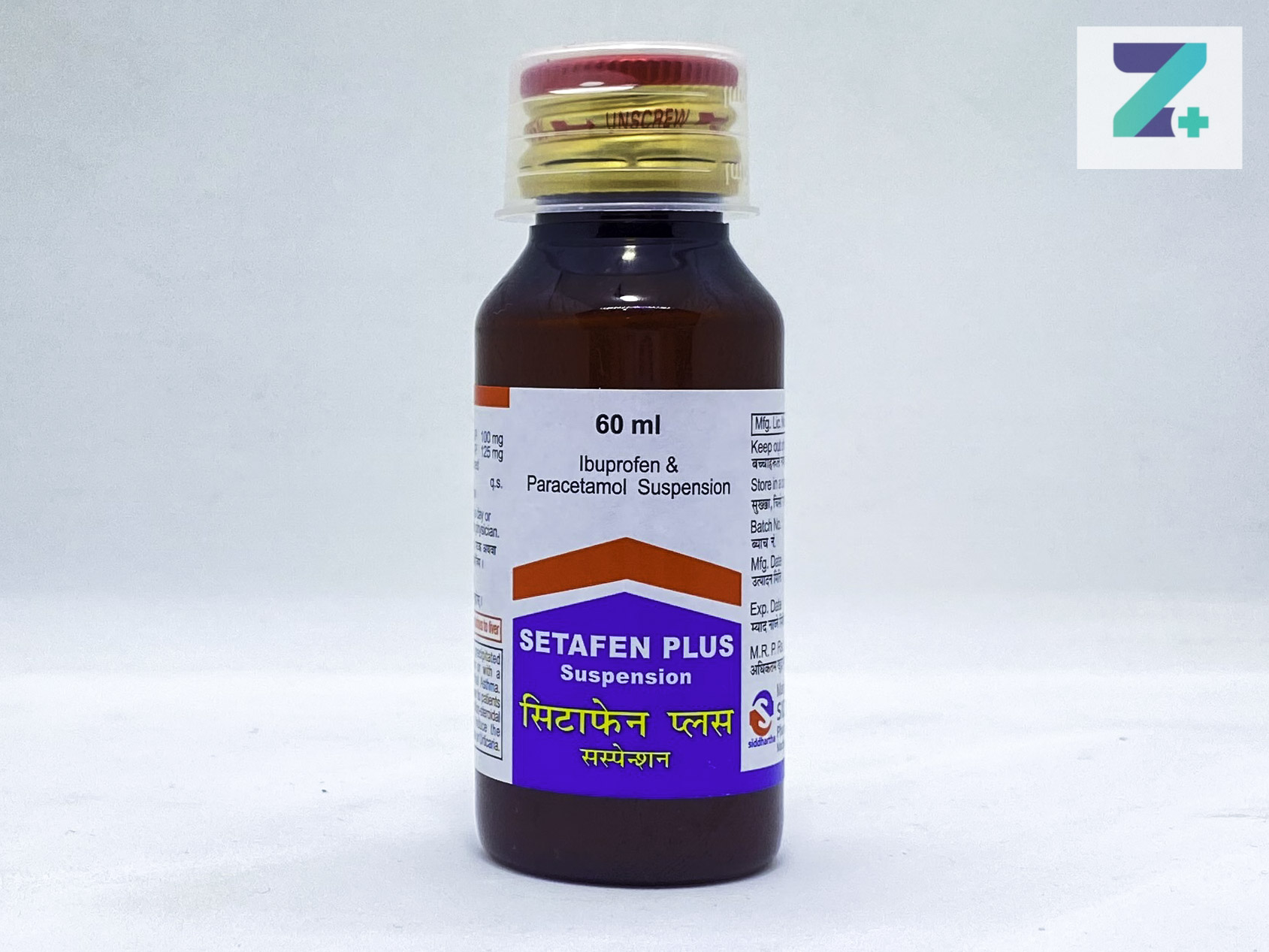
SETAFEN PLUS
Price: Rs.32.00
10% off
In stock
Loose stock: 0
Description
SETAFEN PLUS SUSP 60ML
Details
Composition
IBUPROFEN 100 MG,PARACETAMOL 125 MG
# IBUPROFEN 100 MG + PARACETAMOL 125 MG
## Short Description
**Ibuprofen 100 mg + Paracetamol 125 mg** is a combination pain-relieving and fever-reducing medicine. It combines **ibuprofen**, a non-steroidal anti-inflammatory drug (NSAID), with **paracetamol (acetaminophen)**, an analgesic and antipyretic.
This combination may provide relief from **mild to moderate pain and fever**, particularly when both pain and inflammation are present. The exact approved uses and dosing depend on the product formulation and patient's age/weight.
## Key Benefits
* Provides **pain relief** through two complementary mechanisms.
* Helps reduce **fever**.
* Ibuprofen helps reduce **inflammation, swelling, and pain**.
* Paracetamol provides additional analgesic and fever-reducing effects.
* May be useful for short-term management of certain common painful conditions.
* The low strengths may be formulated for **children**, depending on the specific product and dosing instructions.
## Uses / Indications
Ibuprofen 100 mg + Paracetamol 125 mg may be used for short-term relief of:
* Fever
* Headache
* Toothache
* Earache
* Sore throat discomfort
* Musculoskeletal aches and pains
* Minor injuries and inflammation
* Cold- or flu-associated aches and fever
**Important:** For children, dosing should be based on the child's **age and body weight** and the specific product instructions. Do not assume that an adult dose is appropriate for a child.
## How It Works
### Ibuprofen
Ibuprofen blocks enzymes called **cyclooxygenase (COX-1 and COX-2)**, reducing the production of prostaglandins. Prostaglandins contribute to pain, inflammation, and fever. Reducing them helps relieve these symptoms.
### Paracetamol
Paracetamol primarily acts within the central nervous system to reduce pain and fever. Its precise mechanism is not completely understood but differs from that of NSAIDs such as ibuprofen.
**Together**, the two medicines can provide complementary relief of pain and fever.
## Dosage & Administration
* Use **only according to the product label or your healthcare professional's instructions**.
* The appropriate dose depends on the patient's **age, weight, medical condition, and formulation**.
* For children, use the supplied measuring device when the product is a liquid formulation.
* Do not exceed the recommended dose or frequency.
* Give with food or milk if stomach discomfort occurs, unless otherwise instructed.
* Ensure adequate fluid intake.
* Do not give additional medicines containing **paracetamol/acetaminophen or ibuprofen** at the same time unless specifically advised.
* If symptoms persist or worsen, consult a healthcare professional.
### Important for Children
Because this combination contains two active medicines, **careful dose calculation is important**. Always check the concentration and dosing instructions on the exact product package.
Do not use household spoons to measure liquid medicine.
## Side Effects
### Common Side Effects
Possible side effects include:
* Nausea
* Vomiting
* Stomach discomfort
* Indigestion
* Diarrhea
* Headache
* Dizziness
* Mild skin rash
### Serious Side Effects
Rare but potentially serious reactions include:
* Stomach ulcer or gastrointestinal bleeding
* Severe allergic reaction
* Breathing difficulties or worsening asthma
* Kidney problems
* Liver injury, particularly with excessive paracetamol doses
* Severe skin reactions
**Seek urgent medical attention** if there is difficulty breathing, facial swelling, vomiting blood, black stools, severe abdominal pain, yellowing of the skin/eyes, or a severe skin rash.
## Precautions & Warnings
* Do not exceed the recommended dose.
* **Paracetamol overdose can cause serious and potentially fatal liver damage**, even when the person initially feels well.
* Avoid taking other medicines containing paracetamol/acetaminophen simultaneously unless advised by a healthcare professional.
* Avoid taking additional ibuprofen or other NSAIDs unless specifically instructed.
* Tell your doctor if you have a history of **stomach ulcers, gastrointestinal bleeding, kidney disease, liver disease, heart disease, high blood pressure, asthma, or NSAID allergy**.
* Use caution in dehydrated children, particularly during vomiting, diarrhea, or poor fluid intake.
* Ibuprofen may increase the risk of gastrointestinal bleeding, particularly with prolonged use or higher doses.
* Use during pregnancy only when specifically advised by a healthcare professional. **Ibuprofen should generally be avoided from 20 weeks of pregnancy onward unless specifically recommended by a clinician and is contraindicated in the third trimester.**
* If fever or pain persists, seek medical advice rather than continuing treatment indefinitely.
## Drug Interactions
Tell your doctor or pharmacist about all medicines the patient is taking.
Potential interactions include:
* **Other paracetamol-containing medicines** — increases the risk of overdose and liver injury.
* **Other NSAIDs** such as ibuprofen, naproxen, or diclofenac — may increase gastrointestinal and kidney-related risks.
* **Aspirin** — may increase the risk of bleeding and other NSAID-related adverse effects.
* **Anticoagulants** such as warfarin — may increase bleeding risk.
* **Corticosteroids** — may increase the risk of gastrointestinal ulceration or bleeding.
* **ACE inhibitors, ARBs, and diuretics** — ibuprofen may reduce their blood-pressure effects and increase kidney risk in susceptible patients.
* **Methotrexate** — NSAIDs may increase methotrexate toxicity in certain circumstances.
* Certain medicines that affect the liver may increase the risk associated with paracetamol.
Always check the ingredients of combination cold, flu, and pain medicines to avoid accidental duplication.
## Storage Information
* Store according to the manufacturer's instructions.
* Keep at **room temperature** unless the product label specifies otherwise.
* Protect from excessive heat, moisture, and direct sunlight.
* Keep the product in its original packaging.
* Keep out of reach and sight of children.
* For liquid formulations, follow the manufacturer's instructions regarding use after opening.
* Do not use after the expiry date.
## Prescription Status
**Ibuprofen 100 mg + Paracetamol 125 mg may be available without a prescription in some markets**, particularly when formulated for pediatric use, but availability and legal status vary by country and product.
Use the medicine according to the package instructions or advice from a healthcare professional.
## Genuine Medicine Assurance
Purchase Ibuprofen 100 mg + Paracetamol 125 mg only from a **licensed pharmacy or authorized medicine supplier**.
Before use, check:
* Product name and active ingredients
* Strength of both medicines
* Manufacturer details
* Batch/lot number
* Manufacturing and expiry dates
* Packaging and tamper-evident seal
* Regulatory information where applicable
* Proper dosage instructions
Avoid medicines with damaged packaging, missing labeling, or an uncertain source.
## Frequently Asked Questions (FAQ)
### 1. What is Ibuprofen 100 mg + Paracetamol 125 mg used for?
This combination is used for **short-term relief of pain and fever**. It may be particularly useful when pain is accompanied by inflammation.
### 2. Can children take Ibuprofen 100 mg + Paracetamol 125 mg?
Some products containing these strengths are intended for children, but suitability depends on the child's **age, weight, and the exact formulation**. Always follow the product-specific pediatric dosing instructions or your healthcare professional's advice.
### 3. Does this medicine reduce fever?
Yes. Both ibuprofen and paracetamol have fever-reducing properties, so the combination can help lower fever.
### 4. Can Ibuprofen 100 mg + Paracetamol 125 mg be used for toothache?
It may provide short-term relief from toothache. However, dental pain can indicate an underlying problem requiring dental treatment. Seek dental care if the pain persists or is associated with swelling or fever.
### 5. Can this medicine be used for headache?
Yes, the combination may provide relief from certain mild to moderate headaches. Persistent, severe, or recurrent headaches should be medically evaluated.
### 6. Can I give additional paracetamol with this medicine?
**Do not give additional paracetamol/acetaminophen unless a healthcare professional specifically advises you to do so.** The combination already contains paracetamol, and excessive doses can cause serious liver damage.
### 7. Can I give additional ibuprofen with this medicine?
Generally, no. The product already contains ibuprofen, so additional ibuprofen or another NSAID could increase the risk of side effects.
### 8. Is Ibuprofen 100 mg + Paracetamol 125 mg safe?
It can be safe when used at the correct dose for an appropriate patient. However, both medicines have important precautions, and incorrect dosing can cause serious harm.
### 9. What happens if too much paracetamol is taken?
An overdose can cause **severe liver damage**, sometimes without obvious symptoms initially. If an overdose is suspected, seek emergency medical attention immediately rather than waiting for symptoms.
### 10. Can this medicine cause stomach problems?
Yes. Ibuprofen can cause indigestion, stomach irritation, ulcers, or gastrointestinal bleeding, particularly with higher doses or prolonged use.
### 11. Can I give this medicine to a child with vomiting or diarrhea?
Extra caution is required because dehydration can increase the risk of kidney problems associated with ibuprofen. Consult a healthcare professional before giving ibuprofen-containing medicines to a significantly dehydrated child.
### 12. Can this medicine be taken with food?
It can generally be taken with food or milk if stomach discomfort occurs. Follow the instructions on the specific product label.
### 13. How long does Ibuprofen + Paracetamol take to work?
Pain and fever relief may begin relatively soon after administration, but the timing varies between individuals and formulations.
### 14. Can this medicine be used during pregnancy?
Pregnant patients should consult a healthcare professional before using this combination. **Ibuprofen has important pregnancy-related restrictions**, particularly from 20 weeks onward and during the third trimester.
### 15. Can Ibuprofen + Paracetamol be used for cold and flu?
It can help relieve symptoms such as **fever, headache, and body aches**, but it does not cure the viral infection causing most colds and flu.
### 16. What should I do if I miss a dose?
If the medicine is being used on a scheduled basis, follow the product instructions or your healthcare professional's advice. **Do not double the next dose** to compensate for a missed dose.
### 17. Can this medicine be used for inflammation?
Yes. Ibuprofen has anti-inflammatory activity and may help reduce pain and inflammation. Paracetamol primarily contributes pain-relieving and fever-reducing effects.
### 18. Is Ibuprofen 100 mg + Paracetamol 125 mg available without a prescription?
Depending on the country and formulation, it may be available without a prescription. Always follow local regulations and the product's dosing instructions.
## Medical Disclaimer
This information about **Ibuprofen 100 mg + Paracetamol 125 mg** is provided for general educational purposes only and is **not a substitute for professional medical advice, diagnosis, or treatment**.
The correct dose—especially in children—depends on the **exact formulation, age, weight, and medical condition**. Do not exceed the recommended dose or combine this medicine with other products containing ibuprofen, paracetamol/acetaminophen, or other NSAIDs without professional advice.
**If an overdose is suspected, particularly involving paracetamol, seek urgent medical attention even if no symptoms are present.**