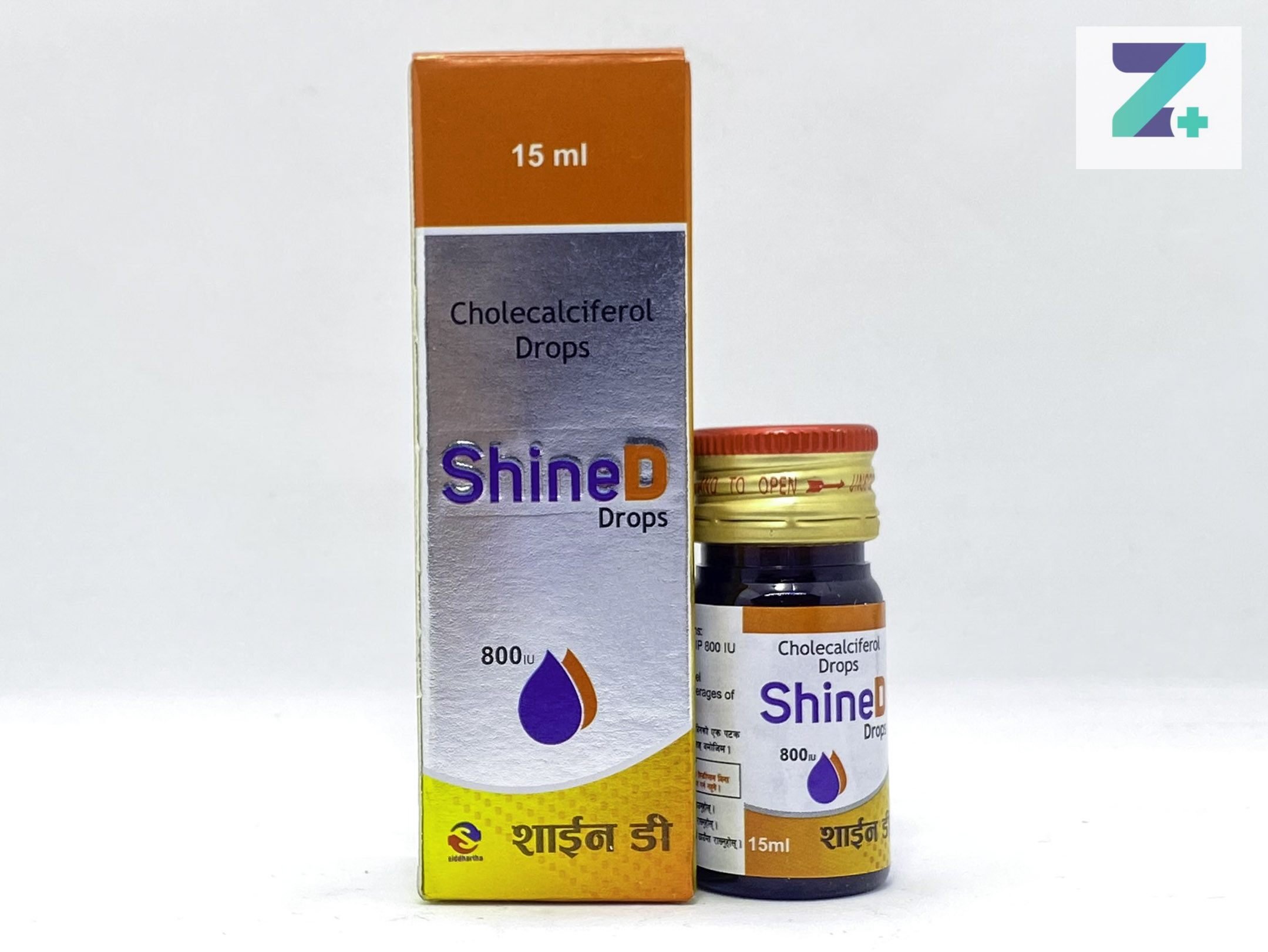
SHINE D DROPS
Price: Rs.135.00
10% off
In stock
Loose stock: 0
Description
SHINE D DROPS DROP 15 ML
Details
Composition
CHOLECALCIFEROL 800 IU
# CHOLECALCIFEROL 800 IU
## SHORT DESCRIPTION
**Cholecalciferol 800 IU** is a form of **vitamin D3** used to help maintain adequate vitamin D levels and support calcium and phosphate absorption. Vitamin D3 is important for healthy bones, teeth, muscles, and normal calcium metabolism.
It may be used to prevent or treat vitamin D deficiency and as part of treatment for certain bone-health conditions when recommended by a healthcare professional.
---
## KEY BENEFITS
* Helps maintain healthy **vitamin D levels**.
* Supports absorption of **calcium and phosphate** from the digestive tract.
* Supports normal **bone and teeth health**.
* Helps maintain normal muscle function.
* Supports proper mineralization and maintenance of bones.
* May help prevent vitamin D deficiency when dietary intake or sunlight exposure is inadequate.
---
## USES / INDICATIONS
Cholecalciferol 800 IU may be used for:
* **Prevention of vitamin D deficiency**
* Supplementation when dietary vitamin D intake is inadequate
* Maintaining bone health
* Supporting calcium absorption
* As part of management of vitamin D deficiency and related bone disorders, when prescribed
Vitamin D supplementation may be particularly relevant for people with limited sunlight exposure, inadequate dietary intake, or increased vitamin D requirements.
---
## HOW IT WORKS
Cholecalciferol is **vitamin D3**, a fat-soluble vitamin and precursor to the active form of vitamin D.
After absorption, vitamin D3 undergoes activation in the **liver and kidneys**.
Active vitamin D helps:
* Increase intestinal absorption of calcium and phosphate.
* Maintain appropriate blood calcium levels.
* Support normal bone mineralization.
* Support normal muscle and neuromuscular function.
**Cholecalciferol → active vitamin D → improved calcium/phosphate absorption → supports healthy bones and muscles.**
---
## DOSAGE & ADMINISTRATION
Take Cholecalciferol 800 IU according to the instructions on the product label or as recommended by your healthcare professional.
### General Administration
* The **800 IU dose is commonly used as a daily vitamin D supplement** in appropriate individuals.
* Take it regularly at approximately the same time each day if using it daily.
* It may generally be taken with or without food.
* Because vitamin D is fat-soluble, taking it with a meal containing some dietary fat may improve absorption.
* Do not exceed the recommended dose unless advised by a healthcare professional.
### Different Requirements
The appropriate vitamin D dose varies according to:
* Age
* Existing vitamin D level
* Diet and sunlight exposure
* Kidney and liver function
* Pregnancy or breastfeeding
* Other vitamin D or calcium products being used
Higher doses may be required for confirmed vitamin D deficiency, but these should be medically supervised.
### Missed Dose
If you forget a dose, take it when remembered unless it is nearly time for the next dose.
**Do not take an excessive amount to compensate for a missed dose.**
---
## SIDE EFFECTS
Cholecalciferol at recommended doses is generally well tolerated.
### Possible Side Effects
Side effects are uncommon at appropriate doses but may include:
* Nausea
* Abdominal discomfort
* Constipation
* Loss of appetite
### Excessive Vitamin D Intake
Taking excessive amounts over a prolonged period can cause **hypercalcemia (high blood calcium)**.
Symptoms may include:
* Nausea or vomiting
* Constipation
* Excessive thirst
* Frequent urination
* Abdominal pain
* Weakness
* Fatigue
* Confusion
* Kidney stones
Seek medical advice if symptoms suggest excessive vitamin D or calcium intake.
---
## PRECAUTIONS & WARNINGS
### Do Not Exceed the Recommended Dose
Vitamin D is fat-soluble and can accumulate in the body. Taking high doses unnecessarily can lead to vitamin D toxicity and hypercalcemia.
### Kidney Disease
Tell your healthcare professional if you have:
* Kidney disease
* Kidney stones
* Reduced kidney function
Vitamin D supplementation may require monitoring in these conditions.
### High Calcium Levels
Do not use additional vitamin D or calcium supplements without medical advice if you have previously had **hypercalcemia**.
### Sarcoidosis and Similar Conditions
Some granulomatous disorders can increase sensitivity to vitamin D and raise calcium levels. Medical supervision is recommended.
### Other Vitamin D Products
Check other medicines, multivitamins, and supplements you take to avoid accidentally consuming excessive vitamin D.
### Pregnancy and Breastfeeding
Vitamin D is important during pregnancy and breastfeeding, but supplementation should remain within recommended amounts. Ask your healthcare professional about the appropriate dose.
---
## DRUG INTERACTIONS
Tell your healthcare professional about all medicines and supplements you use.
### Calcium Supplements
Taking high amounts of calcium together with vitamin D may increase the risk of **high blood calcium levels**.
### Thiazide Diuretics
Medicines such as hydrochlorothiazide can reduce calcium excretion. Combined use with vitamin D may increase the risk of hypercalcemia in susceptible individuals.
### Digoxin
Vitamin D-induced increases in calcium can potentially increase the risk of cardiac effects from **digoxin**. Medical monitoring may be required.
### Anticonvulsants
Some medicines used to treat seizures, such as **phenytoin, carbamazepine, and phenobarbital**, may increase vitamin D metabolism and reduce its effectiveness.
### Corticosteroids
Long-term corticosteroid therapy may reduce calcium absorption and interfere with vitamin D metabolism.
### Cholestyramine
Cholestyramine may reduce the absorption of fat-soluble vitamins, including vitamin D.
### Orlistat
Orlistat can reduce absorption of fat-soluble vitamins, potentially decreasing vitamin D absorption.
---
## STORAGE INFORMATION
* Store according to the manufacturer's instructions.
* Keep in the original packaging.
* Protect from excessive heat, moisture, and direct sunlight.
* Keep the container tightly closed where applicable.
* Keep out of reach of children.
* Do not use after the expiry date.
---
## PRESCRIPTION STATUS
**Usually available as a non-prescription vitamin supplement**, although prescription requirements can vary by country, product formulation, and strength.
Higher-dose vitamin D preparations used for treatment of confirmed deficiency may require medical supervision or a prescription.
---
## GENUINE MEDICINE ASSURANCE
When purchasing **Cholecalciferol 800 IU**, obtain it from a **licensed pharmacy or reputable authorized medicine supplier**.
Check the packaging for:
* Correct product name and vitamin D strength
* Manufacturer information
* Batch/lot number
* Manufacturing and expiry dates
* Intact packaging and seal
* Appropriate regulatory labeling
Avoid products with damaged packaging, altered labels, missing batch details, or questionable authenticity.
---
# FAQ – CHOLECALCIFEROL 800 IU
### 1. What is Cholecalciferol 800 IU?
Cholecalciferol 800 IU is a **vitamin D3 supplement** used to help maintain adequate vitamin D levels and support healthy bones, muscles, and calcium metabolism.
### 2. What is Cholecalciferol also called?
Cholecalciferol is commonly known as **vitamin D3**.
### 3. What is Cholecalciferol 800 IU used for?
It may be used to prevent or correct inadequate vitamin D intake and to support bone and muscle health.
### 4. Does vitamin D3 help bones?
Yes. Vitamin D helps the body absorb calcium and phosphate, which are essential for normal bone formation and maintenance.
### 5. How should I take Cholecalciferol 800 IU?
Take it according to the product instructions or your healthcare professional's recommendation. It can generally be taken with or without food.
### 6. Is it better to take vitamin D with food?
Vitamin D is fat-soluble, so taking it with a meal containing some dietary fat may help absorption.
### 7. Can I take Cholecalciferol 800 IU every day?
An 800 IU daily dose is commonly used for vitamin D supplementation in appropriate individuals. Your individual requirement depends on age, health status, diet, sun exposure, and vitamin D levels.
### 8. Can I take calcium and vitamin D together?
Yes, calcium and vitamin D are often used together because vitamin D helps the body absorb calcium. However, excessive calcium and vitamin D intake can cause high calcium levels.
### 9. Can I take Cholecalciferol during pregnancy?
Vitamin D is important during pregnancy, but supplementation should be taken within recommended amounts. Consult your healthcare professional regarding the appropriate dose.
### 10. Can I take vitamin D while breastfeeding?
Vitamin D can be used during breastfeeding, but the appropriate dose depends on the mother's and infant's needs. Ask your healthcare professional for individualized advice.
### 11. Can too much vitamin D be harmful?
Yes. Excessive long-term intake can cause **vitamin D toxicity and high blood calcium levels**, which may damage the kidneys and cause other complications.
### 12. What are the symptoms of too much vitamin D?
Possible symptoms include excessive thirst, frequent urination, nausea, vomiting, constipation, weakness, fatigue, confusion, and kidney stones.
### 13. Does Cholecalciferol 800 IU cause weight gain?
Weight gain is not a typical effect of vitamin D3 supplementation.
### 14. Can vitamin D3 help with muscle health?
Yes. Adequate vitamin D is important for normal muscle function, and correcting vitamin D deficiency may support muscle health.
### 15. Can I take Cholecalciferol with other vitamins?
It can generally be combined with other vitamins, but check the ingredients of multivitamins and supplements to avoid accidentally taking excessive vitamin D.
### 16. Can vitamin D interact with other medicines?
Yes. Important interactions can occur with certain diuretics, anticonvulsants, corticosteroids, cholestyramine, orlistat, and some heart medicines such as digoxin.
### 17. How long does it take vitamin D3 to work?
The time required to correct vitamin D deficiency varies. Blood vitamin D levels may take weeks or longer to increase depending on the dose and individual circumstances.
### 18. Does Cholecalciferol 800 IU treat severe vitamin D deficiency?
An 800 IU daily dose may not be sufficient to treat significant deficiency in every patient. Confirmed deficiency may require a different dosing regimen under medical supervision.
### 19. Is Cholecalciferol 800 IU prescription-only?
Many 800 IU vitamin D3 products are available without a prescription, but **regulations vary by country and formulation**.
### 20. Can I take Cholecalciferol 800 IU long term?
It may be appropriate for long-term supplementation in some people, but prolonged use should remain within recommended intake levels. Individuals taking multiple vitamin D or calcium products should discuss their total intake with a healthcare professional.
---
## MEDICAL DISCLAIMER
This information about **Cholecalciferol 800 IU (Vitamin D3)** is provided for general educational purposes only and does not replace professional medical advice, diagnosis, or treatment.
The appropriate vitamin D intake varies between individuals. People with kidney disease, kidney stones, hypercalcemia, certain medical conditions, or those taking multiple vitamin D/calcium-containing products should seek professional advice before supplementation.
Do not exceed the recommended dose unless specifically advised by a healthcare professional. Excessive vitamin D intake can cause **hypercalcemia and vitamin D toxicity**.
If you develop severe nausea, vomiting, excessive thirst, frequent urination, confusion, significant weakness, or other concerning symptoms while taking vitamin D, seek medical advice promptly.