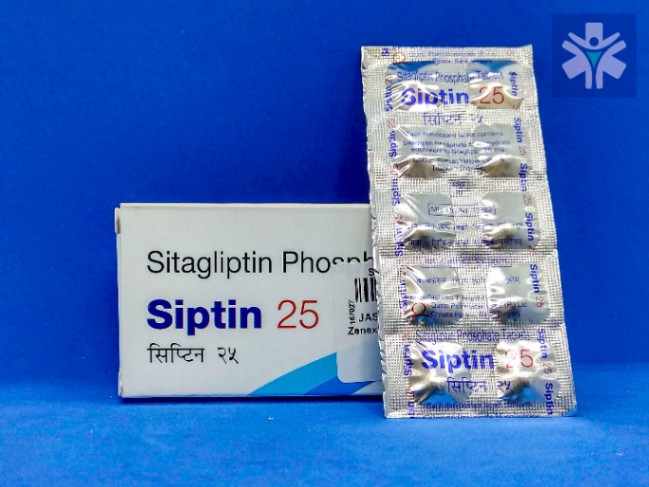
SIPTIN 25
Price: Rs.150.00
15% off
In stock
Loose stock: 0
Description
SIPTIN 25 TAB 10
Details
Composition
SITAGLIPTIN 25 MG
# Sitagliptin 25 mg
## SHORT DESCRIPTION
**Sitagliptin 25 mg** is an oral antidiabetic medicine belonging to the **DPP-4 inhibitor** class. It is used to help control blood glucose levels in adults with **type 2 diabetes mellitus**, along with a suitable diet and regular physical activity.
The 25 mg strength is commonly used in patients with **significantly reduced kidney function**, because sitagliptin is primarily eliminated through the kidneys.
Sitagliptin is **not used to treat type 1 diabetes or diabetic ketoacidosis**.
## KEY BENEFITS
* Helps lower elevated blood glucose levels in type 2 diabetes
* Supports improved blood sugar control when used with diet and exercise
* Helps increase the body's glucose-dependent insulin response
* Reduces inappropriate glucagon release after meals
* Has a relatively low risk of causing hypoglycemia when used alone
* May be used alone or in combination with other diabetes medicines when prescribed
* The 25 mg strength can be useful for patients with severe renal impairment
## USES / INDICATIONS
Sitagliptin 25 mg may be prescribed for:
* **Type 2 diabetes mellitus**
* Improvement of blood glucose control along with diet and exercise
* Combination therapy with other antidiabetic medicines when additional glucose control is required
It may be used with medicines such as **metformin, sulfonylureas, insulin, or certain other diabetes medicines**, depending on the patient's medical condition and treatment plan.
### Important
Sitagliptin is **not indicated for type 1 diabetes mellitus** and should not be used to treat diabetic ketoacidosis.
## HOW IT WORKS
Sitagliptin is a **DPP-4 (dipeptidyl peptidase-4) inhibitor**.
DPP-4 normally breaks down incretin hormones such as **GLP-1 and GIP**. By inhibiting DPP-4, sitagliptin increases the activity of these hormones.
This results in:
* Increased insulin release when blood glucose is elevated
* Reduced glucagon secretion when blood glucose is elevated
* Reduced glucose production by the liver
* Improved overall blood glucose control
**Sitagliptin → DPP-4 inhibition → Increased incretin activity → Increased glucose-dependent insulin + reduced glucagon → Lower blood glucose**
## DOSAGE & ADMINISTRATION
The usual adult dose of sitagliptin for patients with normal kidney function is **100 mg once daily**.
**Sitagliptin 25 mg once daily is generally intended for patients with severe renal impairment or end-stage kidney disease, including those receiving dialysis.**
Therefore, **25 mg should not be considered the standard dose for every patient**.
* Take exactly as prescribed.
* It may be taken **with or without food**.
* Take it at approximately the same time each day.
* Swallow the tablet with water.
* Do not change the dose without consulting your doctor.
* Kidney function should be assessed before and during treatment when clinically appropriate.
### Missed Dose
Take the missed dose when remembered unless it is nearly time for the next dose. **Do not take two doses together.**
## SIDE EFFECTS
Common side effects may include:
* Headache
* Nasal congestion
* Sore throat
* Upper respiratory tract symptoms
* Nausea
* Diarrhea
When sitagliptin is combined with insulin or a sulfonylurea, the risk of **low blood sugar (hypoglycemia)** may increase.
### Serious Side Effects
Seek medical attention if you experience:
* Severe and persistent abdominal pain
* Severe allergic reaction
* Swelling of the face, lips, tongue, or throat
* Difficulty breathing
* Severe rash or blistering
* Significant joint pain
* Symptoms suggesting low blood sugar
### Pancreatitis
Rarely, sitagliptin may be associated with **acute pancreatitis**.
Contact your doctor promptly if you develop persistent, severe abdominal pain, particularly if it radiates to the back and is accompanied by vomiting.
## PRECAUTIONS & WARNINGS
### Kidney Disease
Sitagliptin is primarily eliminated through the kidneys. The dose must be adjusted according to kidney function.
The **25 mg dose is generally used in severe renal impairment or end-stage kidney disease**.
### Pancreatitis
Tell your doctor if you have previously had pancreatitis. Seek medical attention for persistent severe abdominal pain.
### Hypoglycemia
Sitagliptin alone has a relatively low risk of hypoglycemia. However, the risk increases when it is combined with:
* Insulin
* Sulfonylureas
* Certain other glucose-lowering medicines
Your doctor may adjust the dose of the other medicine if necessary.
### Heart Failure
Tell your doctor if you have heart failure or a history of heart-related problems. Your healthcare professional will determine whether sitagliptin is appropriate for you.
### Severe Allergic Reactions
Rare but serious allergic reactions, including **angioedema and severe skin reactions**, can occur. Seek immediate medical attention for facial swelling, difficulty breathing, blistering, or severe rash.
### Pregnancy
Tell your doctor if you are pregnant, planning pregnancy, or become pregnant while taking sitagliptin. Diabetes management during pregnancy requires individualized medical supervision.
### Breastfeeding
Consult your doctor before using sitagliptin while breastfeeding.
## DRUG INTERACTIONS
Sitagliptin has relatively few major drug interactions, but important considerations include:
* **Insulin**
* **Sulfonylureas**, such as glimepiride or gliclazide
* **Digoxin**
* Other antidiabetic medicines
* Medicines that affect kidney function may require additional consideration
### Insulin and Sulfonylureas
Combining sitagliptin with insulin or a sulfonylurea can increase the risk of **hypoglycemia**. Your doctor may adjust the dose of the accompanying medicine.
### Digoxin
Sitagliptin can slightly increase digoxin exposure in some patients. Monitoring may be considered when both medicines are used.
Always inform your doctor or pharmacist about all prescription medicines, over-the-counter medicines, vitamins, and herbal supplements you use.
## STORAGE INFORMATION
* Store according to the manufacturer's instructions.
* Keep at room temperature unless otherwise specified.
* Protect from excessive heat, moisture, and direct sunlight.
* Keep the tablets in their original packaging.
* Keep the container tightly closed.
* Keep out of reach and sight of children.
* Do not use after the expiry date.
* Do not use tablets from damaged or improperly sealed packaging.
## PRESCRIPTION STATUS
**Sitagliptin 25 mg is generally a prescription medicine.**
It should be used under the supervision of a healthcare professional, particularly because the dose needs to be selected according to **kidney function**.
## GENUINE MEDICINE ASSURANCE
To help ensure you receive genuine Sitagliptin 25 mg:
* Purchase from a licensed and reputable pharmacy.
* Check the medicine name and strength.
* Verify the manufacturer's information.
* Check the batch number and expiry date.
* Ensure the packaging is sealed and undamaged.
* Check that the product label is clear and complete.
* Avoid products with altered or suspicious packaging.
* Do not purchase prescription medicines from unverified sellers.
* Ask your pharmacist to verify the product if you have concerns about authenticity.
## FAQ SECTION
### What is Sitagliptin 25 mg used for?
Sitagliptin 25 mg is used to help control **blood sugar levels in adults with type 2 diabetes**, together with diet and exercise. The 25 mg dose is generally used in patients with severe kidney impairment or end-stage kidney disease.
### Is Sitagliptin 25 mg a diabetes medicine?
Yes. Sitagliptin is an oral **DPP-4 inhibitor** used to improve blood glucose control in people with type 2 diabetes.
### How does Sitagliptin work?
Sitagliptin inhibits the DPP-4 enzyme, increasing incretin hormone activity. This helps increase insulin release and reduce glucagon secretion when blood glucose is elevated.
### Is 25 mg the normal dose of Sitagliptin?
No. The usual adult dose with normal kidney function is generally **100 mg once daily**. The **25 mg dose is primarily used when kidney function is severely reduced or in end-stage kidney disease**.
### Why is Sitagliptin 25 mg prescribed for kidney disease?
Sitagliptin is mainly eliminated by the kidneys. When kidney function is significantly reduced, the dose is lowered to prevent excessive drug exposure.
### Can Sitagliptin 25 mg be taken with food?
Yes. Sitagliptin can generally be taken **with or without food**.
### Does Sitagliptin cause low blood sugar?
Sitagliptin alone has a relatively low risk of hypoglycemia. However, the risk can increase when it is taken together with insulin or sulfonylureas.
### Can Sitagliptin be taken with Metformin?
Yes. Sitagliptin and metformin are commonly used together for type 2 diabetes when prescribed by a healthcare professional.
### Can Sitagliptin be used for type 1 diabetes?
No. Sitagliptin is not indicated for the treatment of type 1 diabetes or diabetic ketoacidosis.
### Does Sitagliptin cure diabetes?
No. Sitagliptin helps **control blood glucose**, but it does not cure type 2 diabetes. It should be combined with appropriate diet, physical activity, and other treatment recommended by your healthcare professional.
### Can Sitagliptin cause pancreatitis?
Pancreatitis has been reported rarely. Seek medical attention if you develop persistent, severe abdominal pain that may radiate to the back, especially with vomiting.
### Can Sitagliptin affect the kidneys?
Sitagliptin is eliminated mainly through the kidneys, so the dose needs to be adjusted in people with impaired kidney function. Your doctor may monitor kidney function during treatment.
### Can Sitagliptin cause weight gain?
Sitagliptin is generally considered **weight-neutral**, meaning significant weight gain is not typically expected when it is used alone.
### Can Sitagliptin be taken during pregnancy?
Tell your doctor if you are pregnant or planning pregnancy. Your healthcare professional will determine the safest diabetes treatment during pregnancy.
### Can I take Sitagliptin while breastfeeding?
Consult your doctor before taking sitagliptin while breastfeeding, as appropriate diabetes treatment should be individually assessed.
### What should I do if I miss a dose of Sitagliptin?
Take the missed dose when you remember unless it is nearly time for your next dose. Do not take two doses at the same time.
### Can I stop Sitagliptin when my blood sugar becomes normal?
Do not stop sitagliptin without medical advice. Normal blood glucose may indicate that your treatment is working.
### Does Sitagliptin interact with insulin?
Sitagliptin can be used with insulin when prescribed, but combining them may increase the risk of hypoglycemia. Your doctor may adjust the insulin dose.
### Does Sitagliptin interact with glimepiride?
It can be used with sulfonylureas such as glimepiride, but the combination may increase the risk of hypoglycemia. Medical supervision is recommended.
### How long does Sitagliptin take to work?
Sitagliptin begins affecting incretin activity after administration, but the overall improvement in blood glucose control develops with continued treatment and appropriate diet and lifestyle measures.
### Is Sitagliptin safe for elderly patients?
It may be used in older adults, but kidney function is particularly important when determining the appropriate dose.
### How should Sitagliptin 25 mg be stored?
Store it according to the manufacturer's instructions, protected from excessive heat and moisture, and keep it out of children's reach.
## MEDICAL DISCLAIMER
This information about **Sitagliptin 25 mg** is provided for educational and informational purposes only and is not a substitute for professional medical advice, diagnosis, or treatment.
Sitagliptin is a prescription medicine for **type 2 diabetes**. The **25 mg strength is generally reserved for patients with severe renal impairment or end-stage kidney disease**, so the correct dose should be determined by a healthcare professional based on kidney function.
Seek medical attention for symptoms such as **severe persistent abdominal pain, serious allergic reactions, facial or throat swelling, difficulty breathing, or severe skin reactions**.
Always follow your doctor's prescription and the manufacturer's instructions regarding dosage, monitoring, interactions, and duration of treatment.