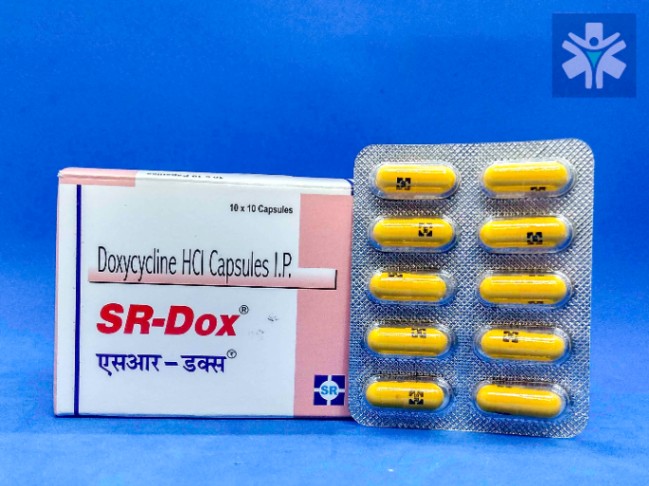
SR-DOX
Price: Rs.60.00
10% off
In stock
Loose stock: 5
Description
SR-DOX CAP 10
Details
Composition
DOXYCYCLINE 100 MG
# Doxycycline 100 mg
## Short Description
**Doxycycline 100 mg** is a broad-spectrum **tetracycline-class antibiotic** used to treat a variety of bacterial infections. It may be prescribed for certain respiratory, skin, urinary, sexually transmitted and other susceptible bacterial infections. It is also commonly used for **acne and rosacea** and for prevention or treatment of certain infections such as **malaria**, depending on the clinical situation.
Doxycycline works by inhibiting bacterial protein synthesis, thereby stopping susceptible bacteria from growing and multiplying.
> **Important:** Doxycycline treats certain **bacterial infections** and does not work against viral infections such as the common cold or influenza.
---
## Key Benefits
* Effective against a broad range of **susceptible bacteria**.
* Used to treat various bacterial infections.
* Commonly prescribed for **acne and inflammatory skin conditions**.
* May be used for selected **sexually transmitted infections**.
* Can be used for certain **tick-borne and other vector-borne infections**.
* Available as an oral medicine with convenient once- or twice-daily dosing for many indications.
* Can be used for certain malaria-prevention regimens when appropriate.
---
## Uses / Indications
Doxycycline 100 mg may be prescribed for susceptible infections such as:
### Respiratory Infections
May be used for selected bacterial respiratory infections, including infections caused by susceptible organisms.
### Skin Conditions
Doxycycline is commonly prescribed for:
* Moderate-to-severe inflammatory acne
* Rosacea
* Certain bacterial skin infections
### Sexually Transmitted Infections
Depending on the organism and local guidelines, doxycycline may be used for infections such as:
* Chlamydia
* Certain nongonococcal urethritis
* Syphilis in selected situations when appropriate alternatives are required
### Tick-Borne and Other Infections
It is commonly used for certain infections such as:
* Lyme disease
* Rickettsial infections
* Anaplasmosis
* Some other vector-borne bacterial infections
### Other Infections
Doxycycline may also be used for selected:
* Eye infections
* Urinary infections
* Gastrointestinal infections
* Periodontal infections
* Other susceptible bacterial infections
### Malaria Prevention
Doxycycline may be prescribed for **malaria prophylaxis** in appropriate travelers, depending on destination and resistance patterns.
> The appropriate indication depends on the identified or suspected organism, local antibiotic resistance and the patient's clinical condition.
---
## How It Works
Doxycycline belongs to the **tetracycline antibiotic** class.
It enters susceptible bacterial cells and binds to the **30S ribosomal subunit**.
This interferes with the addition of amino acids during protein production, preventing bacteria from producing essential proteins required for growth and reproduction.
### In simple terms:
**Doxycycline → blocks bacterial protein synthesis → prevents bacterial growth → helps control the infection.**
Doxycycline is generally considered **bacteriostatic**, meaning it primarily stops susceptible bacteria from multiplying rather than directly killing them.
---
## Dosage & Administration
### Adults
The dose depends on the infection being treated.
A commonly used adult regimen is:
**100 mg once or twice daily**, depending on the condition and prescribing instructions.
Some infections may require an initial higher dose followed by a lower maintenance schedule.
### Acne
For inflammatory acne, doxycycline is commonly prescribed at **100 mg daily or in divided doses**, depending on the clinical situation.
### Malaria Prevention
Dosing for malaria prevention is different from treatment of bacterial infections and should follow the specific travel-health prescription.
### How to Take Doxycycline
* Take exactly as prescribed.
* Swallow with a **full glass of water**.
* Remain sitting or standing upright for at least **30 minutes after taking it**.
* Do not take immediately before lying down or going to sleep.
* It may be taken with food if stomach upset occurs.
* Follow product-specific instructions regarding food and dairy products.
### Important
Do not stop the antibiotic early simply because symptoms improve unless advised by your healthcare professional.
The treatment duration depends on the infection and may range from several days to several weeks.
---
## Side Effects
### Common Side Effects
Possible side effects include:
* Nausea
* Vomiting
* Diarrhea
* Abdominal discomfort
* Heartburn
* Headache
* Loss of appetite
### Photosensitivity
Doxycycline can make the skin **more sensitive to sunlight**.
This may result in:
* Sunburn occurring more quickly
* Skin redness
* Rash
Use appropriate sun protection and limit unnecessary exposure to strong sunlight or tanning beds.
### Esophageal Irritation
Doxycycline can cause:
* Esophagitis
* Painful swallowing
* Difficulty swallowing
* Chest discomfort
Taking the medicine with plenty of water and remaining upright afterward helps reduce this risk.
### Serious Side Effects
Seek medical attention for:
* Severe allergic reaction
* Difficulty breathing
* Severe skin reactions
* Persistent severe headache or visual disturbances
* Severe or persistent diarrhea
* Bloody diarrhea
* Difficulty swallowing or severe chest pain
---
## Precautions & Warnings
### Pregnancy
Doxycycline is generally **avoided during pregnancy**, particularly after the first trimester, unless a healthcare professional determines that it is necessary.
For some serious infections, tetracyclines may still be considered when the benefits outweigh the risks.
### Children
Routine use in children **under 8 years of age** is generally avoided because tetracyclines can cause permanent tooth discoloration and affect bone development.
However, doxycycline may be specifically recommended for young children for certain serious infections, such as some **rickettsial infections**, when the benefits outweigh the risks.
### Sun Exposure
Doxycycline may increase sensitivity to sunlight.
* Use sunscreen.
* Wear protective clothing.
* Avoid prolonged direct sunlight.
* Avoid tanning beds.
### Esophageal Irritation
Always take the medicine with adequate water and remain upright afterward.
### Liver Disease
Tell your healthcare professional if you have significant liver disease.
### Kidney Disease
Doxycycline is generally less dependent on kidney elimination than older tetracyclines, but your healthcare professional should still know about any kidney condition.
### Severe Diarrhea
Antibiotics can occasionally cause **Clostridioides difficile-associated diarrhea**. Seek medical attention if severe or persistent diarrhea develops during or after treatment.
### Antibiotic Resistance
Use doxycycline only when prescribed for an appropriate bacterial infection. Unnecessary antibiotic use contributes to antimicrobial resistance.
---
## Drug Interactions
### Antacids
Antacids containing:
* Aluminum
* Magnesium
* Calcium
can reduce doxycycline absorption.
Separate administration according to the product instructions or your healthcare professional's advice.
### Iron Supplements
Iron can significantly reduce doxycycline absorption.
Doxycycline should generally be taken several hours apart from iron-containing supplements.
### Calcium and Dairy Products
Calcium can reduce doxycycline absorption in some formulations.
Follow the specific product instructions regarding milk, dairy products and calcium-containing supplements.
### Bismuth
Bismuth-containing medicines can reduce doxycycline absorption.
### Warfarin
Doxycycline may enhance the effect of **warfarin** in some patients. INR monitoring may be necessary.
### Isotretinoin
Combining doxycycline with **isotretinoin** may increase the risk of increased intracranial pressure and is generally avoided.
### Certain Antiepileptic Medicines
Medicines such as:
* Carbamazepine
* Phenytoin
* Barbiturates
may reduce doxycycline concentrations and potentially decrease its effectiveness.
### Other Medicines
Tell your healthcare professional about all:
* Prescription medicines
* OTC medicines
* Vitamins
* Mineral supplements
* Herbal products
---
## Storage Information
* Store at **room temperature**, according to the manufacturer's instructions.
* Keep capsules/tablets in their original packaging.
* Protect from excessive heat and moisture.
* Keep away from direct sunlight.
* Keep out of reach of children.
* Do not use after the expiry date.
* Do not use damaged or improperly stored medicine.
---
## Prescription Status
**Doxycycline 100 mg is a prescription antibiotic in many countries.**
It should be used only when prescribed or recommended by an appropriately qualified healthcare professional.
---
## Genuine Medicine Assurance
When purchasing **Doxycycline 100 mg**:
* Purchase from a **licensed and reputable pharmacy**.
* Check that the packaging is sealed and undamaged.
* Verify the active ingredient and strength: **Doxycycline 100 mg**.
* Check the manufacturer's name, batch/lot number and expiry date.
* Ensure the packaging contains appropriate regulatory information.
* Avoid medicines with suspicious packaging or altered labels.
* Do not purchase antibiotics from unauthorized sellers.
* Do not use leftover antibiotics from a previous illness.
* If you suspect a counterfeit product, contact the manufacturer, licensed pharmacy or relevant medicines regulatory authority.
---
# Frequently Asked Questions (FAQ)
### 1. What is Doxycycline 100 mg used for?
Doxycycline 100 mg is used to treat various **susceptible bacterial infections**, including certain respiratory, skin, sexually transmitted and tick-borne infections. It is also commonly used for acne and rosacea.
### 2. Is Doxycycline an antibiotic?
Yes. Doxycycline is a **tetracycline-class antibiotic**.
### 3. Does Doxycycline work for viral infections?
**No.** Doxycycline does not treat viral infections such as the common cold, influenza or most cases of viral sore throat.
### 4. How does Doxycycline work?
It binds to the bacterial **30S ribosomal subunit** and inhibits protein synthesis, preventing susceptible bacteria from growing and multiplying.
### 5. What is Doxycycline 100 mg commonly prescribed for?
Common uses include **acne, rosacea, chlamydial infections, Lyme disease, rickettsial infections and certain respiratory or other bacterial infections**.
### 6. Can Doxycycline treat acne?
Yes. Doxycycline is commonly prescribed for **moderate-to-severe inflammatory acne**, usually for a limited treatment period and often alongside topical acne treatments.
### 7. Can Doxycycline treat chlamydia?
Yes. Doxycycline is commonly used to treat **chlamydial infections** according to current treatment guidelines.
### 8. Can Doxycycline treat a urinary tract infection?
It is **not a standard first-choice antibiotic for most uncomplicated UTIs**. Its use depends on the causative organism and antibiotic susceptibility.
### 9. How should Doxycycline 100 mg be taken?
Take it with a **full glass of water** and remain upright for at least 30 minutes afterward. Follow your prescribed dosing schedule.
### 10. Can I take Doxycycline with milk?
Calcium can interfere with doxycycline absorption. Follow the specific product instructions and ask your pharmacist about appropriate separation from dairy products or calcium supplements.
### 11. Can I take Doxycycline with iron tablets?
Iron can reduce doxycycline absorption. **Separate iron supplements from doxycycline** according to professional or product-specific instructions.
### 12. Can Doxycycline make you sensitive to sunlight?
Yes. Doxycycline can cause **photosensitivity**, making sunburn more likely. Use sun protection and avoid prolonged sun exposure.
### 13. Can Doxycycline cause stomach problems?
Yes. Nausea, abdominal discomfort, diarrhea and heartburn can occur. Taking the medicine correctly with sufficient water can help reduce esophageal irritation.
### 14. Can I lie down after taking Doxycycline?
It is recommended to remain **upright for at least 30 minutes** after taking doxycycline to reduce the risk of esophageal irritation.
### 15. Can children take Doxycycline 100 mg?
Doxycycline is generally avoided routinely in children under 8, but it can be used for certain serious infections when medically indicated. A healthcare professional should determine the dose.
### 16. Can Doxycycline be taken during pregnancy?
Doxycycline is generally avoided during pregnancy unless a healthcare professional determines that treatment is necessary for a specific infection.
### 17. Can I drink alcohol while taking Doxycycline?
Alcohol may potentially affect treatment or worsen side effects in some circumstances. It is advisable to limit or avoid alcohol and follow your healthcare professional's advice.
### 18. What happens if I miss a Doxycycline dose?
Take the missed dose when remembered unless it is nearly time for the next dose. **Do not double the next dose.**
### 19. Can I stop Doxycycline when I feel better?
Do not change or stop antibiotic treatment without medical advice. Completing the prescribed course helps ensure the infection is appropriately treated.
### 20. Is Doxycycline 100 mg available without a prescription?
Doxycycline is **prescription-only in many countries**. Regulations vary, but antibiotics should be used under appropriate professional guidance.
---
## Medical Disclaimer
This information about **Doxycycline 100 mg** is provided for educational and general informational purposes only. It is **not a substitute for professional medical advice, diagnosis or treatment**.
Doxycycline is an antibiotic and should only be used when there is an appropriate indication for antibacterial treatment. Unnecessary or incorrect antibiotic use can contribute to **antimicrobial resistance**.
Take doxycycline with plenty of water and remain upright after taking it to reduce the risk of esophageal irritation. Use appropriate sun protection because doxycycline can increase photosensitivity.
Doxycycline is generally avoided during pregnancy and in children under 8 years of age except when a healthcare professional determines that treatment is necessary for a specific serious infection.
**Do not start, stop or change the dose of Doxycycline 100 mg without appropriate medical advice.** Seek medical attention for severe allergic reactions, severe skin reactions, persistent severe headache or visual changes, or severe/persistent or bloody diarrhea.