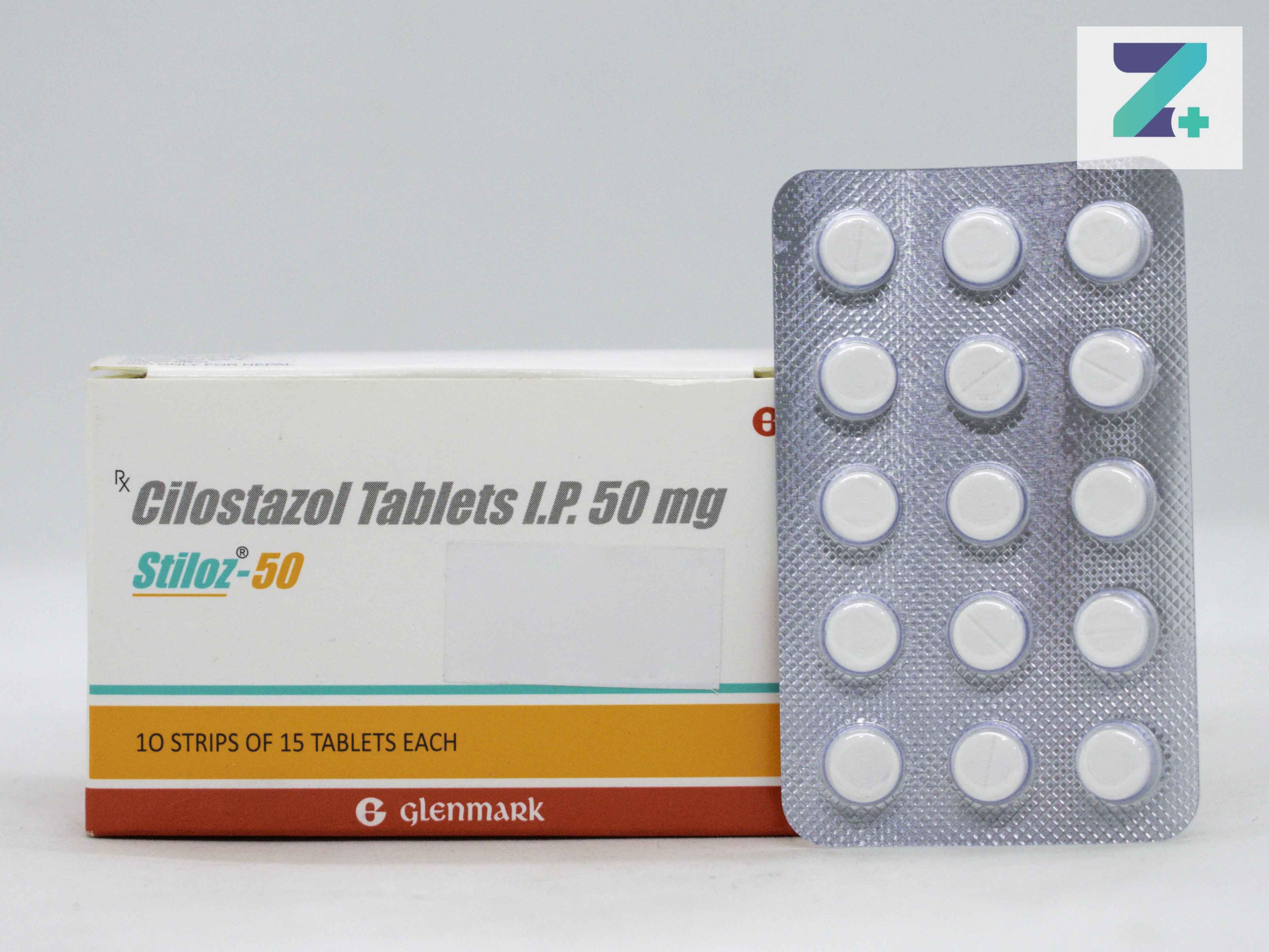
STILOZ 50MG
Price: Rs.429.60
13% off
In stock
Loose stock: 0
Description
STILOZ 50MG TAB 15
Details
Composition
CILOSTAZOL 50 MG
# CILOSTAZOL 50 MG
## SHORT DESCRIPTION
**Cilostazol 50 mg** is a prescription medicine belonging to the **phosphodiesterase-3 (PDE-3) inhibitor** class. It is primarily used to improve symptoms of **intermittent claudication**, a condition in which reduced blood flow to the legs causes pain or cramping during walking.
Cilostazol helps improve walking ability by **inhibiting platelet aggregation and dilating blood vessels**, thereby improving blood flow to the limbs.
---
## KEY BENEFITS
* Helps improve **walking distance** in people with intermittent claudication.
* May reduce leg pain and cramping associated with walking.
* Improves blood flow to the lower limbs.
* Helps inhibit excessive platelet aggregation.
* Produces vasodilation, which can improve peripheral circulation.
* May improve exercise tolerance in appropriately selected patients.
**Important:** Cilostazol improves symptoms and walking ability but does not cure the underlying peripheral artery disease.
---
## USES / INDICATIONS
Cilostazol is primarily indicated for:
### Intermittent Claudication
It is used to reduce symptoms of intermittent claudication associated with **peripheral arterial disease (PAD)**.
Typical symptoms include:
* Pain or cramping in the calf while walking
* Leg discomfort during exercise
* Symptoms that improve after resting
* Reduced walking distance due to leg pain
Lifestyle measures such as **smoking cessation, regular supervised exercise, weight management, and cardiovascular risk-factor control** remain important components of PAD management.
---
## HOW IT WORKS
Cilostazol is a **PDE-3 inhibitor**.
It increases levels of **cyclic adenosine monophosphate (cAMP)** inside platelets and vascular smooth-muscle cells.
This produces two important effects:
1. **Inhibits platelet aggregation** — reducing the tendency of platelets to clump together.
2. **Promotes vasodilation** — relaxing blood vessels and improving blood flow.
**Cilostazol → PDE-3 inhibition → increased cAMP → platelet inhibition + vasodilation → improved limb blood flow and walking ability.**
---
## DOSAGE & ADMINISTRATION
### Usual Adult Dose
The commonly recommended dose is:
**100 mg twice daily**, usually taken at least **30 minutes before or 2 hours after breakfast and dinner**.
A **50 mg twice-daily dose** may be appropriate in certain situations, particularly when cilostazol is used with specific medicines that inhibit CYP3A4 or CYP2C19.
**Do not change between 50 mg and 100 mg without medical advice.**
### How to Take
* Take twice daily as prescribed.
* Take doses at approximately the same times each day.
* Take on an empty stomach as directed.
* Swallow with water.
* Do not exceed the prescribed dose.
### Missed Dose
Take the missed dose when remembered unless it is nearly time for the next dose.
**Do not take two doses at once.**
### Treatment Response
Improvement in walking ability may take several weeks. If there is no meaningful improvement after an appropriate treatment period, your healthcare professional may reassess whether cilostazol should be continued.
---
## SIDE EFFECTS
### Common Side Effects
Possible side effects include:
* Headache
* Diarrhea
* Abnormal stools
* Dizziness
* Palpitations
* Rapid heartbeat
* Abdominal discomfort
* Nausea
* Indigestion
* Swelling of the ankles or feet
### Serious Side Effects
Seek medical attention if you experience:
* Chest pain
* Fainting
* Severe or persistent palpitations
* Unusual or severe bleeding
* Black or bloody stools
* Severe allergic reaction
* Difficulty breathing
* Significant swelling
---
## PRECAUTIONS & WARNINGS
### Heart Failure — Important Contraindication
**Cilostazol is contraindicated in patients with congestive heart failure of any severity.**
Do not use cilostazol if you have been diagnosed with heart failure unless specifically directed by an appropriate specialist under circumstances consistent with current prescribing guidance.
### Heart Rhythm Problems
Cilostazol can increase heart rate and may cause palpitations or tachyarrhythmias.
Tell your healthcare professional if you have:
* Abnormal heart rhythms
* Fast heartbeat
* Angina
* Significant cardiovascular disease
### Bleeding Risk
Because cilostazol inhibits platelet aggregation, it may increase bleeding risk.
Tell your healthcare professional if you have:
* A bleeding disorder
* Active bleeding
* Recent surgery
* A history of bleeding complications
### Low Blood Pressure
Dizziness or lightheadedness may occur, particularly in susceptible individuals.
### Kidney Disease
Patients with significant kidney impairment may require additional medical assessment before treatment.
### Liver Disease
Tell your healthcare professional if you have liver disease.
### Pregnancy
Cilostazol should generally **not be used during pregnancy unless specifically determined necessary by a healthcare professional**, as adequate safety information is limited.
### Breastfeeding
It is generally recommended to avoid cilostazol during breastfeeding because it is not known whether it passes into human milk.
---
## DRUG INTERACTIONS
Cilostazol is metabolized primarily through **CYP3A4 and CYP2C19**, so medicines affecting these enzymes can alter cilostazol concentrations.
### CYP3A4 Inhibitors
Medicines such as:
* Ketoconazole
* Itraconazole
* Erythromycin
* Clarithromycin
* Certain HIV protease inhibitors
may increase cilostazol exposure.
A lower dose, such as **50 mg twice daily**, may be recommended with certain strong or moderate enzyme inhibitors according to prescribing guidance.
### CYP2C19 Inhibitors
Medicines such as:
* Omeprazole
* Some other proton-pump inhibitors
can affect cilostazol metabolism and may require dose adjustment.
### Antiplatelet Medicines
Cilostazol may be used with other antiplatelet medicines in selected patients, but combined therapy can increase bleeding risk.
### Anticoagulants
Medicines such as:
* Warfarin
* Apixaban
* Rivaroxaban
* Dabigatran
may increase bleeding risk when combined with cilostazol.
Use together only under medical supervision.
### Other Medicines Affecting Heart Rate
Tell your healthcare professional if you take medicines that increase or decrease heart rate or affect cardiac rhythm.
---
## STORAGE INFORMATION
* Store at room temperature according to the manufacturer's instructions.
* Keep in the original packaging.
* Protect from excessive heat, moisture, and direct sunlight.
* Keep the container tightly closed.
* Keep out of reach of children.
* Do not use after the expiry date.
---
## PRESCRIPTION STATUS
**Prescription medicine.**
Cilostazol 50 mg should be used under the supervision of a qualified healthcare professional, particularly because it is contraindicated in patients with heart failure and can affect heart rate and bleeding risk.
---
## GENUINE MEDICINE ASSURANCE
When purchasing **Cilostazol 50 mg**, obtain it from a **licensed pharmacy or authorized medicine supplier**.
Check the packaging for:
* Correct medicine name and strength
* Manufacturer information
* Batch/lot number
* Manufacturing and expiry dates
* Intact seal and packaging
* Appropriate regulatory labeling
Do not use products with damaged packaging, altered labels, missing batch information, or questionable authenticity.
---
# FAQ – CILOSTAZOL 50 MG
### 1. What is Cilostazol 50 mg used for?
Cilostazol is primarily used to improve symptoms of **intermittent claudication caused by peripheral arterial disease**, helping patients walk farther before experiencing leg pain.
### 2. What is intermittent claudication?
Intermittent claudication is pain, cramping, or discomfort in the legs that occurs during walking or exercise because of reduced blood flow and usually improves after resting.
### 3. How does Cilostazol work?
Cilostazol inhibits PDE-3, increasing cAMP levels. This produces **vasodilation and inhibition of platelet aggregation**, helping improve blood flow to the limbs.
### 4. Is Cilostazol a blood thinner?
Cilostazol has **antiplatelet effects**, but it is not generally classified as a conventional anticoagulant such as warfarin or apixaban.
### 5. What is the usual Cilostazol dose?
The commonly recommended adult dose is **100 mg twice daily**, but **50 mg twice daily** may be appropriate with certain interacting medicines. The correct dose should be determined by a healthcare professional.
### 6. Why might someone be prescribed Cilostazol 50 mg instead of 100 mg?
A 50 mg twice-daily dose may be used when cilostazol is taken with certain medicines that inhibit its metabolism, according to prescribing guidance.
### 7. Should Cilostazol be taken with food?
Cilostazol is generally taken **at least 30 minutes before or 2 hours after breakfast and dinner** because food, particularly high-fat meals, can increase its absorption.
### 8. How long does Cilostazol take to work?
Some patients notice improvement after several weeks. Maximum benefit may take longer with continued treatment.
### 9. Can Cilostazol cure peripheral artery disease?
No. Cilostazol helps improve **walking symptoms**, but it does not cure the underlying peripheral artery disease.
### 10. Can Cilostazol reduce leg pain?
It can reduce **exercise-related leg pain caused by intermittent claudication** and may increase the distance a person can walk before symptoms occur.
### 11. Can people with heart failure take Cilostazol?
**No. Cilostazol is contraindicated in patients with congestive heart failure of any severity.** Speak with a healthcare professional if you have any history of heart failure.
### 12. Can Cilostazol cause a fast heartbeat?
Yes. Increased heart rate, palpitations, and tachycardia can occur because of its cardiovascular effects.
### 13. Can Cilostazol cause bleeding?
Because it inhibits platelet aggregation, it can increase bleeding risk, particularly when combined with other antiplatelet or anticoagulant medicines.
### 14. Can Cilostazol be taken with aspirin?
Cilostazol may sometimes be used alongside aspirin under medical supervision, but the combination can increase bleeding risk.
### 15. Can Cilostazol be taken with warfarin?
Combined use may increase bleeding risk and requires appropriate medical supervision.
### 16. What are common side effects of Cilostazol?
Common side effects include **headache, diarrhea, abnormal stools, dizziness, palpitations, and rapid heartbeat**.
### 17. What should I do if I miss a Cilostazol dose?
Take it when remembered unless it is nearly time for your next dose. **Do not take two doses together.**
### 18. Can Cilostazol be used during pregnancy?
Cilostazol should generally be avoided during pregnancy unless a healthcare professional determines that treatment is necessary.
### 19. Can Cilostazol be used while breastfeeding?
Breastfeeding is generally not recommended during treatment because it is not known whether cilostazol passes into human milk.
### 20. Is Cilostazol 50 mg prescription-only?
Yes. Cilostazol is generally a **prescription medicine** and should be used under professional medical supervision.
---
## MEDICAL DISCLAIMER
This information about **Cilostazol 50 mg** is provided for general educational purposes only and does not replace professional medical advice, diagnosis, or treatment.
Cilostazol is primarily used for symptomatic improvement of intermittent claudication associated with peripheral arterial disease. It **must not be used in patients with congestive heart failure of any severity** because of safety concerns associated with PDE-3 inhibition.
Tell your healthcare professional about all heart conditions, bleeding disorders, prescription medicines, OTC medicines, and supplements you use. Particular caution is required with medicines that affect **CYP3A4/CYP2C19, platelet function, blood clotting, or cardiac rhythm**.
Seek immediate medical attention for chest pain, fainting, severe palpitations, significant bleeding, difficulty breathing, or severe allergic reactions.
**Do not change the Cilostazol dose or discontinue treatment without consulting your healthcare professional.**