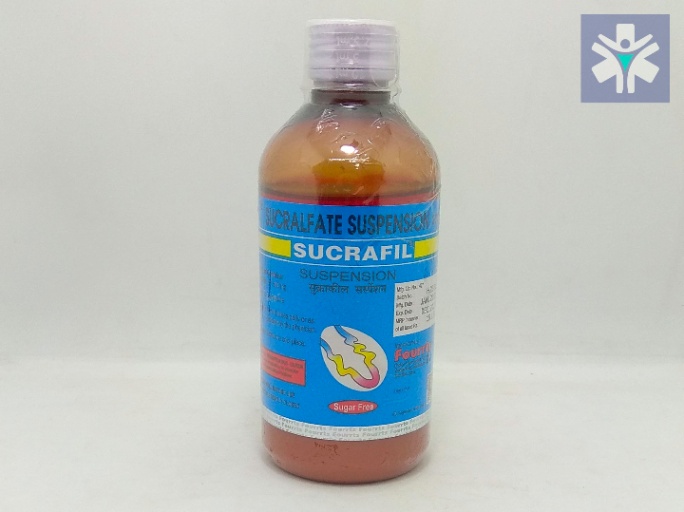
SUCRAFIL
Price: Rs.318.40
10% off
In stock
Loose stock: 0
Description
SUCRAFIL SUSP 200ML
Details
Composition
SUCRALFATE 500 MG
# Sucralfate 500 mg
## Short Description
**Sucralfate 500 mg** is a gastrointestinal **ulcer-protective medicine** used primarily to help treat and protect against **duodenal ulcers**. It forms a protective coating over damaged or ulcerated tissue, helping shield it from stomach acid, pepsin and bile salts and supporting the natural healing process.
Sucralfate works mainly **locally in the gastrointestinal tract** and has minimal systemic absorption.
---
## Key Benefits
* Helps protect **ulcerated and damaged stomach or intestinal lining**.
* Supports healing of **duodenal ulcers**.
* Forms a protective barrier over ulcerated tissue.
* Helps shield affected areas from **stomach acid and digestive enzymes**.
* Acts locally in the gastrointestinal tract with minimal systemic absorption.
* May help relieve symptoms associated with acid-related gastrointestinal irritation when used appropriately.
---
## Uses / Indications
### Duodenal Ulcers
Sucralfate is primarily used for the **short-term treatment of active duodenal ulcers** and may also be used in selected patients to help prevent recurrence.
### Gastric and Other Acid-Related Conditions
Depending on clinical circumstances, healthcare professionals may use sucralfate for other upper gastrointestinal conditions, although the approved indications vary by country and product.
> Sucralfate does not reduce stomach acid production in the same way as proton-pump inhibitors (PPIs) or H2-receptor blockers.
---
## How It Works
Sucralfate is a complex of **sucrose sulfate and aluminum hydroxide**.
In the acidic environment of the stomach, sucralfate forms a viscous, sticky substance that binds preferentially to **proteins at the base of an ulcer**.
This creates a protective barrier that can:
* Shield the ulcer from stomach acid.
* Reduce exposure to pepsin.
* Reduce contact with bile salts.
* Support the body's natural healing processes.
**Sucralfate → binds to ulcerated tissue → forms protective barrier → protects against acid/pepsin → supports ulcer healing.**
---
## Dosage & Administration
> **The appropriate dose depends on the formulation, indication and individual patient.**
### Adults
For active duodenal ulcer disease, conventional sucralfate treatment is commonly given in **divided doses on an empty stomach**. The exact regimen should be determined according to the prescribed formulation.
A **500 mg tablet or equivalent formulation** should not automatically be substituted for a different strength or dosage form without medical advice.
### How to Take
* Take sucralfate **on an empty stomach**, as directed by your healthcare professional.
* It is commonly taken **before meals and/or at bedtime**, depending on the prescribed regimen.
* Take it with water.
* Do not take it together with other medicines unless your healthcare professional or pharmacist confirms the appropriate timing.
### Important Administration Point
Sucralfate can interfere with the absorption of many medicines. **Other oral medicines may need to be taken at a different time**, often at least 2 hours before sucralfate, depending on the medicine.
Follow your pharmacist's or doctor's specific instructions.
### Missed Dose
Take the missed dose when remembered unless it is nearly time for the next dose.
**Do not double the next dose.**
---
## Side Effects
### Common Side Effects
The most common side effect is:
* **Constipation**
Other possible effects include:
* Dry mouth
* Nausea
* Vomiting
* Stomach discomfort
* Indigestion
* Gas
* Headache
### Less Common Effects
Some patients may experience:
* Diarrhea
* Dizziness
* Skin rash or itching
### Serious Reactions
Seek medical attention if you develop:
* Severe allergic reaction
* Difficulty breathing
* Facial or throat swelling
* Severe or persistent gastrointestinal symptoms
---
## Precautions & Warnings
### Kidney Disease
Sucralfate contains aluminum. Patients with **severe kidney impairment** may have an increased risk of aluminum accumulation.
Tell your healthcare professional if you have kidney disease or are receiving dialysis.
### Constipation
Sucralfate may worsen constipation. Tell your healthcare professional if you have severe or persistent constipation.
### Difficulty Swallowing
If you have swallowing difficulties or gastrointestinal obstruction, discuss this with your doctor before using sucralfate.
### Diabetes
Some liquid sucralfate formulations may contain sugars or carbohydrates. Patients with diabetes should check the formulation's ingredients.
### Pregnancy
Tell your healthcare professional if you are pregnant or planning pregnancy. Sucralfate is minimally absorbed systemically, but treatment should still be used according to medical advice.
### Breastfeeding
Consult your healthcare professional before using sucralfate while breastfeeding.
### Long-Term Use
Long-term use should be medically supervised, particularly in people with impaired kidney function.
---
## Drug Interactions
Sucralfate can **reduce or delay the absorption of many oral medicines** because it can bind to them in the gastrointestinal tract.
Examples include:
* **Levothyroxine**
* Certain antibiotics such as **ciprofloxacin and other quinolones**
* **Tetracycline antibiotics**
* Phenytoin
* Digoxin
* Warfarin
* Some medicines used for HIV treatment
* Other medicines that can bind to aluminum-containing compounds
### Important
To reduce interactions, many medicines should be taken **at least 2 hours before sucralfate**, although the required separation can vary depending on the medicine.
Always provide your doctor or pharmacist with a complete list of your medicines, vitamins and supplements.
---
## Storage Information
* Store at **room temperature**, according to the manufacturer's instructions.
* Protect from excessive heat and moisture.
* Keep away from direct sunlight.
* Keep tablets or suspension in the original packaging.
* Keep the container tightly closed.
* Keep out of reach of children.
* Do not use after the expiry date.
* For oral suspension, follow the manufacturer's instructions regarding shaking and storage.
---
## Prescription Status
**Sucralfate 500 mg may be prescription-only or available without a prescription depending on the country, formulation and local regulations.**
Because it can interact with numerous oral medicines and may require specific dosing around meals and other medicines, professional guidance is recommended.
---
## Genuine Medicine Assurance
When purchasing **Sucralfate 500 mg**:
* Purchase from a **licensed and reputable pharmacy**.
* Verify the active ingredient and **500 mg strength**.
* Check the manufacturer's name and regulatory information.
* Verify the batch/lot number and expiry date.
* Ensure the packaging is sealed and undamaged.
* Check that tablets or liquid suspension have an appropriate appearance.
* Avoid products with altered labels or suspicious packaging.
* Keep the medicine in its original packaging.
* Do not purchase medicines from unauthorized sellers.
* If counterfeit medicine is suspected, contact the manufacturer, licensed pharmacy or relevant medicines regulatory authority.
---
# Frequently Asked Questions (FAQ)
### 1. What is Sucralfate 500 mg used for?
Sucralfate is primarily used to **protect and help heal duodenal ulcers**. It may also be prescribed for other gastrointestinal conditions depending on the clinical situation.
### 2. Is Sucralfate an antacid?
Sucralfate is **not a conventional antacid**. Instead, it forms a protective coating over ulcerated or damaged gastrointestinal tissue.
### 3. How does Sucralfate work?
Sucralfate reacts in the acidic stomach environment and forms a protective barrier that adheres to ulcerated tissue, shielding it from acid, pepsin and bile salts.
### 4. Does Sucralfate reduce stomach acid?
No. Sucralfate primarily **protects the stomach and intestinal lining** rather than directly suppressing acid production.
### 5. When should Sucralfate be taken?
It is generally taken **on an empty stomach**, often before meals and/or at bedtime depending on the prescribed regimen.
### 6. Can Sucralfate be taken with food?
Sucralfate is generally most effective when taken on an **empty stomach**. Follow the dosing instructions provided with your specific product.
### 7. Can Sucralfate be taken with other medicines?
Yes, but timing is important. Sucralfate can reduce the absorption of many oral medicines, so some medicines need to be taken separately.
### 8. How long should I wait between Sucralfate and other medicines?
Many interacting medicines should be taken **at least 2 hours before sucralfate**, but the correct interval depends on the specific medicine. Ask a pharmacist or doctor for individualized advice.
### 9. What is the most common side effect of Sucralfate?
**Constipation** is the most commonly reported side effect.
### 10. Can Sucralfate cause constipation?
Yes. Constipation is a relatively common side effect. Maintain adequate fluid intake if appropriate and discuss persistent constipation with your healthcare professional.
### 11. Can Sucralfate be used for gastritis?
Sucralfate may sometimes be prescribed for certain forms of gastritis or gastric irritation, but treatment depends on the underlying cause.
### 12. Can Sucralfate treat acid reflux?
Sucralfate may sometimes be used in specific gastrointestinal conditions, but it is **not generally a first-line treatment for routine acid reflux/GERD**. PPIs and other medicines are commonly used depending on the diagnosis.
### 13. Can Sucralfate be taken with Pantoprazole?
They may be prescribed together in some patients. However, because sucralfate can interfere with medication absorption, the medicines should be **taken according to a properly spaced schedule** provided by your healthcare professional.
### 14. Can Sucralfate be taken with Omeprazole?
They can sometimes be used together, but timing matters. Follow your doctor's or pharmacist's instructions regarding when to take each medicine.
### 15. Can Sucralfate be used during pregnancy?
Sucralfate has minimal systemic absorption, but pregnant patients should still consult their healthcare professional before using it.
### 16. Can Sucralfate be used while breastfeeding?
Because systemic absorption is minimal, exposure through breast milk is expected to be low, but breastfeeding patients should still discuss treatment with their healthcare professional.
### 17. Can people with kidney disease take Sucralfate?
People with significant kidney impairment should use sucralfate cautiously because it contains aluminum. Medical supervision is particularly important in severe kidney disease or dialysis.
### 18. Can Sucralfate heal an ulcer?
Yes. Sucralfate can **support the healing of duodenal ulcers** by protecting the ulcer from damaging substances in the stomach and intestine.
### 19. How quickly does Sucralfate work?
Sucralfate begins forming a protective coating relatively quickly, but **ulcer healing takes time** and depends on the underlying condition and treatment regimen.
### 20. Is Sucralfate 500 mg available without a prescription?
Availability varies by **country, formulation and local regulations**. Some products may require a prescription.
---
## Medical Disclaimer
This information about **Sucralfate 500 mg** is provided for educational and general informational purposes only. It is **not a substitute for professional medical advice, diagnosis or treatment**.
Sucralfate can interfere with the absorption of numerous medicines. Always inform your healthcare professional about all prescription medicines, OTC medicines, supplements and vitamins you take. Patients with **severe kidney impairment** require particular caution because sucralfate contains aluminum.
The appropriate dose and treatment duration depend on the specific gastrointestinal condition and formulation. **Do not self-treat persistent abdominal pain, vomiting, black/tarry stools, vomiting blood or unexplained weight loss**, as these symptoms may require urgent medical evaluation.
Always follow the product label and the instructions of your qualified healthcare professional.