SYNDOPA 275MG
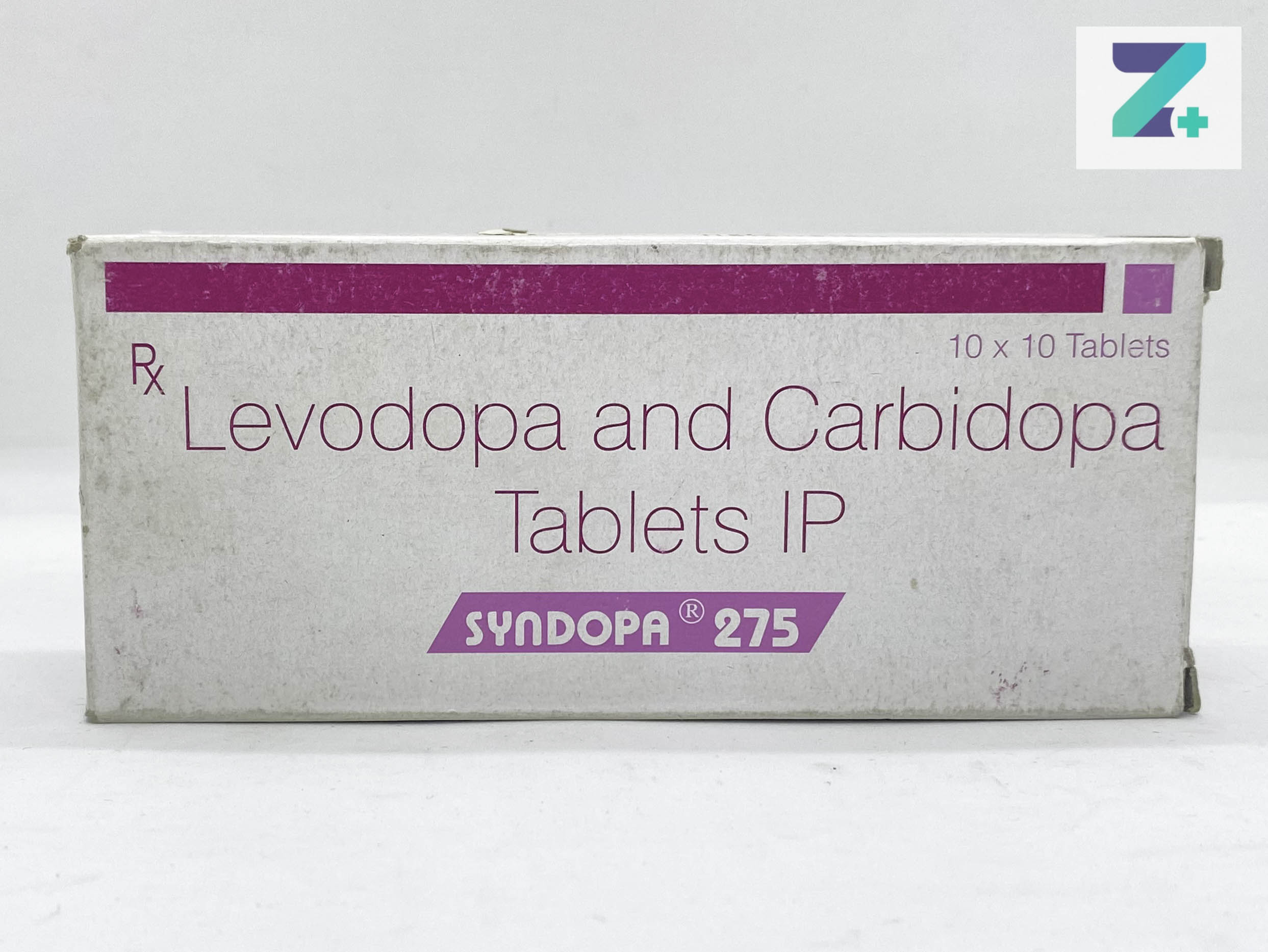
Price: Rs.65.40
13% off
In stock
Loose stock: 0
Description
SYNDOPA 275MG TAB 10
Details
Composition
CARBIDOPA 25 MG,LEVODOPA 250 MG
# CARBIDOPA 25 MG + LEVODOPA 250 MG
## SHORT DESCRIPTION
**Carbidopa 25 mg + Levodopa 250 mg** is a prescription medicine used primarily to manage the symptoms of **Parkinson's disease and parkinsonism**. Levodopa is converted into dopamine in the brain, helping replenish the dopamine deficiency associated with Parkinson's disease. Carbidopa prevents much of levodopa from being converted into dopamine outside the brain, allowing more levodopa to reach the brain and reducing some peripheral side effects.
This combination helps control symptoms such as **slowness of movement, muscle rigidity, and tremor**, but it does not cure Parkinson's disease or stop its underlying progression.
---
# KEY BENEFITS
* Helps improve **slowness of movement (bradykinesia)**.
* Helps reduce **muscle stiffness and rigidity**.
* Can improve **Parkinsonian tremor** in many patients.
* May improve overall mobility and ability to perform daily activities.
* Carbidopa allows more levodopa to reach the brain.
* Can reduce nausea and other peripheral effects associated with levodopa.
* Provides dopaminergic replacement therapy for Parkinson's disease.
---
# USES / INDICATIONS
Carbidopa + Levodopa may be prescribed for:
* **Parkinson's disease**
* Idiopathic parkinsonism
* Post-encephalitic parkinsonism
* Symptomatic parkinsonism associated with certain other conditions
It primarily helps control motor symptoms such as:
* Tremor
* Rigidity
* Bradykinesia
* Reduced mobility
The exact approved indications may vary by country and formulation.
---
# HOW IT WORKS
### Levodopa 250 mg
Parkinson's disease is associated with reduced dopamine activity in specific areas of the brain.
Levodopa crosses the **blood-brain barrier** and is converted into dopamine in the brain. Increasing dopamine availability helps improve motor symptoms.
### Carbidopa 25 mg
Carbidopa inhibits **dopa decarboxylase**, the enzyme that converts levodopa into dopamine outside the brain.
Carbidopa itself does not significantly cross the blood-brain barrier. By reducing peripheral conversion of levodopa:
* More levodopa becomes available to reach the brain.
* Lower amounts of levodopa may be needed compared with levodopa alone.
* Peripheral side effects such as nausea and vomiting may be reduced.
### Combined Action
**Levodopa → replenishes dopamine in the brain**
**Carbidopa → helps more levodopa reach the brain and reduces peripheral conversion**
---
# DOSAGE & ADMINISTRATION
The appropriate dose varies considerably between patients and should be individualized by a healthcare professional.
### General Administration
* Take exactly as prescribed.
* Tablets are usually taken at regular intervals throughout the day.
* Swallow with water.
* Do not change the dose or dosing schedule without medical advice.
* Treatment is generally started and adjusted gradually according to symptom response and adverse effects.
### Food and Protein
Large amounts of dietary protein can interfere with levodopa absorption or compete with levodopa for transport into the brain in some patients.
If you notice that the medicine works less effectively after high-protein meals, discuss meal timing with your healthcare professional.
### Do Not Stop Suddenly
Do not abruptly discontinue carbidopa/levodopa unless specifically instructed by a healthcare professional.
Sudden withdrawal can cause severe worsening of Parkinsonian symptoms and, rarely, a serious syndrome resembling **neuroleptic malignant syndrome**.
### Missed Dose
Take the missed dose when remembered unless it is close to the next scheduled dose.
**Do not double the dose.**
---
# SIDE EFFECTS
## Common Side Effects
Possible side effects include:
* Nausea
* Loss of appetite
* Dizziness
* Headache
* Dry mouth
* Constipation
* Sleepiness
* Fatigue
## Movement-Related Side Effects
With longer treatment or higher doses, some patients may develop:
* **Dyskinesia** (involuntary movements)
* Chorea-like movements
* Muscle twitching
* Increased or abnormal movements
### Motor Fluctuations
Some patients may experience:
* **Wearing-off** — symptoms return before the next dose.
* **On-off fluctuations** — unpredictable changes between better mobility and reduced movement.
## Other Possible Effects
* Low blood pressure when standing
* Confusion
* Hallucinations
* Sleep disturbances
* Vivid dreams
* Changes in urine, sweat, or saliva color
Darkening of urine, sweat, or saliva can occur and is generally harmless.
---
# PRECAUTIONS & WARNINGS
## Hallucinations and Mental Changes
Levodopa can cause:
* Hallucinations
* Confusion
* Agitation
* Delusions
* Changes in behavior
Older adults and people with cognitive impairment may be particularly susceptible.
Report significant mental or behavioral changes to a healthcare professional.
## Low Blood Pressure
Carbidopa/levodopa may cause **orthostatic hypotension**, resulting in dizziness or fainting when standing.
Rise slowly from sitting or lying positions.
## Dyskinesia
High doses or long-term treatment can cause involuntary movements. Dose adjustment may be required if dyskinesia becomes troublesome.
## Sleep Attacks
Some patients taking dopaminergic medicines can experience sudden sleepiness or sleep attacks.
Avoid driving or operating machinery if you experience excessive daytime sleepiness.
## Melanoma
People with Parkinson's disease may have an increased risk of melanoma. Any new or changing skin lesion should be evaluated by a healthcare professional.
## Glaucoma
Tell your doctor if you have glaucoma, particularly **narrow-angle glaucoma**.
## Cardiovascular Disease
Use caution if you have:
* Significant heart disease
* Irregular heart rhythms
* A history of heart attack
Your healthcare professional may monitor cardiovascular status during treatment.
## Peptic Ulcer Disease
Tell your doctor if you have a history of stomach ulcers or gastrointestinal bleeding.
## Kidney or Liver Disease
Dose selection and monitoring may require additional consideration in people with significant kidney or liver disease.
## Pregnancy
Carbidopa/levodopa should be used during pregnancy only when the potential benefit justifies the potential risk and under medical supervision.
## Breastfeeding
Levodopa can affect prolactin levels and may reduce milk production. Discuss breastfeeding with your healthcare professional before using this medicine.
---
# DRUG INTERACTIONS
### MAO Inhibitors
Non-selective **monoamine oxidase (MAO) inhibitors** can cause dangerous interactions with levodopa/carbidopa and are generally contraindicated.
A sufficient washout period may be required when switching between these medicines.
### Antipsychotic Medicines
Some antipsychotics block dopamine receptors and may reduce the effectiveness of levodopa.
They may also worsen Parkinsonian symptoms.
### Iron Supplements
Iron-containing supplements can reduce the absorption of levodopa in some patients.
Your pharmacist or doctor may recommend separating administration times.
### Antihypertensive Medicines
Carbidopa/levodopa may increase the risk of **low blood pressure**, particularly when combined with blood-pressure-lowering medicines.
### Other Parkinson's Medicines
Other dopaminergic medicines may enhance therapeutic effects but can also increase adverse effects such as dyskinesia, hallucinations, or low blood pressure.
### Metoclopramide
Metoclopramide can reduce the effectiveness of levodopa and may worsen Parkinsonian symptoms.
### Domperidone
Domperidone may sometimes be used to manage levodopa-related nausea under medical supervision, but it has important cardiovascular precautions and should not be self-medicated.
### High-Protein Meals
Large amounts of dietary protein may reduce or delay levodopa absorption or effectiveness in some patients.
Tell your doctor or pharmacist about all prescription medicines, OTC medicines, vitamins, supplements, and herbal products you take.
---
# STORAGE INFORMATION
* Store according to the manufacturer's instructions.
* Keep at the recommended room temperature.
* Protect from excessive heat, moisture, and direct sunlight.
* Keep tablets in their original packaging.
* Keep out of reach of children.
* Do not use after the expiry date.
* Do not use tablets that are damaged or significantly changed in appearance.
---
# PRESCRIPTION STATUS
**Carbidopa 25 mg + Levodopa 250 mg is a prescription medicine.**
It should be used under the supervision of a qualified healthcare professional, particularly because the dose often needs to be individually adjusted according to symptom control and adverse effects.
---
# GENUINE MEDICINE ASSURANCE
When purchasing **Carbidopa 25 mg + Levodopa 250 mg**, obtain it from a **licensed pharmacy or authorized medicine supplier**.
Check the packaging for:
* Correct medicine name and strength
* Manufacturer information
* Batch/lot number
* Manufacturing and expiry dates
* Intact packaging and seal
* Regulatory information
* Patient information leaflet
Avoid medicines with damaged packaging, altered labels, missing batch information, or questionable authenticity.
---
# FAQ – CARBIDOPA 25 MG + LEVODOPA 250 MG
### 1. What is Carbidopa 25 mg + Levodopa 250 mg used for?
It is primarily used to control the symptoms of **Parkinson's disease and parkinsonism**, including tremor, stiffness, and slowed movement.
### 2. What is Levodopa?
Levodopa is a precursor of **dopamine**. It crosses into the brain and is converted to dopamine, helping improve Parkinsonian motor symptoms.
### 3. What is Carbidopa?
Carbidopa inhibits the conversion of levodopa to dopamine outside the brain, allowing more levodopa to reach the brain.
### 4. Does Carbidopa treat Parkinson's disease by itself?
No. Carbidopa is primarily used together with levodopa. It helps levodopa work more effectively and reduces peripheral conversion.
### 5. Does Carbidopa/Levodopa cure Parkinson's disease?
No. It **controls symptoms but does not cure Parkinson's disease or stop its underlying progression**.
### 6. What symptoms does Carbidopa/Levodopa improve?
It can improve:
* Tremor
* Muscle rigidity
* Bradykinesia
* Reduced mobility
### 7. Can Carbidopa/Levodopa cause involuntary movements?
Yes. **Dyskinesia**, or involuntary movements, can occur, particularly after prolonged treatment or with higher doses.
### 8. What is wearing-off with levodopa?
Wearing-off occurs when Parkinsonian symptoms return before the next scheduled dose. A doctor may adjust the dose or treatment schedule.
### 9. What are on-off fluctuations?
These are unpredictable changes between periods when movement is relatively good and periods when Parkinsonian symptoms become more pronounced.
### 10. Can Carbidopa/Levodopa cause hallucinations?
Yes. Hallucinations, confusion, or other behavioral changes can occur, especially in older adults or people receiving higher doses.
### 11. Can Carbidopa/Levodopa cause dizziness?
Yes. It can lower blood pressure, particularly when standing, causing **dizziness or lightheadedness**.
### 12. Can I stop Carbidopa/Levodopa suddenly?
**No.** Do not stop it abruptly unless directed by your doctor. Sudden withdrawal can cause severe worsening of Parkinsonian symptoms and potentially serious complications.
### 13. Can I take Carbidopa/Levodopa with food?
It can generally be taken with or without food depending on the product instructions. However, **high-protein meals can interfere with levodopa absorption or effectiveness** in some people.
### 14. Can I take iron supplements with Carbidopa/Levodopa?
Iron may reduce levodopa absorption. Ask your doctor or pharmacist whether you should separate the timing of iron and carbidopa/levodopa.
### 15. Can I take Metoclopramide with Carbidopa/Levodopa?
Metoclopramide can reduce levodopa's effectiveness and may worsen Parkinsonian symptoms. Discuss alternative anti-nausea treatment with your healthcare professional.
### 16. Can Carbidopa/Levodopa be taken with blood-pressure medicines?
It may be used with them, but the combination can increase the risk of **low blood pressure and dizziness**. Medical monitoring may be necessary.
### 17. Can Carbidopa/Levodopa cause sleepiness?
Yes. Some patients experience drowsiness or sudden sleep episodes. Avoid driving if you experience excessive sleepiness.
### 18. Can Carbidopa/Levodopa change urine color?
Yes. Urine, sweat, or saliva may sometimes become darker. This can be a harmless effect of the medicine.
### 19. Can Carbidopa/Levodopa be used during pregnancy?
Use during pregnancy should be determined by a healthcare professional after assessing potential benefits and risks.
### 20. Can Carbidopa/Levodopa be used while breastfeeding?
Discuss breastfeeding with your doctor because levodopa can affect prolactin and may reduce milk production.
### 21. Is Carbidopa/Levodopa available without a prescription?
It is generally a **prescription medicine** and should be taken under medical supervision.
### 22. What should I do if I miss a dose?
Take it when remembered unless it is close to the next dose. **Do not double the next dose.**
### 23. What happens if I take too much Carbidopa/Levodopa?
An overdose can cause abnormal movements, confusion, agitation, nausea, changes in heart rate or blood pressure, and other serious effects. Seek urgent medical attention if an overdose is suspected.
---
# MEDICAL DISCLAIMER
This information about **Carbidopa 25 mg + Levodopa 250 mg** is provided for general educational purposes only and does not replace professional medical advice, diagnosis, or treatment.
Carbidopa/levodopa is a prescription medicine that requires **individual dose adjustment and ongoing monitoring**. It can cause dyskinesia, hallucinations, orthostatic hypotension, excessive sleepiness, and other adverse effects. Do not change the dose or discontinue treatment suddenly without medical advice.
Tell your healthcare professional about all medicines and supplements you take, particularly **MAO inhibitors, antipsychotics, blood-pressure medicines, iron supplements, and other Parkinson's medicines**.
**Use Carbidopa 25 mg + Levodopa 250 mg only as prescribed by a qualified healthcare professional.** Seek urgent medical attention for severe confusion, hallucinations, fainting, severe involuntary movements, chest symptoms, or other serious reactions.