SYSCAN 200MG
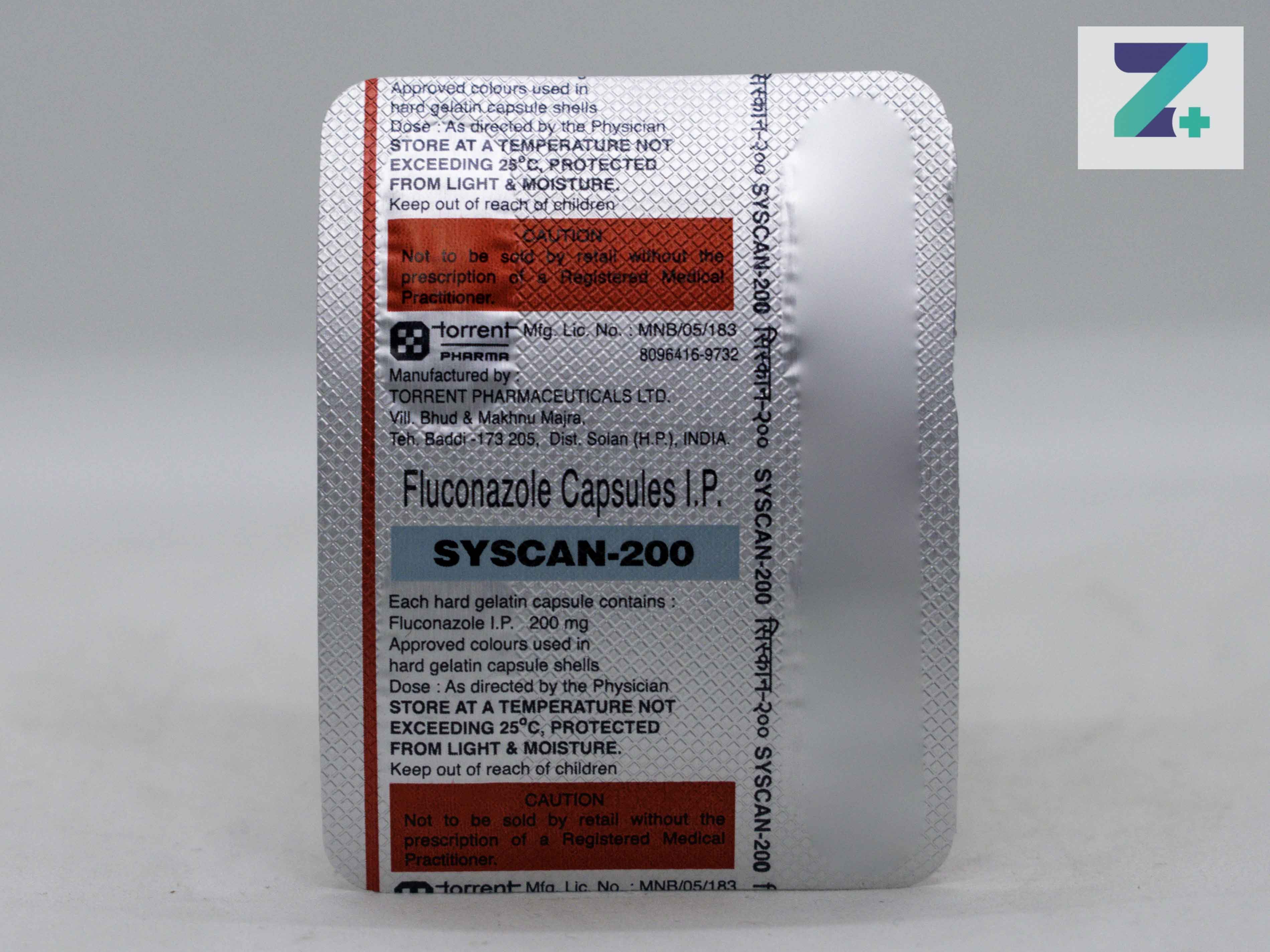
Price: Rs.290.24
10% off
In stock
Loose stock: 0
Description
SYSCAN 200MG CAP 4
Details
Composition
FLUCONAZOLE 200 MG
# FLUCONAZOLE 200 MG
## Short Description
**Fluconazole 200 mg** is a systemic **triazole antifungal medicine** used to treat a variety of fungal and yeast infections. It works by interfering with the production of **ergosterol**, an essential component of fungal cell membranes.
Fluconazole may be prescribed for infections such as **candidiasis**, cryptococcal infections, and certain other susceptible fungal infections. The appropriate dose and duration depend on the type and severity of infection, the patient's age, kidney function, and other medicines being used.
## Key Benefits
* Treats susceptible **fungal and yeast infections**.
* Effective against many infections caused by **Candida** species.
* Can be used for certain systemic fungal infections.
* Available as an oral medicine and, in some settings, intravenous formulations.
* Generally has good absorption when taken orally.
* The 200 mg strength allows dosing for infections requiring higher doses than those used for some uncomplicated fungal infections.
* May be used for both treatment and, in selected circumstances, prevention of certain fungal infections.
## Uses / Indications
Fluconazole 200 mg may be prescribed for susceptible fungal infections, including:
* **Candidiasis**.
* Oropharyngeal candidiasis (oral thrush).
* Esophageal candidiasis.
* Certain urinary tract Candida infections.
* Certain invasive or systemic Candida infections.
* **Cryptococcal meningitis**, including maintenance treatment in appropriate patients.
* Certain other susceptible fungal infections.
* Prevention of Candida infections in selected high-risk patients.
### Important
Fluconazole is **not effective against all types of fungi**. Some fungal infections, including certain molds, may require different antifungal medicines.
The diagnosis should be established before treatment whenever possible.
## How It Works
Fluconazole inhibits the fungal enzyme **14-alpha-demethylase**, which is involved in the production of **ergosterol**.
Ergosterol is an essential component of fungal cell membranes.
### Fluconazole → inhibits ergosterol synthesis → disrupts fungal cell membrane formation → inhibits fungal growth.
Fluconazole is relatively selective for fungal enzymes compared with human enzymes, although interactions and adverse effects can still occur.
## Dosage & Administration
The correct dose depends on the **type and severity of infection**.
A 200 mg dose may be used in several clinical situations, but it should **not be assumed to be the correct dose for every fungal infection**.
### General Administration
* Take exactly as prescribed.
* Fluconazole may generally be taken **with or without food**.
* Swallow the tablet/capsule with water.
* Take doses at approximately the same time each day when using a regular dosing schedule.
* Complete the prescribed course even if symptoms improve early.
* Do not take more than prescribed.
### Kidney Function
Fluconazole is primarily eliminated through the kidneys. Patients with **reduced kidney function** may require dose adjustment.
### Duration
Treatment duration varies considerably:
* Some uncomplicated infections require only a short course.
* Other infections may require treatment for several weeks or longer.
* Serious systemic fungal infections may require prolonged therapy under specialist supervision.
### Missed Dose
Take the missed dose when remembered unless it is almost time for the next dose. **Do not double the next dose.**
## Side Effects
Common side effects may include:
* Headache.
* Nausea.
* Stomach discomfort.
* Diarrhea.
* Vomiting.
* Indigestion.
* Dizziness.
* Changes in taste.
* Skin rash.
Most side effects are mild, but persistent or severe symptoms should be discussed with a healthcare professional.
### Serious Side Effects
Rare but potentially serious reactions include:
* Severe allergic reaction.
* Severe or widespread skin rash.
* Liver injury.
* Yellowing of the skin or eyes.
* Dark urine.
* Severe abdominal pain.
* Abnormal heart rhythm.
* Seizures.
Seek urgent medical attention if severe skin reactions, breathing difficulty, fainting, significant palpitations, or symptoms of liver injury occur.
## Precautions & Warnings
### Liver Disease
Fluconazole can rarely cause **liver injury**.
Tell your doctor if you have liver disease. Seek medical advice if you develop:
* Yellow skin or eyes.
* Dark urine.
* Persistent nausea.
* Severe fatigue.
* Unusual abdominal pain.
### Kidney Disease
Because fluconazole is primarily eliminated through the kidneys, people with impaired kidney function may require a dose adjustment.
### Heart Rhythm Problems
Fluconazole can prolong the **QT interval** in susceptible individuals.
Tell your doctor if you have:
* A history of abnormal heart rhythms.
* Long QT syndrome.
* Significant electrolyte abnormalities.
* Certain heart diseases.
### Skin Reactions
Stop treatment and seek medical attention if you develop a severe or blistering rash, peeling skin, mouth sores, or other signs of a serious skin reaction.
### Pregnancy
Fluconazole should be used during pregnancy only when specifically recommended by a healthcare professional. Treatment choices depend on the infection, dose, and stage of pregnancy.
### Breastfeeding
Fluconazole passes into breast milk. Discuss treatment with your healthcare professional, particularly when repeated or high-dose therapy is required.
### Children
Dosage in children is usually calculated according to **body weight and the type of infection**. Children should receive fluconazole only according to professional medical advice.
## Drug Interactions
Fluconazole can interact with several medicines because it inhibits certain **CYP450 enzymes**, particularly CYP2C9, CYP2C19, and CYP3A4.
### Warfarin and Other Anticoagulants
Fluconazole can increase the effect of **warfarin**, potentially increasing bleeding risk. Appropriate monitoring may be required.
### Certain Statins
Fluconazole may increase concentrations of some statins, potentially increasing the risk of **muscle toxicity**.
### Certain Diabetes Medicines
Fluconazole can increase the effects of some oral sulfonylurea medicines, potentially causing **low blood glucose**.
### Phenytoin
Fluconazole can increase phenytoin concentrations. Monitoring may be necessary when these medicines are combined.
### Cyclosporine and Tacrolimus
Fluconazole can increase concentrations of certain immunosuppressive medicines, including **cyclosporine and tacrolimus**.
### Some Heart-Rhythm Medicines
Combining fluconazole with certain medicines that prolong the QT interval may increase the risk of abnormal heart rhythms.
### Rifampicin
Rifampicin can reduce fluconazole concentrations and may reduce its effectiveness.
### Other Medicines
Always tell your healthcare professional about all:
* Prescription medicines.
* OTC medicines.
* Vitamins.
* Herbal products.
* Dietary supplements.
## Storage Information
* Store according to the manufacturer's instructions.
* Keep at room temperature unless the product label specifies otherwise.
* Protect from excessive heat, moisture, and direct sunlight.
* Keep the medicine in its original packaging.
* Keep the container tightly closed.
* Keep out of reach of children.
* Do not use after the expiry date.
* Do not use tablets/capsules if they appear damaged or significantly altered.
## Prescription Status
**Fluconazole 200 mg is generally a prescription medicine**, particularly when used for systemic or serious fungal infections.
Regulations vary by country and formulation. Professional diagnosis is important because different fungal infections require different antifungal medicines and treatment durations.
## Genuine Medicine Assurance
When purchasing Fluconazole 200 mg, obtain it from a **licensed pharmacy or authorized medicine supplier**.
Check for:
* Correct active ingredient: **Fluconazole**.
* Correct strength: **200 mg**.
* Manufacturer details.
* Batch/lot number.
* Manufacturing and expiry dates.
* Intact packaging and seal.
* Clear dosage instructions.
* Proper storage conditions.
Do not use a product if the packaging is damaged, tampered with, incorrectly labeled, or suspicious.
## Frequently Asked Questions (FAQ)
### 1. What is Fluconazole 200 mg used for?
Fluconazole 200 mg is used to treat **susceptible fungal and yeast infections**, including certain Candida infections and cryptococcal infections.
### 2. Is fluconazole an antibiotic?
No. **Fluconazole is an antifungal medicine**, not an antibacterial antibiotic.
### 3. How does fluconazole work?
It blocks an enzyme required to produce **ergosterol**, an important component of fungal cell membranes. This inhibits fungal growth.
### 4. Can fluconazole treat Candida infections?
Yes. Fluconazole is active against many **Candida** species, although some Candida species may be resistant and require another antifungal.
### 5. Is 200 mg of fluconazole a high dose?
The appropriate dose depends on the infection. **200 mg is a commonly used strength**, but it is not necessarily the correct dose for every condition.
### 6. How should Fluconazole 200 mg be taken?
It can generally be taken **with or without food**. Follow the dose and schedule prescribed by your healthcare professional.
### 7. How long does fluconazole take to work?
Symptoms may begin improving within a few days for some infections, but the time varies according to the type and severity of infection. Complete the prescribed course even if symptoms improve.
### 8. Can I stop fluconazole when I feel better?
Do not stop treatment early unless your healthcare professional tells you to do so. Some infections require treatment for a specific duration to prevent recurrence.
### 9. Can fluconazole treat oral thrush?
Yes. Fluconazole can be prescribed for **oropharyngeal candidiasis (oral thrush)** when systemic antifungal treatment is appropriate.
### 10. Can fluconazole treat vaginal yeast infections?
Fluconazole can be used for certain **vaginal Candida infections**, but the dose and treatment regimen may differ from 200 mg. Follow the prescribed regimen rather than self-adjusting the dose.
### 11. Can fluconazole treat fungal skin infections?
It may be prescribed for certain susceptible fungal skin infections, although other antifungals may be preferred depending on the specific diagnosis.
### 12. Can fluconazole treat ringworm?
Fluconazole may sometimes be used for certain dermatophyte infections, but treatment depends on the location, severity, organism, and available alternatives.
### 13. Can fluconazole treat bacterial infections?
No. Fluconazole does **not treat bacterial infections**.
### 14. Can I drink alcohol while taking fluconazole?
Alcohol is not known to directly inactivate fluconazole, but both alcohol and fluconazole can potentially contribute to **liver-related problems or gastrointestinal symptoms**. Avoid excessive alcohol and discuss alcohol use with your healthcare professional.
### 15. Can fluconazole affect the liver?
Yes. Although uncommon, fluconazole can cause **liver injury**. Seek medical advice if you develop jaundice, dark urine, severe fatigue, or persistent nausea.
### 16. Can fluconazole affect the heart?
Fluconazole can rarely prolong the **QT interval**, potentially contributing to abnormal heart rhythms in susceptible individuals or when combined with certain medicines.
### 17. Can I take fluconazole with warfarin?
Fluconazole can increase the effect of warfarin and raise bleeding risk. Your doctor may need to monitor your **INR** more closely.
### 18. Can I take fluconazole during pregnancy?
Fluconazole should be used during pregnancy only when specifically recommended by a healthcare professional. The appropriate treatment depends on the infection and clinical circumstances.
### 19. Can I take fluconazole while breastfeeding?
Fluconazole passes into breast milk. Discuss the appropriate dose and duration with your healthcare professional.
### 20. Can children take Fluconazole 200 mg?
Children may receive fluconazole when medically indicated, but doses are generally based on **body weight and the specific infection**. A 200 mg adult-strength dose should not be given to a child without medical instruction.
### 21. What should I do if I miss a dose?
Take it when remembered unless it is nearly time for the next dose. **Do not take two doses together** to make up for a missed dose.
### 22. Can fluconazole interact with other medicines?
Yes. Fluconazole has several important drug interactions, including with **warfarin, phenytoin, certain statins, some diabetes medicines, immunosuppressants, and certain heart-rhythm medicines**.
### 23. Why might fluconazole not work?
Possible reasons include:
* The infection may not be fungal.
* The fungus may be resistant.
* The wrong antifungal may have been selected.
* The treatment duration may be insufficient.
* The diagnosis may be incorrect.
Persistent symptoms should be medically reassessed rather than treated with repeated doses without advice.
### 24. Is Fluconazole 200 mg available without a prescription?
Fluconazole is generally a **prescription medicine**, although availability and dispensing requirements vary by country.
### 25. What should I do if I take too much fluconazole?
Contact a healthcare professional or poison/emergency service for advice, particularly if a large amount was taken. Do not take additional doses until you receive appropriate guidance.
## Medical Disclaimer
This information about **Fluconazole 200 mg** is provided for general educational and informational purposes only. It is not a substitute for professional medical advice, diagnosis, or treatment.
Fluconazole has important **drug interactions** and may require dose adjustment in people with kidney impairment. It can also rarely cause serious liver injury, severe skin reactions, or heart-rhythm abnormalities.
Do not self-treat persistent or recurrent fungal symptoms with repeated fluconazole doses without appropriate medical evaluation. Seek prompt medical attention for **severe allergic reactions, blistering or peeling skin, jaundice, severe abdominal symptoms, fainting, or significant heart palpitations**.