TETMOSOL SOAP
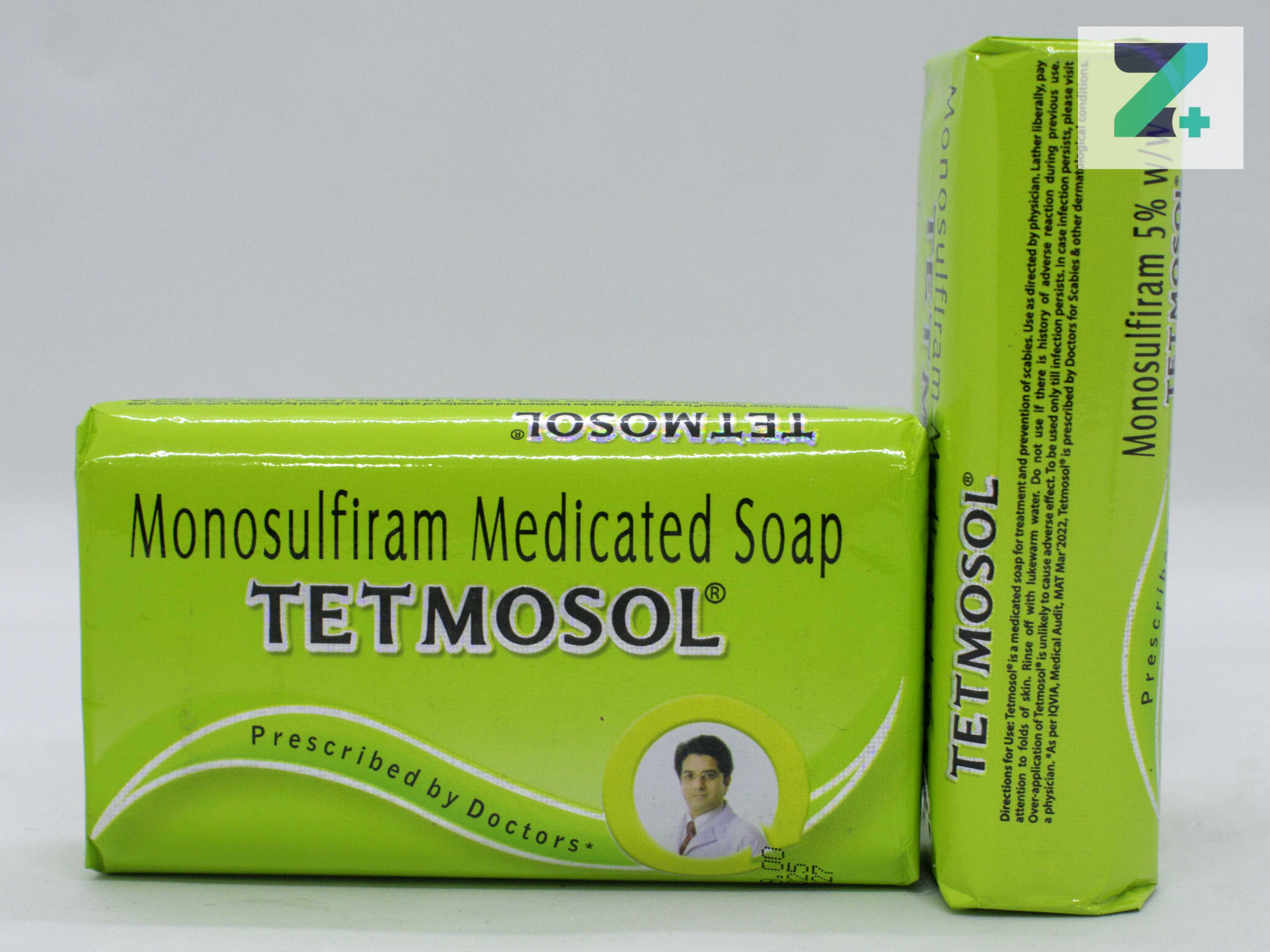
Price: Rs.158.40
10% off
In stock
Loose stock: 0
Description
TETMOSOL SOAP SOAP 75GM
Details
Composition
TETRAETHYLTHIURAM MONOSULPHIDE 5 %
# Tetraethylthiuram Monosulphide 5%
## Short Description
**Tetraethylthiuram monosulphide 5%** is a **topical antiparasitic medicine** used primarily for the treatment of certain **scabies and other ectoparasitic skin infestations**, depending on the specific product and local prescribing guidance.
It acts against parasites on the skin and may help eliminate the organisms responsible for infestation. The exact approved indications and application schedule can vary by formulation and country.
> **Important:** Tetraethylthiuram monosulphide is not the same medicine as disulfiram (tetraethylthiuram disulfide), which is an oral medicine used in alcohol-dependence treatment.
---
## Key Benefits
* Helps eliminate certain **parasitic skin infestations**.
* May be used as a topical treatment for **scabies**, where clinically appropriate.
* Applied directly to affected skin.
* Can help reduce itching and other symptoms associated with parasite infestation once the underlying infestation is treated.
* May be useful when prescribed as an alternative topical antiparasitic treatment.
---
## Uses / Indications
Tetraethylthiuram monosulphide 5% may be prescribed for:
* **Scabies (Sarcoptes scabiei infestation)**
* Certain other superficial **ectoparasitic infestations**, depending on the product
### Important
Not every itchy rash is scabies. Other conditions such as eczema, allergic dermatitis, fungal infection and insect bites can cause similar symptoms.
A healthcare professional should confirm the diagnosis when possible.
---
## How It Works
Tetraethylthiuram monosulphide has **antiparasitic activity** against susceptible ectoparasites.
When applied to the skin, it acts locally against the organisms responsible for infestation, helping reduce their survival and reproduction.
### In simple terms:
**Tetraethylthiuram monosulphide → acts on susceptible parasites → reduces/eliminates the infestation → symptoms gradually improve.**
The exact mechanism responsible for its antiparasitic activity is not completely established.
---
## Dosage & Administration
### Adults
Use the product **exactly according to the manufacturer's instructions or healthcare professional's directions**.
For scabies treatment, topical antiparasitic preparations are generally applied to affected areas of the skin and left in place for a specified period before washing off. However, the exact application schedule for **tetraethylthiuram monosulphide 5% varies by formulation**.
### General Application Instructions
1. Follow the prescribed application schedule.
2. Apply to clean, dry skin when directed.
3. Avoid the eyes, mouth and other mucous membranes.
4. Wash hands after application unless the hands are being treated.
5. Do not apply more frequently or in larger amounts than recommended.
6. Wash clothing, bedding and towels appropriately to reduce the risk of reinfestation when treating scabies.
> **Important:** Do not substitute a dosing schedule intended for permethrin, ivermectin or another scabies medicine. Use the instructions specifically provided for the tetraethylthiuram monosulphide product.
### Household Contacts
For confirmed scabies, close household and sexual contacts may also need evaluation and treatment, even if they do not yet have symptoms.
---
## Side Effects
### Common Side Effects
Possible local reactions include:
* Burning
* Stinging
* Itching
* Redness
* Skin irritation
* Dryness
* Rash
Some itching may continue temporarily even after the parasites have been eliminated because the skin can remain inflamed or sensitive.
### Serious Reactions
Stop use and seek medical attention if you develop:
* Severe skin irritation
* Extensive blistering
* Severe swelling
* Facial or throat swelling
* Difficulty breathing
* Severe allergic reaction
Avoid excessive application because increased exposure may increase skin irritation.
---
## Precautions & Warnings
### External Use Only
This product is intended for **external use**. Do not swallow it.
Avoid contact with:
* Eyes
* Mouth
* Nose
* Genitals or other sensitive mucosal surfaces unless specifically directed by the product instructions
If accidental eye contact occurs, rinse thoroughly with clean water and seek medical advice if irritation persists.
### Broken or Inflamed Skin
Use caution on severely irritated, scratched or broken skin because absorption and irritation may be increased.
### Children
Use in infants and young children only when specifically recommended by a healthcare professional. Children's skin may be more sensitive to topical medicines.
### Pregnancy
Consult a healthcare professional before using tetraethylthiuram monosulphide during pregnancy. Use should be based on an appropriate assessment of potential benefits and risks.
### Breastfeeding
Discuss use with a healthcare professional before applying the medicine during breastfeeding. Avoid accidental contact of treated skin with an infant.
### Persistent Itching
Itching may continue for **several weeks after successful scabies treatment**. Persistent or worsening symptoms should be assessed rather than automatically repeating treatment.
---
## Drug Interactions
Because tetraethylthiuram monosulphide is applied topically, significant systemic drug interactions are generally **less likely** than with oral medicines.
However:
* Avoid applying other medicated creams or lotions to the same area unless advised.
* Combining multiple topical antiparasitic products may increase skin irritation.
* Tell your healthcare professional about all medicines, creams, lotions and other treatments you are using.
### Important Distinction
**Tetraethylthiuram monosulphide is different from disulfiram (tetraethylthiuram disulfide).**
Disulfiram has important interactions with alcohol and certain medicines, but these interactions should **not automatically be attributed to topical tetraethylthiuram monosulphide**.
---
## Storage Information
* Store at **room temperature**, according to the manufacturer's instructions.
* Keep the container tightly closed.
* Protect from excessive heat, moisture and direct sunlight.
* Keep away from children.
* Do not use after the expiry date.
* Do not use if the container or packaging is damaged.
* Avoid contamination of the product by touching the applicator directly to infected skin when the packaging instructions advise otherwise.
---
## Prescription Status
**Tetraethylthiuram monosulphide 5% may be prescription-only or pharmacy-controlled depending on the country and formulation.**
Because availability and approved indications vary, follow local regulations and consult a pharmacist or healthcare professional.
---
## Genuine Medicine Assurance
When purchasing **Tetraethylthiuram Monosulphide 5%**:
* Purchase from a **licensed and reputable pharmacy**.
* Check that the packaging is sealed and undamaged.
* Verify the active ingredient and concentration.
* Check the manufacturer's name, batch/lot number and expiry date.
* Make sure the product is specifically labeled for topical use.
* Avoid products with suspicious packaging or labeling.
* Do not purchase medicines from unauthorized sellers.
* If you suspect a counterfeit medicine, contact the manufacturer, licensed pharmacy or relevant medicines regulatory authority.
---
# Frequently Asked Questions (FAQ)
### 1. What is Tetraethylthiuram Monosulphide 5% used for?
Tetraethylthiuram monosulphide 5% is a **topical antiparasitic medicine** that may be used for scabies and certain other ectoparasitic skin infestations, depending on the formulation.
### 2. Is Tetraethylthiuram Monosulphide used for scabies?
Yes. It has been used as a topical treatment for **scabies**, although the availability and preferred treatments vary by country.
### 3. Is Tetraethylthiuram Monosulphide the same as Disulfiram?
**No.** Tetraethylthiuram monosulphide and disulfiram (tetraethylthiuram disulfide) are different chemical compounds. Disulfiram is an oral medicine used in alcohol-dependence treatment.
### 4. How does Tetraethylthiuram Monosulphide work?
It has **antiparasitic activity** against susceptible organisms living on the skin. Its precise antiparasitic mechanism is not completely established.
### 5. Can Tetraethylthiuram Monosulphide stop scabies itching?
It can help eliminate the underlying infestation when effective against the parasite. However, **itching may continue for weeks after successful treatment** because of the skin's inflammatory response.
### 6. How should Tetraethylthiuram Monosulphide 5% be applied?
The application schedule depends on the specific product. Follow the **manufacturer's instructions or healthcare professional's directions** rather than using a schedule intended for another scabies medicine.
### 7. Can I apply it more often if the itching is severe?
No. Applying more medicine than recommended does not necessarily eliminate scabies faster and may cause **skin irritation or other adverse effects**.
### 8. Can Tetraethylthiuram Monosulphide be used on the face?
Only if specifically instructed by a healthcare professional or product labeling. Avoid the **eyes, mouth and sensitive mucosal areas**.
### 9. Can it be applied to broken skin?
It should generally not be applied to severely damaged or extensively broken skin unless specifically recommended by a healthcare professional.
### 10. Can children use Tetraethylthiuram Monosulphide 5%?
Children may require special precautions because their skin can be more sensitive. Use it in children **only according to professional advice and product-specific instructions**.
### 11. Can it be used during pregnancy?
Consult a healthcare professional before use during pregnancy. The benefits and potential risks should be assessed individually.
### 12. Can it be used while breastfeeding?
Discuss use with a healthcare professional. Avoid allowing an infant to come into contact with treated skin.
### 13. Does everyone in a household need scabies treatment?
People who have had **close skin-to-skin contact** with someone with confirmed scabies may need evaluation and, in many cases, treatment at the same time to reduce reinfestation.
### 14. Should I wash my bedding after treating scabies?
Yes. Washing recently used **clothing, bedding and towels** according to appropriate laundering instructions can help reduce the risk of reinfestation.
### 15. Why am I still itching after scabies treatment?
Scabies-related itching can persist for **several weeks after successful treatment** because the immune reaction to mites and their remnants can continue.
### 16. Can I use another scabies medicine at the same time?
Do not combine antiparasitic treatments without professional advice. Using multiple products can increase **skin irritation** and is not necessarily more effective.
### 17. Is Tetraethylthiuram Monosulphide an antibiotic?
No. It is an **antiparasitic topical medicine**, not an antibiotic.
### 18. Is Tetraethylthiuram Monosulphide an antifungal?
No. It is not primarily an antifungal medicine and should not be used to treat fungal infections unless a product is specifically indicated for that purpose.
### 19. What should I do if the scabies does not improve?
Consult a healthcare professional. Persistent infestation may result from **incorrect application, reinfestation from untreated contacts, resistance or an incorrect diagnosis**.
### 20. Is Tetraethylthiuram Monosulphide 5% available without a prescription?
Availability varies by country. It may be **prescription-only or pharmacy-controlled** depending on local regulations and the specific product.
---
## Medical Disclaimer
This information about **Tetraethylthiuram Monosulphide 5%** is provided for educational and general informational purposes only. It is **not a substitute for professional medical advice, diagnosis or treatment**.
The exact approved indications, application method and treatment duration depend on the specific product and local medical guidance. **Do not confuse tetraethylthiuram monosulphide with disulfiram (tetraethylthiuram disulfide).**
If scabies is suspected, appropriate diagnosis and management of close contacts and household members may be necessary. Seek medical advice if symptoms persist, worsen or recur after treatment, or if severe skin irritation or an allergic reaction develops.
**Do not apply more frequently or in greater quantities than directed.**