THYROLAR 100MG
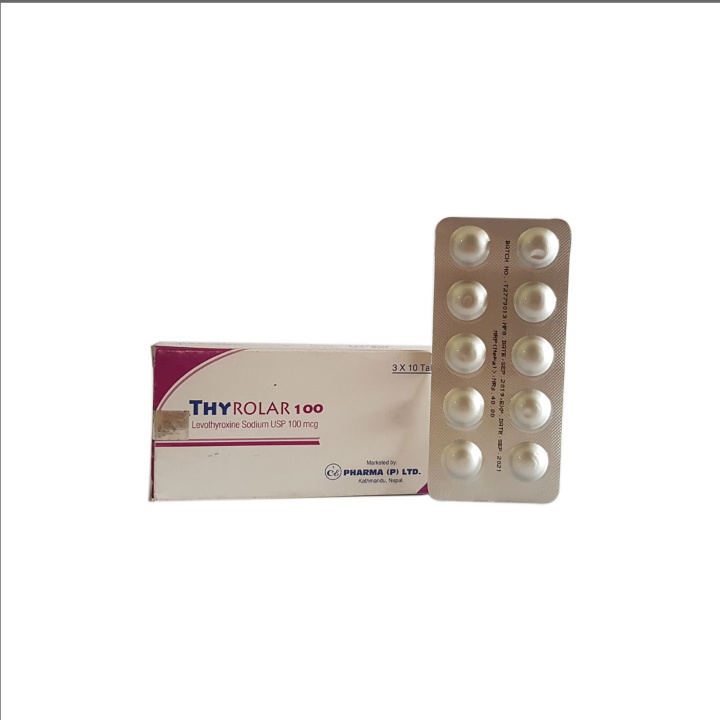
Price: Rs.40.00
10% off
In stock
Loose stock: 0
Description
THYROLAR 100MG TAB 10
Details
Composition
LEVOTHYROXINE 100 MCG
# Levothyroxine 100 mcg
## Short Description
**Levothyroxine 100 mcg** is a prescription **thyroid hormone replacement medicine** used primarily to treat **hypothyroidism (underactive thyroid)**. It contains synthetic thyroxine (T4), which is converted in the body to the active thyroid hormone T3 and helps restore normal thyroid hormone levels.
## Key Benefits
* Replaces thyroid hormone when the body does not produce enough.
* Helps restore normal **thyroid hormone levels**.
* Relieves symptoms associated with hypothyroidism, such as fatigue and feeling cold.
* Supports normal metabolism, energy production, and cardiovascular function.
* May help normalize elevated **TSH (thyroid-stimulating hormone)** levels when appropriately dosed.
* Can be used for long-term thyroid hormone replacement when prescribed.
## Uses / Indications
Levothyroxine 100 mcg may be prescribed for:
* **Hypothyroidism**
* Primary thyroid hormone deficiency
* Certain cases of thyroid hormone deficiency following thyroid surgery
* Hypothyroidism following radioactive iodine treatment
* **Thyroid hormone suppression therapy** in selected thyroid disorders, when specifically prescribed
* Congenital hypothyroidism, with age-appropriate dosing
The required dose varies considerably between individuals and should be determined using clinical assessment and thyroid-function tests.
## How It Works
Levothyroxine is a synthetic form of **thyroxine (T4)**, the primary hormone produced naturally by the thyroid gland.
After administration, T4 is converted in tissues to **triiodothyronine (T3)**, the more biologically active thyroid hormone. T3 binds to thyroid hormone receptors and regulates processes involved in:
* Metabolism
* Energy production
* Heart function
* Body temperature
* Growth and development
* Brain and nervous-system function
Levothyroxine replaces the thyroid hormone that the body is unable to produce adequately.
## Dosage & Administration
* Take **Levothyroxine 100 mcg exactly as prescribed**.
* It is usually taken **once daily on an empty stomach**, preferably **30–60 minutes before breakfast**.
* Take it with a full glass of water.
* Take it consistently at the same time each day.
* Certain medicines and supplements can significantly reduce absorption. In particular, separate levothyroxine from **calcium or iron supplements by at least 4 hours**, unless your healthcare professional provides different instructions.
* Do not switch between different levothyroxine brands or formulations without discussing it with your healthcare professional, as absorption can vary.
* Do not change the dose based only on symptoms.
* If you miss a dose, take it when remembered unless it is close to the next scheduled dose. **Do not routinely double doses without medical advice.**
Your doctor will use **TSH and, when appropriate, free T4 testing** to determine whether your dose is adequate.
## Side Effects
### Common Side Effects
When the dose is appropriate, levothyroxine is generally well tolerated. Side effects usually occur when the dose is **too high** and may resemble symptoms of hyperthyroidism:
* Nervousness or anxiety
* Tremor
* Increased sweating
* Headache
* Insomnia
* Increased appetite
* Weight loss
* Diarrhea
* Heat intolerance
* Increased heart rate
* Palpitations
### Serious Side Effects
Seek medical attention for:
* Chest pain
* Severe or persistent palpitations
* Rapid or irregular heartbeat
* Severe shortness of breath
* Fainting
* Severe headache or other concerning symptoms
Taking excessive thyroid hormone over a prolonged period can increase the risk of **heart problems and bone loss**, particularly in older adults and postmenopausal women.
## Precautions & Warnings
### Heart Disease
People with coronary artery disease, arrhythmias, or other cardiovascular conditions may require a **lower starting dose and gradual adjustment** because thyroid hormone can increase cardiac workload.
### Correct Dosing
Levothyroxine has a **narrow therapeutic range**. Both under-treatment and over-treatment can cause health problems.
Regular thyroid-function testing is important, especially after starting treatment or changing the dose.
### Osteoporosis
Excessive thyroid hormone replacement over the long term may contribute to **bone loss and osteoporosis**, particularly in postmenopausal women.
### Diabetes
Thyroid hormone replacement can affect blood-glucose control. People with diabetes may need closer monitoring when levothyroxine treatment is started or adjusted.
### Pregnancy
Adequate thyroid hormone levels are especially important during pregnancy. People already taking levothyroxine often require **dose adjustments during pregnancy** under medical supervision.
### Other Precautions
Tell your doctor if you have:
* Heart disease
* High blood pressure
* Diabetes
* Adrenal insufficiency
* Osteoporosis
* Pituitary or hypothalamic disorders
* Significant gastrointestinal conditions affecting drug absorption
## Drug Interactions
Levothyroxine absorption or effectiveness can be affected by:
* **Calcium supplements** — can reduce absorption.
* **Iron supplements** — can reduce absorption.
* **Antacids containing aluminum or magnesium** — may reduce absorption.
* **Bile-acid sequestrants** such as cholestyramine — can reduce absorption.
* **Sucralfate** — can interfere with absorption.
* **Proton-pump inhibitors and other acid-reducing medicines** — may alter absorption in some patients.
* Some cholesterol-lowering medicines and fiber supplements may reduce absorption.
* **Warfarin** — thyroid hormone changes can alter anticoagulant requirements.
* Certain medicines that affect thyroid hormone metabolism or binding may alter treatment requirements.
* Some antiepileptic medicines can increase thyroid hormone metabolism.
Always tell your doctor or pharmacist about all prescription medicines, OTC medicines, vitamins, supplements, and herbal products you take.
## Storage Information
* Store according to the manufacturer's recommended conditions, generally at **room temperature**.
* Protect tablets from moisture, excessive heat, and direct sunlight.
* Keep tablets in their original packaging.
* Keep the medicine away from children.
* Do not use after the expiry date.
* Keep the container tightly closed when not in use.
* Dispose of unused medicine according to local pharmacy or healthcare guidance.
## Prescription Status
**Levothyroxine 100 mcg is generally a prescription medicine.**
It should be used under medical supervision because the correct dose is highly individualized and is determined using thyroid-function tests and clinical assessment.
## Genuine Medicine Assurance
When purchasing Levothyroxine 100 mcg, obtain it from a **licensed pharmacy or authorized medicine supplier**.
Before using the medicine, verify:
* Manufacturer name
* Active ingredient and strength
* Batch/lot number
* Manufacturing and expiry dates
* Packaging and seal integrity
* Product registration or authorization information where applicable
Avoid medicines from unknown or unverified sources, especially products with damaged packaging or missing batch information.
# Frequently Asked Questions (FAQs)
### 1. What is Levothyroxine 100 mcg used for?
Levothyroxine 100 mcg is primarily used to treat **hypothyroidism**, a condition in which the thyroid gland does not produce enough thyroid hormone.
### 2. Is Levothyroxine the same as thyroid hormone?
Levothyroxine is a **synthetic form of thyroxine (T4)**, the hormone naturally produced by the thyroid gland.
### 3. How does Levothyroxine 100 mcg work?
It replaces deficient T4 hormone. The body converts some T4 to **T3**, which acts on thyroid hormone receptors throughout the body to regulate metabolism and other physiological functions.
### 4. When should I take Levothyroxine 100 mcg?
It is usually taken **once daily on an empty stomach, 30–60 minutes before breakfast**, with water.
### 5. Can I take Levothyroxine with food?
Food can reduce or alter levothyroxine absorption. For consistent treatment, take it on an empty stomach as directed by your healthcare professional.
### 6. Can I take calcium or iron with Levothyroxine?
Calcium and iron can significantly reduce levothyroxine absorption. They should generally be taken **at least 4 hours apart** from levothyroxine.
### 7. How long does Levothyroxine take to work?
Some symptoms may improve within a few weeks, but it can take **several weeks** for thyroid hormone levels and symptoms to stabilize after starting or changing the dose.
### 8. Do I need Levothyroxine for life?
Many people with permanent hypothyroidism require **long-term or lifelong thyroid hormone replacement**. However, treatment duration depends on the underlying cause of hypothyroidism.
### 9. What happens if I stop Levothyroxine?
Stopping treatment can cause thyroid hormone levels to fall again, potentially causing hypothyroidism symptoms and abnormal TSH levels. Do not stop it without medical advice.
### 10. Can Levothyroxine 100 mcg cause weight loss?
If hypothyroidism caused weight gain, restoring normal thyroid hormone levels may lead to some weight normalization. Levothyroxine **should not be used as a weight-loss medicine** in people with normal thyroid function.
### 11. What are signs that my Levothyroxine dose is too high?
Possible signs include **fast heartbeat, palpitations, tremor, anxiety, sweating, insomnia, heat intolerance, and unexplained weight loss**. Contact your healthcare professional if these occur.
### 12. What are signs that my Levothyroxine dose is too low?
Symptoms can include **fatigue, feeling cold, constipation, dry skin, weight gain, and sluggishness**. Blood tests are needed to determine whether the dose is adequate.
### 13. Can Levothyroxine be taken during pregnancy?
Yes. Levothyroxine is commonly used to treat hypothyroidism during pregnancy, and maintaining appropriate thyroid hormone levels is important for both the mother and developing baby. Dose adjustments are often needed under medical supervision.
### 14. Can Levothyroxine be taken while breastfeeding?
Levothyroxine is generally compatible with breastfeeding when used at appropriate replacement doses. Maintaining adequate maternal thyroid hormone levels is important.
### 15. Why do I need blood tests while taking Levothyroxine?
Blood tests, particularly **TSH and sometimes free T4**, help determine whether you are receiving the correct dose and whether adjustments are needed.
### 16. Can I switch brands of Levothyroxine?
Different formulations may have differences in absorption. It is generally best to **use the same manufacturer's product consistently** and discuss any switch with your healthcare professional.
### 17. What should I do if I miss a dose of Levothyroxine 100 mcg?
Take the missed dose when remembered unless it is close to the next scheduled dose. **Do not routinely take extra doses** without discussing it with your healthcare professional.
### 18. Is Levothyroxine 100 mcg available without a prescription?
Levothyroxine is generally a **prescription-only medicine** because the dose must be individualized and monitored with thyroid-function testing.
## Medical Disclaimer
This information about **Levothyroxine 100 mcg** is provided for educational and SEO purposes only and does not replace professional medical advice, diagnosis, or treatment. Levothyroxine has a narrow therapeutic range, and the correct dose varies between individuals. Both insufficient and excessive thyroid hormone replacement can cause significant health problems. Always take Levothyroxine 100 mcg according to your healthcare professional's prescription and the manufacturer's instructions. Do not change the dose, switch formulations, or stop treatment without medical advice.