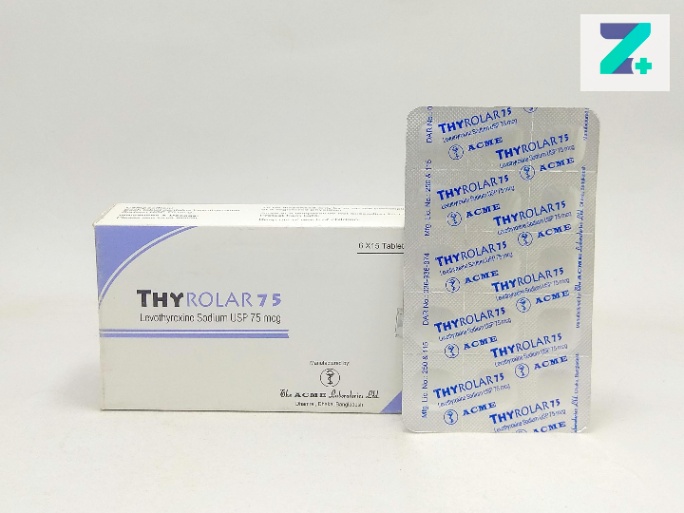
THYROLAR 75MG
Price: Rs.45.00
10% off
In stock
Loose stock: 0
Description
THYROLAR 75MG TAB 15
Details
Composition
LEVOTHYROXINE 75 MCG
# Levothyroxine 75 mcg
## SHORT DESCRIPTION
**Levothyroxine 75 mcg** is a synthetic form of **thyroxine (T4)**, a hormone naturally produced by the thyroid gland. It is primarily used to treat **hypothyroidism**, a condition in which the thyroid does not produce enough thyroid hormone.
Levothyroxine replaces the thyroid hormone that the body is lacking and helps restore normal metabolism and thyroid hormone levels. It may also be used as part of treatment for certain thyroid disorders under medical supervision.
## KEY BENEFITS
* Replaces deficient thyroid hormone
* Helps restore normal thyroid hormone levels
* Treats symptoms associated with hypothyroidism
* Supports normal metabolism and energy production
* Helps regulate heart rate, body temperature, and other metabolic functions
* May be used to suppress TSH in selected thyroid conditions when medically indicated
## USES / INDICATIONS
Levothyroxine 75 mcg may be prescribed for:
* **Hypothyroidism**
* Primary thyroid hormone deficiency
* Certain cases of secondary or tertiary hypothyroidism
* Thyroid hormone replacement after thyroid surgery
* Thyroid hormone replacement after radioactive iodine treatment
* Certain thyroid cancers as part of TSH suppression therapy
* Congenital hypothyroidism in appropriate patients
The required dose varies considerably between individuals and is determined using factors such as age, body weight, thyroid function, cardiovascular health, pregnancy status, and other medicines.
## HOW IT WORKS
Levothyroxine is a synthetic version of **thyroxine (T4)**.
After absorption, some T4 is converted in the body into **triiodothyronine (T3)**, the more biologically active thyroid hormone. T3 and T4 bind to thyroid hormone receptors and regulate gene activity involved in metabolism, growth, development, and energy use.
By replacing insufficient thyroid hormone, levothyroxine helps restore normal physiological processes and reduces symptoms of hypothyroidism.
## DOSAGE & ADMINISTRATION
* Take Levothyroxine 75 mcg exactly as prescribed by your doctor.
* It is usually taken **once daily on an empty stomach**, ideally **30–60 minutes before breakfast**.
* Take it with a full glass of water.
* Take levothyroxine consistently at the same time each day.
* Avoid taking it together with food, coffee, or other medicines that may reduce absorption.
* Do not change the dose or brand without discussing it with your healthcare professional.
* Treatment is usually long-term, and many people with hypothyroidism require lifelong therapy.
### Important separation from other medicines
Calcium and iron supplements can significantly reduce levothyroxine absorption. They should generally be taken **at least 4 hours apart** from levothyroxine.
### Missed dose
Take the missed dose when you remember unless it is close to the next scheduled dose. Do not routinely double doses without medical advice.
## SIDE EFFECTS
When the correct dose is used, levothyroxine is generally well tolerated.
Side effects usually occur when the dose is **too high** and symptoms of excess thyroid hormone develop.
Possible side effects include:
* Increased heart rate
* Palpitations
* Nervousness
* Anxiety
* Tremor
* Difficulty sleeping
* Increased sweating
* Heat intolerance
* Headache
* Increased appetite
* Weight loss
* Muscle weakness
* Diarrhea
* Menstrual changes
### Serious side effects
Seek medical attention for:
* Chest pain
* Severe or persistent palpitations
* Rapid or irregular heartbeat
* Severe shortness of breath
* Fainting
* Severe tremor or agitation
Excessive thyroid hormone replacement can place additional stress on the heart and, in severe cases, may cause serious cardiovascular complications.
## PRECAUTIONS & WARNINGS
### Heart disease
Patients with coronary artery disease, angina, heart rhythm problems, or other cardiovascular conditions may require a lower starting dose and gradual dose adjustment.
Tell your doctor about any history of heart disease before starting treatment.
### Correct dosing
Levothyroxine has a narrow therapeutic range. Taking too much can cause symptoms of hyperthyroidism, while taking too little may leave hypothyroidism inadequately treated.
Regular **TSH blood testing** is important to determine whether the dose is appropriate.
### Adrenal insufficiency
Untreated adrenal insufficiency should be addressed before starting thyroid hormone replacement because thyroid hormone can increase the body's metabolic demands.
### Pregnancy
Thyroid hormone requirements often increase during pregnancy. Women who are pregnant or planning pregnancy should inform their healthcare professional promptly so thyroid function can be monitored and the dose adjusted when necessary.
### Osteoporosis
Long-term excessive thyroid hormone replacement can contribute to bone loss, particularly in postmenopausal women. The dose should be kept within the appropriate therapeutic range.
### Switching products
Different levothyroxine products may have differences in absorption. Do not switch brands or formulations without informing your healthcare professional, as thyroid function testing may be required.
## DRUG INTERACTIONS
Levothyroxine can interact with many medicines and supplements.
Important interactions include:
* **Calcium supplements** — can reduce levothyroxine absorption.
* **Iron supplements** — can reduce absorption.
* **Antacids containing aluminum or magnesium** — may reduce absorption.
* **Cholestyramine and colestipol** — may reduce absorption.
* **Sucralfate** — can interfere with absorption.
* **Proton pump inhibitors and other acid-reducing medicines** — may affect absorption in some patients.
* **Certain diabetes medicines** — thyroid hormone replacement may affect blood glucose control.
* **Warfarin** — thyroid hormone changes can alter anticoagulant requirements.
* **Some anticonvulsants** — may alter thyroid hormone metabolism.
* **Estrogen-containing medicines** — may affect thyroid hormone requirements.
Tell your doctor or pharmacist about all prescription medicines, OTC medicines, vitamins, and supplements you take.
## STORAGE INFORMATION
* Store Levothyroxine 75 mcg according to the manufacturer's instructions.
* Keep at room temperature.
* Protect from light, moisture, and excessive heat.
* Keep tablets in their original packaging.
* Keep out of reach and sight of children.
* Do not use after the expiry date.
* Avoid storing the medicine in areas with high humidity, such as bathrooms.
## PRESCRIPTION STATUS
**Levothyroxine 75 mcg is generally a prescription medicine.**
Because the required dose is individualized and excessive or inadequate thyroid hormone replacement can cause health problems, treatment should be monitored by a qualified healthcare professional.
## GENUINE MEDICINE ASSURANCE
To help ensure you receive genuine Levothyroxine 75 mcg:
* Purchase from a licensed and reputable pharmacy.
* Check the medicine name and **75 mcg strength**.
* Verify the manufacturer and product information.
* Check the batch number and expiry date.
* Ensure the packaging is sealed and undamaged.
* Check that the tablet appearance matches the manufacturer's description where applicable.
* Do not use products with altered or suspicious packaging.
* Consult a pharmacist if you have concerns about authenticity.
## FAQ SECTION
### What is Levothyroxine 75 mcg used for?
Levothyroxine 75 mcg is primarily used to treat **hypothyroidism**, a condition in which the thyroid gland does not produce enough thyroid hormone.
### Is Levothyroxine the same as thyroid hormone?
Levothyroxine is a synthetic form of **thyroxine (T4)**, the main hormone normally produced by the thyroid gland.
### How does Levothyroxine 75 mcg work?
Levothyroxine replaces the thyroid hormone that the body lacks. Some T4 is converted into T3, which regulates metabolism, energy use, growth, and many other body functions.
### When should I take Levothyroxine 75 mcg?
It is generally taken once daily on an **empty stomach**, preferably 30–60 minutes before breakfast, with water.
### Can I take Levothyroxine after breakfast?
Taking levothyroxine with food can reduce or alter its absorption. It is generally best taken before breakfast as directed. If you have been instructed to take it at another time, take it consistently under your doctor's guidance.
### Can I drink coffee after taking Levothyroxine?
Coffee may interfere with levothyroxine absorption when taken too soon after the tablet. It is generally advisable to wait before drinking coffee after taking your dose.
### Can I take calcium with Levothyroxine?
Calcium can reduce levothyroxine absorption. Take calcium supplements **at least 4 hours apart** from levothyroxine unless your healthcare professional provides different instructions.
### Can I take iron with Levothyroxine?
Iron supplements can interfere with levothyroxine absorption. They should generally be separated from levothyroxine by **at least 4 hours**.
### How long does Levothyroxine take to work?
Some symptoms may gradually improve over several weeks. It can take several weeks for thyroid hormone levels and TSH to reach a new steady state after a dose change.
### How long do I need to take Levothyroxine?
Many people with permanent hypothyroidism need **lifelong treatment**, although the duration depends on the underlying cause of thyroid hormone deficiency.
### Can Levothyroxine 75 mcg cause weight loss?
Levothyroxine restores thyroid hormone levels in people with hypothyroidism. It may reverse weight gain caused by untreated hypothyroidism, but it **should not be used as a weight-loss medicine** in people with normal thyroid function.
### What happens if I take too much Levothyroxine?
Too much levothyroxine can cause symptoms of excess thyroid hormone, including rapid heartbeat, palpitations, anxiety, tremor, sweating, insomnia, and weight loss. Seek medical advice if you suspect an overdose.
### Can Levothyroxine cause heart problems?
Excessive doses can increase heart rate and place additional strain on the heart. People with existing heart disease may require particularly careful dose adjustment.
### Does Levothyroxine need regular blood tests?
Yes. **TSH testing** is commonly used to monitor treatment and determine whether the dose is appropriate. Additional thyroid hormone tests may be used when clinically indicated.
### Can I stop Levothyroxine when I feel better?
Do not stop treatment without medical advice. Feeling better usually means the medicine is controlling the thyroid hormone deficiency; stopping it may cause hypothyroidism to return.
### Can Levothyroxine be used during pregnancy?
Yes. Levothyroxine is commonly used to treat hypothyroidism during pregnancy, and adequate thyroid hormone levels are important for maternal and fetal health. Thyroid function should be monitored regularly.
### Can Levothyroxine be taken while breastfeeding?
Yes, levothyroxine is generally considered compatible with breastfeeding when used at appropriate replacement doses. Continue to follow your healthcare professional's instructions.
### Can Levothyroxine be taken with other medicines?
Yes, but many medicines and supplements can affect its absorption or alter thyroid hormone requirements. Always inform your doctor or pharmacist about everything you take.
### What should I do if I miss a Levothyroxine dose?
Take the missed dose when you remember unless it is close to the next dose. If you frequently miss doses, speak with your healthcare professional for advice rather than changing the schedule yourself.
### Is Levothyroxine 75 mcg available without a prescription?
Levothyroxine is generally a **prescription medicine** because the dose must be individualized and monitored with thyroid function tests.
### Can I switch between Levothyroxine brands?
Different formulations may have differences in absorption. If you switch products, inform your healthcare professional because thyroid function may need to be rechecked.
## MEDICAL DISCLAIMER
This information about **Levothyroxine 75 mcg** is provided for educational and informational purposes only and is not a substitute for professional medical advice, diagnosis, or treatment.
Levothyroxine dosing is highly individualized. The correct dose depends on thyroid function, age, body weight, cardiovascular health, pregnancy status, other medicines, and the underlying cause of hypothyroidism.
**Do not start, stop, or change Levothyroxine 75 mcg without consulting a qualified healthcare professional.** Regular thyroid function testing is important to ensure that the dose provides appropriate hormone replacement without causing excessive thyroid hormone levels.
Always follow the approved product information and the specific instructions provided by your doctor or pharmacist.