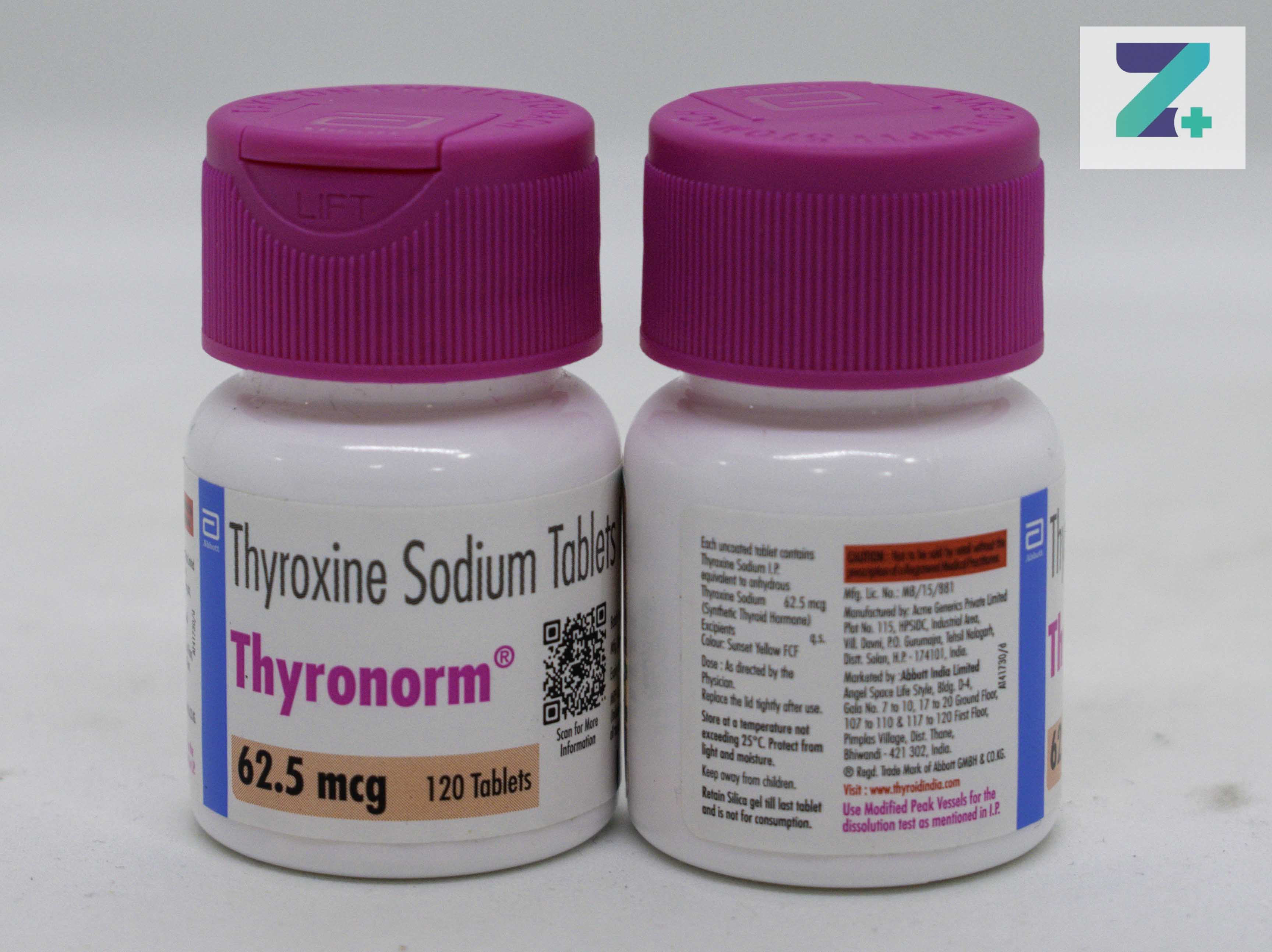
THYRONORM 62.5
Price: Rs.352.22
13% off
In stock
Loose stock: 0
Description
THYRONORM 62.5 TAB 120
Details
Composition
THYROXINE 62.5 MCG
# Thyroxine 62.5 mcg
## Short Description
**Thyroxine 62.5 mcg (levothyroxine)** is a synthetic form of the thyroid hormone **thyroxine (T4)**. It is primarily used as **thyroid hormone replacement therapy** in people whose thyroid gland does not produce enough thyroid hormone.
Levothyroxine helps restore normal thyroid hormone levels and can relieve symptoms associated with **hypothyroidism** when the correct dose is taken regularly.
> **Important:** Levothyroxine has a narrow therapeutic range. The dose should be individualized based on thyroid blood tests, clinical symptoms, age, and other health conditions.
---
# Key Benefits
* Replaces deficient **thyroid hormone (T4)**.
* Helps restore normal thyroid hormone levels.
* Helps relieve symptoms of hypothyroidism.
* Supports normal metabolism and energy production.
* Supports normal heart, brain, muscle, and digestive function.
* Helps maintain normal growth and development in children when thyroid hormone is deficient.
* Can help prevent complications of untreated hypothyroidism.
---
# Uses / Indications
### 1. Hypothyroidism
Thyroxine 62.5 mcg is commonly prescribed for **underactive thyroid (hypothyroidism)** caused by conditions such as:
* Hashimoto's thyroiditis
* Autoimmune thyroid disease
* Thyroid surgery
* Radioactive iodine treatment
* Certain medicines
* Congenital thyroid hormone deficiency
### 2. Thyroid Hormone Replacement
It replaces the thyroid hormone that the body is unable to produce adequately.
### 3. Thyroid Cancer
In selected patients with thyroid cancer, levothyroxine may be prescribed at doses intended to **suppress thyroid-stimulating hormone (TSH)** as part of specialist treatment.
### 4. Goiter
Levothyroxine may sometimes be used in specific thyroid disorders or goiter management when clinically appropriate.
---
# How It Works
Thyroxine (levothyroxine) is a synthetic version of the body's naturally produced **T4 thyroid hormone**.
After absorption, some T4 is converted into **triiodothyronine (T3)**, the more biologically active thyroid hormone.
Thyroid hormones regulate numerous processes, including:
* Metabolism
* Energy production
* Heart function
* Body temperature
* Brain function
* Muscle function
* Growth and development
Levothyroxine restores thyroid hormone activity and helps bring **TSH and thyroid hormone levels toward the desired range**.
---
# Dosage & Administration
The appropriate dose is individualized. **Thyroxine 62.5 mcg is one possible maintenance dose and is not appropriate for everyone.**
Your healthcare professional may adjust the dose based on:
* TSH and free T4 blood tests
* Age
* Body weight
* Cause and severity of hypothyroidism
* Pregnancy
* Heart disease
* Other medicines
### How to Take Thyroxine
* Take it **once daily**, unless otherwise prescribed.
* Take it on an **empty stomach**, ideally **30–60 minutes before breakfast**.
* Take it with a full glass of water.
* Try to take it at the same time every day.
* Avoid switching between different brands or formulations without discussing it with your healthcare professional, as absorption can vary.
### Alternative Timing
If morning administration is difficult, levothyroxine may sometimes be taken consistently at bedtime, provided it is taken several hours after the last meal. Follow your doctor's specific instructions.
### Important: Calcium and Iron
Calcium and iron supplements can significantly reduce levothyroxine absorption.
Separate levothyroxine from calcium or iron supplements by **at least 4 hours**, unless your healthcare professional provides different instructions.
### Missed Dose
Take the missed dose when remembered unless it is nearly time for the next dose.
If it is close to the next scheduled dose, skip the missed dose.
**Do not routinely double the dose without medical advice.**
---
# Side Effects
When the correct dose is used, levothyroxine is generally well tolerated.
Side effects are often associated with receiving **too much thyroid hormone**.
## Common Signs of Excess Thyroid Hormone
* Increased heart rate
* Palpitations
* Nervousness
* Anxiety
* Tremor
* Sweating
* Heat intolerance
* Headache
* Difficulty sleeping
* Increased appetite
* Weight loss
* Diarrhea
* Muscle weakness
## Serious Side Effects
Seek medical attention for:
* Chest pain
* Severe or persistent palpitations
* Very rapid or irregular heartbeat
* Shortness of breath
* Severe tremor
* Fainting
* Severe headache or confusion
Long-term excessive dosing can increase the risk of **abnormal heart rhythms and reduced bone mineral density**.
---
# Precautions & Warnings
### Correct Dose Is Important
Levothyroxine is a hormone replacement medicine, and both **too little and too much** can cause problems.
Do not change your dose based only on symptoms.
### Heart Disease
People with:
* Coronary artery disease
* Angina
* Previous heart attack
* Heart rhythm disorders
* Other cardiovascular disease
may require a lower starting dose and gradual dose adjustment.
### Adrenal Insufficiency
Untreated adrenal insufficiency should be considered before starting thyroid hormone replacement because thyroid hormone treatment can worsen adrenal insufficiency in susceptible individuals.
### Osteoporosis
Long-term excessive thyroid hormone replacement can contribute to bone loss, particularly in postmenopausal individuals.
### Pregnancy
Thyroid hormone requirements often **increase during pregnancy**.
Women taking levothyroxine who become pregnant should contact their healthcare professional promptly for appropriate thyroid monitoring and dose adjustment.
Do not stop levothyroxine during pregnancy without medical advice.
### Children
Levothyroxine is commonly used in children with hypothyroidism, but dosing is carefully individualized according to age, weight, and clinical requirements.
### Older Adults
Older adults, particularly those with heart disease, may require cautious dose initiation and monitoring.
---
# Drug Interactions
### Calcium Supplements
Calcium can reduce levothyroxine absorption.
**Separate calcium-containing products from levothyroxine by at least 4 hours.**
### Iron Supplements
Iron can reduce absorption.
Separate iron-containing supplements from levothyroxine by **at least 4 hours**.
### Antacids
Some antacids containing:
* Aluminum
* Magnesium
* Calcium
can reduce levothyroxine absorption.
### Proton Pump Inhibitors
Medicines such as omeprazole and other acid-reducing medicines may affect levothyroxine absorption in some patients.
### Cholestyramine and Similar Medicines
Bile-acid sequestrants can reduce levothyroxine absorption.
### Certain Foods and Beverages
Absorption may be affected by:
* Soy-containing foods
* High-fiber diets
* Coffee
* Certain mineral-containing foods or supplements
Consistent administration is important.
### Warfarin
Starting or changing thyroid hormone therapy can alter the response to **warfarin**, potentially requiring closer monitoring of anticoagulation.
### Diabetes Medicines
Thyroid hormone changes can affect blood glucose control and may require adjustment of diabetes medicines.
Always inform your healthcare professional about all prescription medicines, OTC products, vitamins, minerals, and herbal supplements you take.
---
# Storage Information
* Store Thyroxine 62.5 mcg according to the manufacturer's instructions.
* Keep tablets in the original packaging.
* Protect from **light, moisture, and excessive heat**.
* Keep the container tightly closed.
* Keep out of reach of children.
* Do not use after the expiry date.
* Avoid storing tablets in humid areas such as bathrooms unless the manufacturer specifically permits it.
---
# Prescription Status
**Thyroxine 62.5 mcg (levothyroxine) is generally a prescription medicine.**
It should be taken under medical supervision because the dose needs to be individualized and monitored using thyroid function tests.
---
# Genuine Medicine Assurance
When purchasing Thyroxine 62.5 mcg:
* Purchase only from a **licensed and reputable pharmacy**.
* Verify the active ingredient and strength.
* Check the manufacturer's name, batch/lot number, and expiry date.
* Ensure the packaging is intact.
* Avoid products from unauthorized or suspicious sellers.
* Do not use tablets from damaged or tampered packaging.
* Keep the original packaging for product identification.
* Avoid switching brands or formulations without consulting your healthcare professional.
**Genuine medicine assurance:** Product authenticity should be verified through the dispensing pharmacy, manufacturer, or relevant national medicines regulatory authority.
---
# FAQ – Thyroxine 62.5 mcg
### 1. What is Thyroxine 62.5 mcg used for?
Thyroxine 62.5 mcg is a form of **levothyroxine**, used primarily to replace thyroid hormone in people with **hypothyroidism**.
### 2. Is Thyroxine 62.5 mcg the same as levothyroxine?
Yes. Levothyroxine is a synthetic form of **thyroxine (T4)**, the hormone naturally produced by the thyroid gland.
### 3. What does Thyroxine 62.5 mcg do?
It replaces insufficient thyroid hormone and helps regulate metabolism, energy production, heart function, brain function, and other important body processes.
### 4. When should I take Thyroxine 62.5 mcg?
It is usually taken **once daily on an empty stomach, 30–60 minutes before breakfast**, with water, unless your healthcare professional gives different instructions.
### 5. Can I take Thyroxine after breakfast?
Taking levothyroxine with food can reduce or make absorption less predictable. For consistent treatment, it is generally preferred on an empty stomach.
### 6. Can I take calcium with Thyroxine 62.5 mcg?
Yes, when needed, but calcium should generally be taken **at least 4 hours apart** from levothyroxine because it can reduce absorption.
### 7. Can I take iron with Thyroxine 62.5 mcg?
Yes, but iron supplements should generally be separated from levothyroxine by **at least 4 hours**.
### 8. Does Thyroxine 62.5 mcg help with weight loss?
Levothyroxine is **not a weight-loss medicine**. In people with hypothyroidism, restoring normal thyroid hormone levels may result in some weight change related to correction of the thyroid disorder.
Taking excessive thyroid hormone for weight loss can cause serious cardiovascular and bone-related complications.
### 9. How long does Thyroxine take to work?
Some symptoms may gradually improve within several weeks. Because levothyroxine has a long duration of action, thyroid blood tests are generally assessed after an appropriate interval following a dose change.
### 10. Does Thyroxine need to be taken every day?
Yes. Hypothyroidism usually requires **consistent daily thyroid hormone replacement** unless your healthcare professional gives different instructions.
### 11. What happens if I miss a dose of Thyroxine?
Take it when remembered unless it is close to your next dose. Follow your doctor's instructions and avoid routinely taking extra doses without medical advice.
### 12. Can I stop Thyroxine when I feel better?
Do not stop it without medical advice. Feeling better generally means treatment is controlling the thyroid hormone deficiency; it does not necessarily mean the underlying condition has resolved.
### 13. Can Thyroxine cause a fast heartbeat?
Yes. If the dose is too high, symptoms of excess thyroid hormone can include **rapid heartbeat, palpitations, tremor, sweating, anxiety, and difficulty sleeping**.
### 14. Can Thyroxine be taken during pregnancy?
Yes. Levothyroxine is commonly used during pregnancy when indicated. Thyroid hormone requirements may increase during pregnancy, so regular monitoring is important.
**Do not stop levothyroxine without medical advice during pregnancy.**
### 15. Can Thyroxine be taken while breastfeeding?
Levothyroxine can generally be used during breastfeeding when clinically indicated. Maintaining appropriate thyroid hormone levels is important for the mother.
### 16. Does coffee affect Thyroxine absorption?
Coffee may reduce or alter levothyroxine absorption when taken too close to the dose. Taking levothyroxine with water on an empty stomach and waiting before drinking coffee can help maintain consistent absorption.
### 17. Can I take Thyroxine with other medicines?
Yes, but many medicines and supplements can affect levothyroxine absorption or thyroid hormone requirements. Tell your doctor about all medicines, supplements, and herbal products you use.
### 18. How often should thyroid levels be checked?
Testing frequency depends on the individual. Thyroid function is commonly checked after starting treatment or changing the dose and then periodically once the dose is stable.
### 19. What happens if I take too much Thyroxine?
Too much levothyroxine can cause symptoms of excessive thyroid hormone, including **palpitations, rapid heartbeat, tremor, anxiety, sweating, diarrhea, and insomnia**. Significant overdose can be dangerous and requires medical assessment.
### 20. Is Thyroxine 62.5 mcg available without a prescription?
Levothyroxine is generally a **prescription medicine**, although exact dispensing requirements vary by country.
---
# Medical Disclaimer
This information about **Thyroxine 62.5 mcg (levothyroxine)** is provided for educational and informational purposes only. It does not replace professional medical advice, diagnosis, or treatment.
Levothyroxine dosage is highly individualized. **Do not start, stop, or change the dose based solely on symptoms or advice from non-medical sources.** Thyroid function tests and clinical assessment are important for determining the appropriate dose.
Take particular care with calcium, iron, antacids, and other medicines that can affect absorption. Maintain a consistent dosing routine and inform your healthcare professional about all medicines and supplements you use.
Seek prompt medical attention for **chest pain, severe palpitations, fainting, severe shortness of breath, or symptoms suggesting significant thyroid hormone excess**.