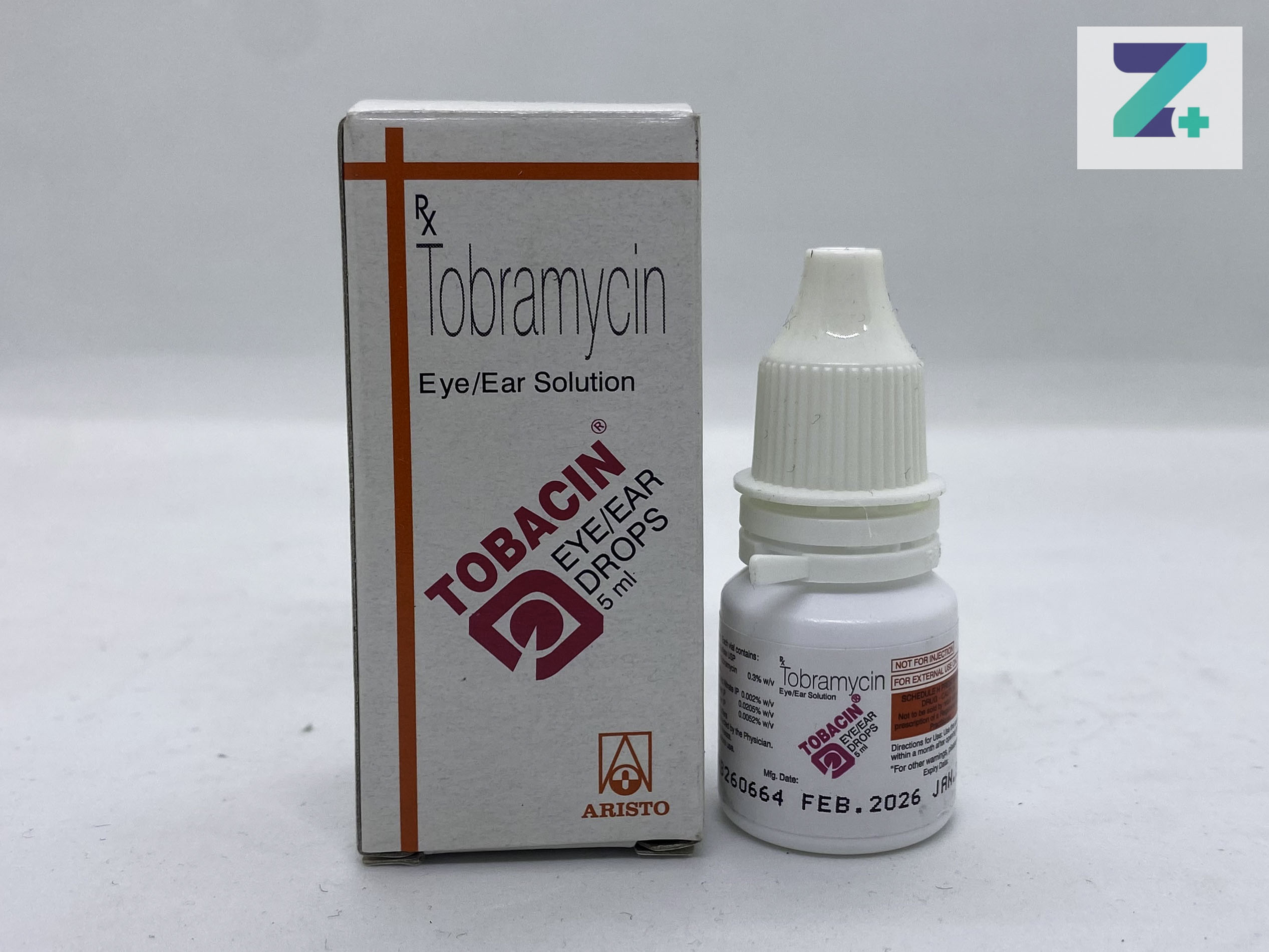
TOBACIN EYE/EAR
Price: Rs.155.20
10% off
In stock
Loose stock: 0
Description
TOBACIN EYE/EAR DROPS 5ML
Details
Composition
TOBRAMYCIN 0.3% W/V
# TOBRAMYCIN 0.3% W/V
## SHORT DESCRIPTION
**Tobramycin 0.3% W/V** is an **aminoglycoside antibiotic**, commonly formulated as an ophthalmic solution for the treatment of certain **bacterial eye infections**. It works by interfering with bacterial protein production, helping stop the growth of susceptible bacteria.
It is intended for bacterial infections and **does not treat viral or fungal eye infections**.
---
## KEY BENEFITS
* Helps treat susceptible **bacterial eye infections**.
* Works directly against bacteria responsible for infection.
* May help reduce symptoms such as eye redness, discharge, irritation, and swelling when these are caused by susceptible bacteria.
* Topical ophthalmic administration delivers the medicine directly to the affected eye.
* Can be used when prescribed by a healthcare professional.
---
## USES / INDICATIONS
Tobramycin 0.3% ophthalmic preparations may be prescribed for susceptible bacterial infections of the eye, including:
* **Bacterial conjunctivitis**
* Bacterial infections involving the eyelids or surrounding ocular tissues
* Other susceptible superficial ocular infections as determined by an eye-care professional
### Important
Tobramycin is **not effective against viral or fungal eye infections**.
---
## HOW IT WORKS
Tobramycin is an **aminoglycoside antibiotic**.
It enters susceptible bacteria and binds to bacterial **30S ribosomal subunits**. This interferes with bacterial protein synthesis and causes production of abnormal proteins, ultimately inhibiting bacterial growth and leading to bacterial cell death.
**Tobramycin → interferes with bacterial protein synthesis → inhibits/kills susceptible bacteria → helps resolve bacterial infection.**
---
## DOSAGE & ADMINISTRATION
> **Use Tobramycin 0.3% W/V exactly as prescribed by your doctor or eye-care professional.**
The dosage and duration depend on the severity and type of infection.
### General Administration for Ophthalmic Preparations
* Wash your hands before use.
* Do not touch the dropper tip to the eye, eyelids, fingers, or other surfaces.
* Instill the prescribed number of drops into the affected eye(s).
* Close the eye gently after administration.
* Wash your hands after use.
* Complete the prescribed course even if symptoms improve, unless your healthcare professional advises otherwise.
### If Using Other Eye Drops
If multiple ophthalmic medicines are prescribed, separate their administration by several minutes according to your healthcare professional's instructions.
### Contact Lenses
Remove contact lenses before using the eye drops unless your doctor specifically advises otherwise. Follow the product's instructions regarding when lenses can be replaced.
### Missed Dose
Use the missed dose when remembered unless it is nearly time for the next dose. **Do not use extra drops to compensate for a missed dose.**
---
## SIDE EFFECTS
### Common Side Effects
Temporary effects may include:
* Mild eye irritation
* Burning or stinging after application
* Itching
* Redness
* Temporary blurred vision
* Eye discomfort
* Increased tearing
These effects are often mild and temporary.
### Serious Side Effects
Stop using the medicine and seek medical advice if you develop:
* Severe eye pain
* Significant swelling
* Severe redness
* Vision changes that persist
* Severe or worsening irritation
* Signs of an allergic reaction
### Prolonged Use
Prolonged or inappropriate use of topical antibiotics may contribute to **overgrowth of non-susceptible organisms**, including fungi, or contribute to antibiotic resistance.
---
## PRECAUTIONS & WARNINGS
### Allergy
Do not use tobramycin if you have previously experienced a serious allergic reaction to **tobramycin or other aminoglycoside antibiotics**.
### For External/Ophthalmic Use
If the product is an eye preparation, use it **only in the eye as directed**. Do not swallow or inject it.
### Contact Lens Use
Contact lenses may irritate an infected eye and may interfere with treatment. Follow your eye-care professional's instructions regarding lens use.
### Avoid Contamination
Do not touch the dropper tip against the eye, eyelashes, fingers, or other surfaces because this can contaminate the medicine.
### Persistent Symptoms
If the infection does not improve or becomes worse during treatment, contact your doctor or eye-care professional.
### Prolonged Treatment
Long-term or repeated use should be avoided unless medically indicated because it can promote resistant organisms or secondary infections.
### Pregnancy
Tell your healthcare professional if you are pregnant or planning pregnancy. Your doctor can determine whether the medicine is appropriate.
### Breastfeeding
Discuss use with your healthcare professional if you are breastfeeding.
---
## DRUG INTERACTIONS
Because topical ophthalmic tobramycin generally produces lower systemic exposure than oral or injectable aminoglycosides, significant drug interactions are less common. However, inform your doctor about all medicines you use.
### Other Aminoglycosides
Using multiple aminoglycoside-containing medicines may increase the risk of aminoglycoside-related adverse effects, particularly if systemic exposure occurs.
### Other Ophthalmic Medicines
If you are using multiple eye preparations, your healthcare professional may recommend separating their administration.
### Systemic Medicines
Tell your doctor if you are receiving medicines that can affect the kidneys or hearing, particularly systemic aminoglycosides or other potentially nephrotoxic/ototoxic medicines.
---
## STORAGE INFORMATION
* Store according to the manufacturer's instructions.
* Keep the container tightly closed when not in use.
* Protect from excessive heat and direct sunlight.
* Keep away from moisture.
* Keep out of reach and sight of children.
* Do not use after the expiry date.
* Do not use if the solution becomes unusually cloudy, discolored, or contaminated.
* Do not share eye drops with another person.
---
## PRESCRIPTION STATUS
**Prescription Medicine**
Tobramycin 0.3% W/V ophthalmic preparations should be used according to the advice of a qualified healthcare professional.
Prescription requirements may vary depending on the country and specific product formulation.
---
## GENUINE MEDICINE ASSURANCE
For safe treatment, purchase **Tobramycin 0.3% W/V** from a licensed pharmacy or authorized medicine supplier.
Before use, check:
* Product name and strength
* Active ingredient
* Manufacturer
* Batch/lot number
* Manufacturing date
* Expiry date
* Packaging and seal integrity
* Regulatory information where applicable
Do not use the product if:
* The package is damaged or tampered with.
* The product is expired.
* The seal is broken before first use.
* The solution appears contaminated or significantly changed in appearance.
If you suspect the medicine is counterfeit or defective, consult a licensed pharmacist or the relevant medicine regulatory authority.
---
# FAQ – TOBRAMYCIN 0.3% W/V
### 1. What is Tobramycin 0.3% W/V used for?
Tobramycin 0.3% W/V is commonly used as an **ophthalmic antibiotic** to treat susceptible bacterial infections of the eye.
### 2. Is Tobramycin an antibiotic?
Yes. Tobramycin is an **aminoglycoside antibiotic**.
### 3. Does Tobramycin treat viral eye infections?
No. Tobramycin treats susceptible **bacterial infections** and does not work against viruses.
### 4. Can Tobramycin treat fungal eye infections?
No. It is not an antifungal medicine and should not be used to treat fungal eye infections unless specifically directed as part of an appropriate treatment plan.
### 5. How does Tobramycin eye medicine work?
It interferes with bacterial protein synthesis by binding to bacterial ribosomes, thereby inhibiting or killing susceptible bacteria.
### 6. Can Tobramycin eye drops cause burning?
Yes. Mild temporary burning, stinging, irritation, or discomfort may occur after administration.
### 7. Can Tobramycin cause blurred vision?
Temporary blurred vision can occur immediately after applying eye drops. If blurred vision persists or becomes significant, seek medical advice.
### 8. Can I wear contact lenses while using Tobramycin?
Follow your doctor's and product instructions. Contact lenses are generally removed during treatment of an eye infection, and lenses should not be worn immediately after applying many ophthalmic preparations.
### 9. Can I use Tobramycin for redness caused by allergies?
Tobramycin is an antibiotic and is **not a treatment for ordinary allergic eye redness** unless a bacterial infection is also present and treatment is medically indicated.
### 10. How often should Tobramycin 0.3% be used?
The frequency depends on the severity and type of infection and should be determined by your healthcare professional. Follow the prescribed schedule.
### 11. How long should I use Tobramycin?
Use it for the duration prescribed by your healthcare professional. Do not stop early or continue unnecessarily without medical advice.
### 12. What happens if I miss a Tobramycin dose?
Apply the missed dose when remembered unless it is nearly time for the next dose. **Do not use extra drops to make up for the missed dose.**
### 13. Can Tobramycin be used in both eyes?
Use it only in the eye or eyes specified by your healthcare professional.
### 14. Can Tobramycin be used in children?
It may be prescribed for children when medically appropriate. The child's healthcare professional should determine the appropriate treatment.
### 15. Can Tobramycin be used during pregnancy?
Tell your healthcare professional if you are pregnant or planning pregnancy. Your doctor will determine whether the potential benefits outweigh any potential risks.
### 16. Can Tobramycin be used while breastfeeding?
Discuss its use with your healthcare professional if you are breastfeeding.
### 17. Can I use Tobramycin with other eye drops?
It may be possible to use multiple ophthalmic medicines, but follow your doctor's instructions and separate different eye preparations as directed.
### 18. Can I share my Tobramycin eye drops?
**No.** Eye drops should never be shared because sharing can spread infection and contaminate the bottle.
### 19. What if Tobramycin eye drops do not improve my infection?
Contact your doctor or eye-care professional if symptoms do not improve, become worse, or new symptoms develop. The infection may not be caused by bacteria susceptible to tobramycin.
### 20. Can Tobramycin cause antibiotic resistance?
Yes. Unnecessary, prolonged, or inappropriate antibiotic use can contribute to **antibiotic resistance**.
### 21. What should I do if the dropper touches my eye?
Avoid touching the dropper tip to the eye or other surfaces. If contamination occurs, consult the product instructions or a pharmacist about whether the bottle should be replaced.
### 22. Can Tobramycin cause an allergic reaction?
Yes, although serious allergic reactions are uncommon. Stop use and seek medical attention if you develop severe swelling, rash, difficulty breathing, or other symptoms of a serious allergy.
### 23. Is Tobramycin 0.3% available without a prescription?
It is commonly a **prescription medicine**, although legal requirements can vary by country and formulation.
### 24. Can Tobramycin be used for an eye injury?
Do not use it for an eye injury unless recommended by an eye-care professional. Eye injuries may require specific evaluation and treatment.
### 25. Can Tobramycin cure every type of eye infection?
No. It is effective only against susceptible bacteria. Eye infections caused by viruses, fungi, allergies, or other causes require different management.
---
## MEDICAL DISCLAIMER
This information about **Tobramycin 0.3% W/V** is provided for general educational and informational purposes only. It is **not a substitute for professional medical advice, diagnosis, or treatment**.
The information above assumes that the **0.3% W/V formulation is an ophthalmic preparation**. Different formulations or routes of administration may have different indications, doses, warnings, and instructions. Always verify the formulation and product-specific package insert before use.
Use antibiotic eye medicine only as directed by a qualified healthcare professional. Do not use it for viral or fungal infections unless specifically instructed as part of an appropriate treatment plan.
Seek prompt medical attention for severe eye pain, significant vision changes, severe swelling, worsening infection, or symptoms of a serious allergic reaction.
**Always read the product label/package insert and follow the instructions provided by your doctor or pharmacist.**