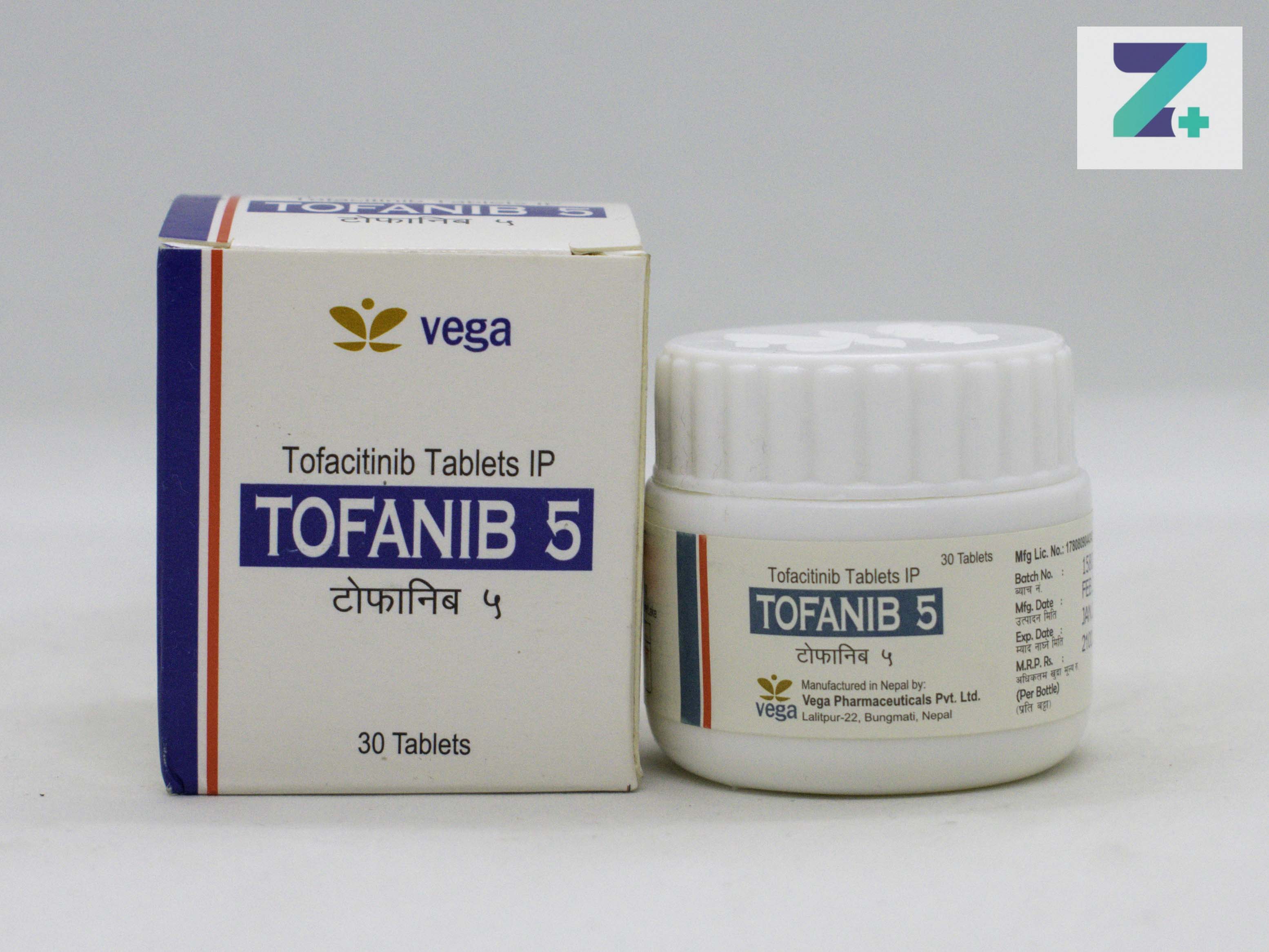
TOFANIB 5 MG
Price: Rs.2100.00
10% off
In stock
Loose stock: 0
Description
TOFANIB 5 MG TAB 30
Details
Composition
TOFACITINIB 5MG
# Tofacitinib 5 mg
## Short Description
**Tofacitinib 5 mg** is a prescription medicine known as a **Janus kinase (JAK) inhibitor**. It is used to treat certain inflammatory and autoimmune conditions, including **rheumatoid arthritis, psoriatic arthritis, and ulcerative colitis**, when appropriate.
Tofacitinib reduces abnormal immune-system activity by blocking JAK signaling pathways involved in inflammation. Because it suppresses parts of the immune system, it can increase the risk of **serious infections, blood clots, certain cancers, and cardiovascular events** in some patients.
> **Important:** Tofacitinib should be prescribed and monitored by a qualified healthcare professional. It is not appropriate for every patient with an inflammatory or autoimmune disease.
---
## Key Benefits
* Helps reduce inflammation associated with certain autoimmune diseases
* Can improve **joint pain, swelling, and stiffness** in rheumatoid arthritis and psoriatic arthritis
* Can help control symptoms of **ulcerative colitis**
* May improve physical function and disease activity in eligible patients
* Oral treatment that can be taken without injections
* Selectively targets **JAK signaling pathways** involved in immune and inflammatory responses
---
## Uses / Indications
Tofacitinib 5 mg may be prescribed for adults with certain moderate-to-severe inflammatory conditions.
### **Rheumatoid Arthritis**
May be used for adults with moderately to severely active rheumatoid arthritis who have had an inadequate response or intolerance to certain other treatments.
### **Psoriatic Arthritis**
May be used to reduce signs and symptoms of active psoriatic arthritis in appropriate patients.
### **Ulcerative Colitis**
Tofacitinib may be prescribed for adults with moderately to severely active ulcerative colitis when appropriate conventional or biologic treatments have not provided adequate benefit or were not tolerated.
### Other Approved Uses
The approved indications, age restrictions, and treatment requirements can vary by country and regulatory authority.
---
## How It Works
Tofacitinib is a **JAK inhibitor**.
JAK enzymes, particularly **JAK1 and JAK3**, participate in signaling pathways used by various cytokines that regulate immune responses and inflammation.
Tofacitinib inhibits JAK signaling, which reduces the activity of certain inflammatory pathways.
**Tofacitinib → inhibits JAK signaling → reduces inflammatory cytokine activity → decreases abnormal immune-mediated inflammation**
Because the medicine suppresses immune-system activity, it can also reduce the body's ability to fight certain infections.
---
## Dosage & Administration
> **Important:** Tofacitinib dosing is highly condition-specific. The 5 mg tablet is commonly used as a maintenance dose for several indications, but some conditions require different doses or treatment phases. Always follow the prescription provided by your healthcare professional.
### Rheumatoid Arthritis / Psoriatic Arthritis
A commonly used adult regimen is:
**5 mg twice daily**
or an equivalent extended-release regimen where available and appropriate.
### Ulcerative Colitis
Treatment may involve a **higher induction dose followed by a lower maintenance dose**. The exact regimen depends on treatment response and the prescribing guidelines applicable to the patient.
### How to Take Tofacitinib
* Take exactly as prescribed.
* It may generally be taken **with or without food**.
* Take doses at approximately the same times each day.
* Swallow tablets with water.
* Do not crush, chew, or split modified-release formulations unless the product instructions specifically allow it.
* Do not change the dose without medical advice.
### Kidney or Liver Impairment
Dose adjustments may be necessary in patients with:
* Moderate or severe kidney impairment
* Moderate liver impairment
Tofacitinib is generally not recommended in patients with **severe hepatic impairment** unless specifically determined appropriate according to local prescribing information.
### Missed Dose
Take the missed dose when remembered unless it is nearly time for the next dose.
**Do not take two doses at once.**
---
## Side Effects
### Common Side Effects
Possible side effects include:
* Headache
* Diarrhea
* Nausea
* Upper respiratory tract infections
* Nasal congestion
* Increased cholesterol levels
* Acne or rash in some patients
### Important Side Effects
Tofacitinib can cause changes in:
* White blood cell counts
* Red blood cell counts
* Cholesterol levels
* Liver enzymes
Regular laboratory monitoring may therefore be required.
### Serious Side Effects
Tofacitinib can increase the risk of:
* Serious infections
* Tuberculosis
* Herpes zoster (shingles)
* Serious bacterial, viral, or fungal infections
* Blood clots
* Heart attack and other major cardiovascular events
* Certain cancers, including lymphoma
* Serious allergic reactions
Seek urgent medical attention for:
* Difficulty breathing
* Chest pain
* Sudden weakness or numbness
* Swelling or pain in one leg
* Persistent high fever
* Severe cough
* Severe abdominal pain
* Unexplained weight loss
* Unusual lumps or swollen lymph nodes
---
## Precautions & Warnings
### Serious Infections
Tofacitinib suppresses immune activity and can increase the risk of serious infections.
Tell your doctor if you have:
* An active infection
* Recurrent infections
* Tuberculosis
* Hepatitis B or C
* A weakened immune system
Treatment may need to be delayed or stopped during certain serious infections.
### Tuberculosis
Patients should generally be evaluated for **tuberculosis (TB)** before starting treatment.
Patients with latent TB may require appropriate treatment before or during tofacitinib therapy.
### Herpes Zoster
Tofacitinib can increase the risk of **shingles**.
Discuss vaccination status with your healthcare professional before starting treatment.
### Cancer Risk
Tofacitinib may increase the risk of certain malignancies, including lymphoma and some skin cancers.
Tell your healthcare professional if you have a history of cancer or significant cancer risk factors.
### Blood Clots
Tofacitinib has been associated with an increased risk of **venous thromboembolism**, including deep vein thrombosis (DVT) and pulmonary embolism (PE), particularly at higher doses and in patients with additional risk factors.
Seek urgent medical attention for:
* Sudden shortness of breath
* Chest pain
* Coughing blood
* Sudden leg swelling or pain
### Cardiovascular Risk
Certain patients, particularly older adults with cardiovascular risk factors, may have an increased risk of **heart attack, stroke, or other major cardiovascular events**.
Tell your doctor if you have:
* Heart disease
* Previous stroke
* High blood pressure
* Diabetes
* High cholesterol
* A history of smoking
### Blood Cell Abnormalities
Tofacitinib can reduce certain blood cell counts.
Your healthcare professional may monitor:
* Complete blood count (CBC)
* Hemoglobin
* Lymphocytes
* Neutrophils
### Liver Function
Liver enzymes may increase during treatment. Periodic blood tests may be recommended.
### Cholesterol
Tofacitinib can increase cholesterol levels. Lipid levels may be checked after treatment begins.
### Vaccinations
Avoid **live vaccines** during treatment unless specifically recommended by your healthcare professional.
Ideally, appropriate vaccinations should be reviewed before starting treatment.
### Pregnancy
Tell your healthcare professional if you are pregnant, planning pregnancy, or become pregnant while taking tofacitinib.
### Breastfeeding
Discuss tofacitinib use with your healthcare professional if you are breastfeeding.
---
## Drug Interactions
Tofacitinib has clinically important interactions with several medicines.
### Strong CYP3A4 Inhibitors
Medicines such as **ketoconazole** can increase tofacitinib concentrations and may require dose adjustment.
### Moderate CYP3A4 Inhibitors + Strong CYP2C19 Inhibitors
Medicines such as **fluconazole** can increase tofacitinib exposure and may require dose modification.
### CYP3A4 Inducers
Medicines such as:
* Rifampicin
* Rifabutin
* Carbamazepine
* Phenytoin
may reduce tofacitinib concentrations and potentially decrease its effectiveness.
### Other Immunosuppressive Medicines
Tofacitinib is generally not recommended in combination with other potent immunosuppressants such as certain biologic DMARDs because of increased risk of serious infection and immune suppression.
### Live Vaccines
Live vaccines should generally be avoided during tofacitinib treatment.
### Cholesterol-Lowering Medicines
Because tofacitinib can alter lipid levels, your doctor may monitor cholesterol and adjust cardiovascular risk management if necessary.
Always provide your doctor and pharmacist with a complete list of prescription medicines, over-the-counter products, supplements, and herbal medicines.
---
## Storage Information
* Store at **room temperature** according to the manufacturer's instructions.
* Keep the tablets in their original packaging.
* Protect from excessive heat and moisture.
* Keep away from direct sunlight.
* Keep out of reach and sight of children.
* Do not use after the expiry date.
* Do not use tablets from damaged or tampered packaging.
---
## Prescription Status
**Tofacitinib 5 mg is a prescription-only medicine.**
Because of its significant risks, treatment should be initiated and monitored by a healthcare professional experienced in managing inflammatory or autoimmune diseases.
Before and during treatment, your healthcare professional may assess:
* Tuberculosis
* Hepatitis B and C
* Complete blood count
* Liver function
* Cholesterol levels
* Cardiovascular and clotting risk
* Infection history
* Vaccination status
---
## Genuine Medicine Assurance
When purchasing **Tofacitinib 5 mg**:
* Purchase only from a **licensed pharmacy or authorized medicine supplier**.
* Verify the medicine name and strength.
* Check the manufacturer's details.
* Check the batch/lot number and expiry date.
* Ensure the packaging and seal are intact.
* Do not purchase from unauthorized or suspicious sources.
* Do not use tablets from damaged or tampered packaging.
* Keep the original packaging and prescription information.
* If authenticity is uncertain, consult a pharmacist or contact the manufacturer using the information printed on the packaging.
---
# FAQ – Tofacitinib 5 mg
### 1. What is Tofacitinib 5 mg used for?
Tofacitinib 5 mg is used to treat certain inflammatory and autoimmune conditions, including **rheumatoid arthritis, psoriatic arthritis, and ulcerative colitis**, when appropriate.
### 2. Is Tofacitinib an immunosuppressant?
Yes. Tofacitinib modifies immune-system activity by inhibiting JAK signaling. This reduces inflammation but can also increase susceptibility to infections.
### 3. What type of medicine is Tofacitinib?
Tofacitinib is an oral **Janus kinase (JAK) inhibitor**.
### 4. How does Tofacitinib work?
It inhibits JAK enzymes involved in cytokine signaling, reducing the activity of inflammatory pathways that contribute to autoimmune disease.
### 5. Is Tofacitinib used for rheumatoid arthritis?
Yes. Tofacitinib can be prescribed for certain adults with **moderately to severely active rheumatoid arthritis**.
### 6. Is Tofacitinib used for psoriatic arthritis?
Yes. It may be used to treat active psoriatic arthritis in appropriate patients.
### 7. Can Tofacitinib be used for ulcerative colitis?
Yes. Tofacitinib is approved in various countries for certain adults with **moderately to severely active ulcerative colitis**.
### 8. Is Tofacitinib 5 mg a steroid?
No. Tofacitinib is **not a corticosteroid**. It is a targeted synthetic JAK inhibitor.
### 9. Is Tofacitinib a biologic medicine?
No. Tofacitinib is a **small-molecule oral medicine**, not an injectable biologic.
### 10. How often is Tofacitinib 5 mg taken?
For some conditions, 5 mg is commonly taken **twice daily**, while other conditions may require different induction or maintenance regimens. Always follow your specific prescription.
### 11. Can Tofacitinib be taken with food?
Yes. Tofacitinib can generally be taken **with or without food**.
### 12. Does Tofacitinib weaken the immune system?
It suppresses certain immune pathways. As a result, it can increase susceptibility to **serious infections**, including tuberculosis and shingles.
### 13. Does Tofacitinib increase the risk of infections?
Yes. Serious infections are an important risk associated with tofacitinib. Contact your healthcare professional if you develop persistent fever, severe cough, or other signs of infection.
### 14. Can Tofacitinib cause shingles?
Yes. Tofacitinib can increase the risk of **herpes zoster (shingles)**.
### 15. Should I be tested for tuberculosis before taking Tofacitinib?
Yes. Patients are generally evaluated for **TB infection before starting treatment**, with appropriate follow-up based on individual risk.
### 16. Can Tofacitinib increase cholesterol?
Yes. Tofacitinib can increase cholesterol levels. Your healthcare professional may check your lipid profile during treatment.
### 17. Does Tofacitinib increase the risk of blood clots?
Tofacitinib has been associated with an increased risk of serious blood clots, particularly with higher doses and in patients with cardiovascular or clotting risk factors.
### 18. What are the symptoms of a blood clot while taking Tofacitinib?
Seek urgent medical attention for **sudden shortness of breath, chest pain, coughing blood, or sudden swelling/pain in a leg**.
### 19. Can Tofacitinib increase the risk of heart attack or stroke?
Certain patients, particularly those with cardiovascular risk factors, may have an increased risk of major cardiovascular events. Your doctor should assess your individual risk before and during treatment.
### 20. Can Tofacitinib cause cancer?
Tofacitinib may increase the risk of certain cancers, including lymphoma and some skin cancers. The level of risk varies according to individual factors and treatment exposure.
### 21. Can I receive vaccines while taking Tofacitinib?
Vaccination should be discussed with your healthcare professional. **Live vaccines are generally avoided** during treatment.
### 22. Can I take Tofacitinib with other immunosuppressants?
Combining tofacitinib with certain biologic or potent immunosuppressive medicines is generally avoided because of increased risks, particularly serious infections.
### 23. Can I take Tofacitinib with antibiotics?
Some antibiotics can interact with tofacitinib. For example, certain medicines that inhibit CYP enzymes can increase tofacitinib exposure. Always tell your doctor which antibiotics you are taking.
### 24. Can Tofacitinib be taken during pregnancy?
Discuss pregnancy or plans for pregnancy with your healthcare professional before taking tofacitinib. Treatment decisions should be individualized.
### 25. Can I breastfeed while taking Tofacitinib?
Discuss breastfeeding with your healthcare professional before using tofacitinib.
### 26. What monitoring is required with Tofacitinib?
Your doctor may monitor **CBC, liver enzymes, cholesterol levels, infection status, TB, hepatitis status, and cardiovascular risk**, depending on your clinical situation.
### 27. What happens if I miss a dose of Tofacitinib?
Take the missed dose when remembered unless it is nearly time for your next scheduled dose. **Do not take two doses together.**
### 28. Can I stop Tofacitinib suddenly?
Do not stop or restart tofacitinib without consulting your healthcare professional. Stopping treatment may allow the underlying inflammatory disease to become active again.
### 29. What should I do if I develop an infection while taking Tofacitinib?
Contact your healthcare professional promptly if you develop a significant infection. Your doctor may recommend temporarily withholding treatment depending on the severity and type of infection.
### 30. Is Tofacitinib 5 mg available without a prescription?
No. **Tofacitinib 5 mg is generally a prescription medicine** and requires appropriate medical supervision.
---
## Medical Disclaimer
This information about **Tofacitinib 5 mg** is provided for **educational and informational purposes only** and does not replace professional medical advice, diagnosis, or treatment.
Tofacitinib is a potent immune-modifying medicine with important safety risks. It may increase the risk of **serious infections, tuberculosis, shingles, certain cancers, blood clots, heart attack, stroke, and other cardiovascular events**, particularly in patients with relevant risk factors or when used at higher doses.
Before treatment and periodically during therapy, healthcare professionals may need to assess infection risk, TB and hepatitis status, blood counts, liver function, cholesterol, and cardiovascular or clotting risk.
**Do not start, stop, or change the dose of Tofacitinib without medical supervision.** Seek urgent medical attention for chest pain, sudden shortness of breath, one-sided leg swelling, severe infection symptoms, or signs of a serious allergic reaction.
Always follow the prescribing information supplied with your specific product and the instructions of your healthcare professional.