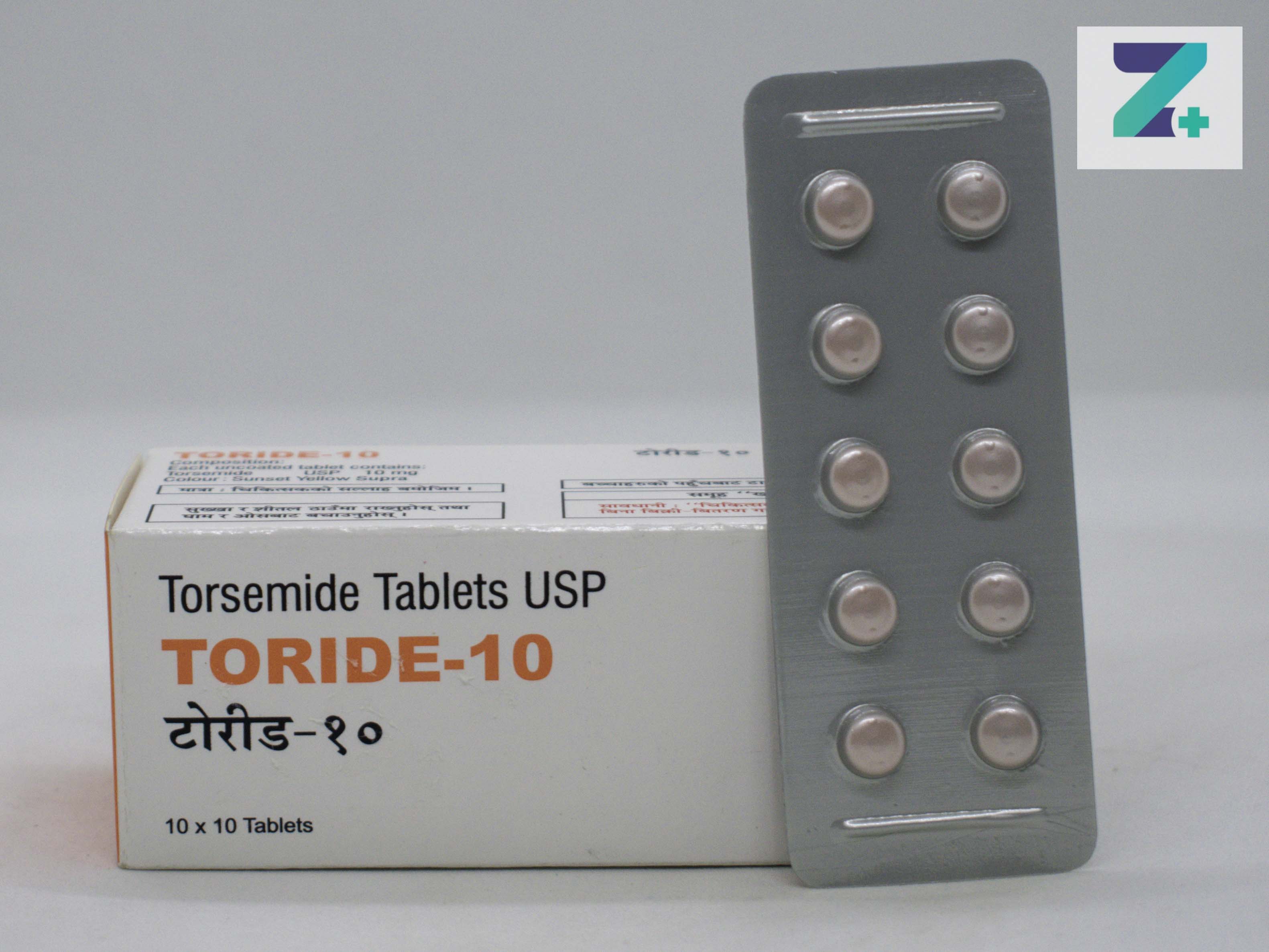
TORIDE-10
Price: Rs.70.00
15% off
In stock
Loose stock: 0
Description
TORIDE-10 TAB 10
Details
Composition
TORSEMIDE 10 MG
# Torsemide 10 mg
## SHORT DESCRIPTION
Torsemide 10 mg is a **loop diuretic (water tablet)** used to remove excess salt and water from the body. It is commonly prescribed for **fluid retention (edema)** associated with heart failure, kidney disease or liver disease. It may also be used to help control high blood pressure in certain patients.
Torsemide increases urine production, helping reduce fluid buildup and swelling.
## KEY BENEFITS
* Helps reduce excess fluid and swelling
* Increases urine production to remove excess salt and water
* Helps relieve edema associated with certain heart, kidney or liver conditions
* Can help reduce fluid-related symptoms such as swollen legs and ankles
* May help lower blood pressure
* Can reduce the workload associated with fluid overload in appropriate patients
## USES / INDICATIONS
Torsemide 10 mg may be prescribed for:
* **Edema associated with congestive heart failure**
* Fluid retention associated with kidney disorders
* Fluid retention associated with liver disease
* **Hypertension**, when appropriate
* Other conditions involving excess fluid accumulation, as determined by a healthcare professional
## HOW IT WORKS
Torsemide is a **loop diuretic**.
It acts primarily on the **thick ascending limb of the loop of Henle** in the kidneys, where it inhibits the sodium-potassium-chloride cotransporter.
This reduces the reabsorption of sodium and chloride, causing more salt and water to be eliminated through urine.
As excess fluid is removed, swelling decreases and blood pressure may be lowered.
## DOSAGE & ADMINISTRATION
* Take Torsemide 10 mg exactly as prescribed.
* The dose depends on the condition being treated and the patient's response.
* It is usually taken **once daily**, preferably at the same time each day.
* Because torsemide increases urination, taking it in the morning may help avoid frequent nighttime urination.
* It may be taken with or without food.
* Swallow the tablet with water.
* Do not change the dose or frequency without medical advice.
* Your doctor may monitor blood pressure, kidney function and electrolyte levels during treatment.
### Missed Dose
Take the missed dose when remembered unless it is close to the next scheduled dose. Avoid taking it late in the day if this is likely to cause troublesome nighttime urination. Do not double the next dose.
## SIDE EFFECTS
Common side effects may include:
* Increased urination
* Dizziness
* Headache
* Weakness
* Low blood pressure
* Dehydration
* Increased thirst
* Constipation
* Nausea
* Changes in electrolyte levels
Torsemide can reduce potassium, sodium, magnesium and other electrolytes, particularly at higher doses or during prolonged treatment.
### Serious Side Effects
Seek medical attention for:
* Severe dizziness or fainting
* Severe dehydration
* Very low blood pressure
* Muscle cramps or significant weakness
* Confusion
* Irregular heartbeat or palpitations
* Significant reduction in urine output
* Hearing changes or ringing in the ears, particularly after high doses or rapid administration
* Severe allergic reaction
## PRECAUTIONS & WARNINGS
* Torsemide can cause **dehydration and electrolyte abnormalities**.
* Your doctor may periodically check kidney function and electrolytes such as potassium and sodium.
* Tell your doctor if you have kidney disease, liver disease, diabetes or gout.
* Excessive fluid loss may cause dizziness or fainting, particularly in older adults.
* Stand up slowly from sitting or lying down to reduce dizziness.
* Tell your doctor if you have difficulty passing urine or urinary obstruction.
* Torsemide may increase uric acid levels and potentially worsen **gout**.
* Blood glucose levels may increase in some patients with diabetes.
* Long-term or high-dose treatment may increase the risk of electrolyte disturbances.
* Do not significantly change your fluid or salt intake without medical advice, particularly if you are being treated for heart failure or liver disease.
* Tell your doctor if you are pregnant, planning pregnancy or breastfeeding.
* Seek medical attention if you develop severe weakness, confusion, irregular heartbeat or persistent vomiting/diarrhea.
## DRUG INTERACTIONS
Torsemide may interact with:
* **Other diuretics** — may increase fluid loss, low blood pressure and electrolyte abnormalities.
* **ACE inhibitors and ARBs** — may increase the risk of low blood pressure or kidney-function changes.
* **NSAIDs** such as ibuprofen, diclofenac and naproxen — may reduce the diuretic effect and increase the risk of kidney problems.
* **Digoxin** — low potassium or magnesium caused by diuretics may increase the risk of digoxin toxicity.
* **Lithium** — diuretics can increase lithium concentrations and the risk of lithium toxicity.
* **Corticosteroids** — may increase the risk of low potassium.
* **Aminoglycoside antibiotics** — may increase the risk of hearing-related toxicity.
* **Certain antihypertensive medicines** — may enhance the blood-pressure-lowering effect.
* **Diabetes medicines** — blood glucose may require closer monitoring.
* **Sucralfate** — may reduce absorption of some oral medicines; separate administration may be recommended.
Always tell your doctor or pharmacist about all prescription medicines, over-the-counter medicines, vitamins and herbal supplements you use.
## STORAGE INFORMATION
* Store according to the manufacturer's instructions.
* Keep tablets in their original packaging.
* Store at the recommended room temperature.
* Protect from excessive heat, moisture and direct sunlight.
* Keep the container tightly closed where applicable.
* Keep out of reach of children.
* Do not use after the expiry date.
* Do not use the medicine if the packaging is damaged or the tablets appear abnormal.
## PRESCRIPTION STATUS
**Prescription medicine.** Torsemide 10 mg should be used under the supervision of a qualified healthcare professional.
Prescription requirements may vary according to local regulations.
## GENUINE MEDICINE ASSURANCE
For safe and genuine medicine use:
* Purchase Torsemide 10 mg only from a licensed and reputable pharmacy.
* Check the medicine name and **10 mg strength**.
* Verify the batch number and expiry date.
* Ensure the packaging and seal are intact.
* Check the manufacturer's details.
* Avoid medicines with damaged, altered or suspicious packaging.
* Purchase medicines only from authorized sources.
* Consult a pharmacist if you have concerns about product authenticity.
## FAQ
### What is Torsemide 10 mg used for?
Torsemide 10 mg is a **loop diuretic** used to treat excess fluid retention associated with conditions such as heart failure, kidney disease and liver disease. It may also be used for high blood pressure in appropriate patients.
### Is Torsemide a water pill?
Yes. Torsemide is commonly called a **water pill or diuretic** because it increases urine production and helps remove excess salt and water from the body.
### How does Torsemide work?
Torsemide blocks the reabsorption of sodium and chloride in a specific part of the kidney. This causes more salt and water to leave the body through urine.
### Does Torsemide reduce swelling?
Yes. By removing excess fluid, torsemide can reduce **edema or swelling**, particularly swelling caused by heart, kidney or liver conditions.
### Does Torsemide lower blood pressure?
Yes. Torsemide can lower blood pressure by increasing the elimination of sodium and water. It may be prescribed for hypertension in selected patients.
### When should I take Torsemide 10 mg?
It is commonly taken once daily. Taking it in the **morning** can help reduce the inconvenience of frequent urination during the night. Follow your doctor's instructions.
### Does Torsemide make you urinate more?
Yes. Increased urination is the intended effect of torsemide and helps remove excess fluid from the body.
### How long does Torsemide take to work?
Torsemide generally begins increasing urine production relatively soon after an oral dose, although the time and degree of fluid reduction vary between individuals.
### Can Torsemide cause dehydration?
Yes. Excessive fluid loss can cause dehydration, especially if the dose is too high or if you have vomiting, diarrhea or inadequate fluid intake.
### Does Torsemide lower potassium?
Yes. Like other loop diuretics, torsemide can lower potassium levels. Your doctor may monitor potassium and other electrolytes during treatment.
### Can Torsemide cause low blood pressure?
Yes. Excessive fluid removal can cause **hypotension**, leading to dizziness, weakness or fainting.
### Can Torsemide cause kidney problems?
Torsemide is used in many patients with kidney-related fluid retention, but excessive fluid loss can reduce kidney function. Kidney function should therefore be monitored when appropriate.
### Can Torsemide increase uric acid?
Yes. Torsemide can increase uric acid levels and may worsen gout in susceptible patients.
### Can Torsemide be taken with Amlodipine?
These medicines may be prescribed together, but both can lower blood pressure. Your healthcare professional may monitor blood pressure and adjust treatment if necessary.
### Can Torsemide be taken with Losartan?
Yes, the combination may be used in patients with hypertension or certain heart conditions. Blood pressure, kidney function and electrolytes may need monitoring.
### Can Torsemide be taken with Spironolactone?
Yes. The combination is commonly used in certain patients with heart failure or fluid retention. Because the medicines affect electrolytes differently, medical monitoring is important.
### Can Torsemide be taken with Digoxin?
It may be prescribed together in some heart conditions. However, torsemide can lower potassium and magnesium, which may increase the risk of digoxin-related problems. Monitoring may be required.
### Can I take Ibuprofen with Torsemide?
NSAIDs such as ibuprofen may reduce the diuretic effect and can increase the risk of kidney problems. Consult your doctor before regularly using NSAIDs with torsemide.
### Can I drink alcohol while taking Torsemide?
Alcohol can increase dizziness and low blood pressure, particularly when combined with a diuretic. It is advisable to discuss alcohol use with your healthcare professional.
### Can Torsemide be taken during pregnancy?
Torsemide should be used during pregnancy only when specifically prescribed by a healthcare professional after considering the potential benefits and risks.
### Can Torsemide be taken while breastfeeding?
Consult your healthcare professional before taking torsemide while breastfeeding. Diuretics may affect fluid balance and, depending on dose, may potentially affect milk production.
### Does Torsemide cause weight loss?
Torsemide may cause a decrease in body weight due to **loss of excess fluid**, not loss of body fat. It should not be used as a weight-loss medicine.
### What should I do if I miss a Torsemide dose?
Take the missed dose when you remember unless it is nearly time for the next dose. Avoid taking a missed dose late in the day if it may cause excessive nighttime urination. Do not double the dose.
### What happens if I take too much Torsemide?
An overdose can cause excessive urination, severe dehydration, low blood pressure and dangerous electrolyte abnormalities. Seek urgent medical attention if an overdose is suspected.
### How should Torsemide 10 mg be stored?
Store it according to the manufacturer's instructions at the recommended room temperature, away from excessive heat and moisture. Keep it in its original packaging and out of reach of children.
## MEDICAL DISCLAIMER
This information is provided for educational and informational purposes only and should not replace professional medical advice, diagnosis or treatment. Torsemide 10 mg is a prescription diuretic that can significantly affect **fluid balance, blood pressure, kidney function and electrolytes**. Use it only as directed by a healthcare professional. Do not change your dose or fluid intake without medical advice. Seek medical attention for severe dizziness, fainting, severe dehydration, irregular heartbeat, significant weakness or markedly reduced urine output. Always inform your healthcare professional about other medicines you take, particularly blood-pressure medicines, NSAIDs, digoxin and lithium.