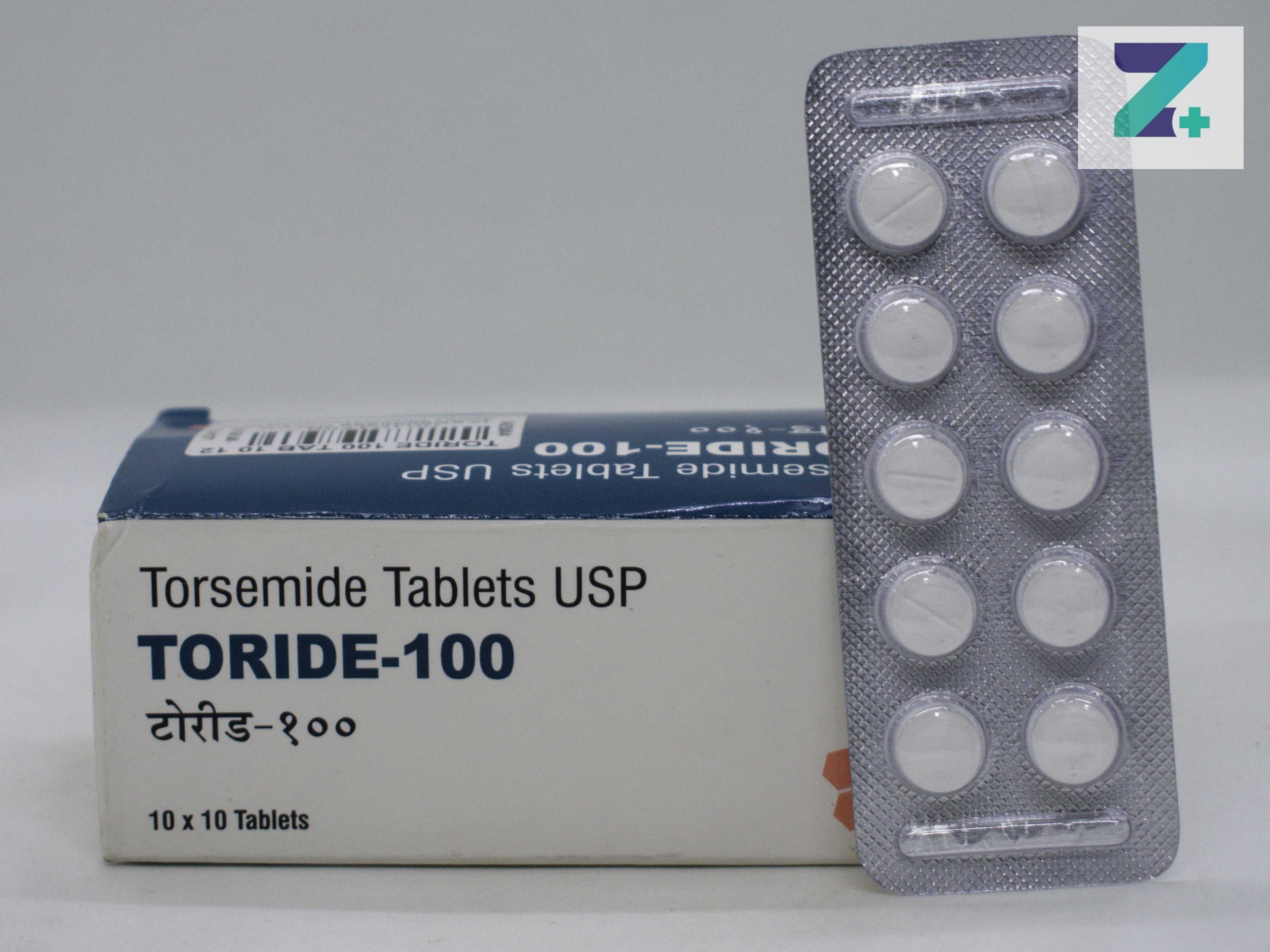
TORIDE 100
Price: Rs.350.00
10% off
In stock
Loose stock: 0
Description
TORIDE 100 TAB 10
Details
Composition
TORSEMIDE 100 MG
# Torsemide 100 mg
## Short Description
**Torsemide 100 mg** is a prescription **loop diuretic (water tablet)** used to remove excess salt and water from the body. It is primarily prescribed for **edema (fluid retention)** associated with conditions such as heart failure, kidney disease or liver disease.
Torsemide increases urine production, helping reduce excess fluid and associated swelling. The **100 mg strength is relatively high** and is generally used only when clinically appropriate under medical supervision.
> **Important:** Torsemide can cause dehydration, low blood pressure and electrolyte abnormalities. The dose should be individualized based on the patient's condition, kidney function, fluid status and response to treatment.
---
## Key Benefits
* Helps remove **excess fluid and sodium** from the body.
* Reduces swelling (**edema**) in the legs, ankles and other tissues.
* Helps relieve fluid overload associated with **heart failure**.
* May be used for edema related to certain **kidney disorders**.
* May help manage fluid retention associated with **liver disease**.
* Can reduce symptoms associated with fluid accumulation, such as swelling and shortness of breath.
* Has a relatively predictable diuretic effect when taken as prescribed.
---
## Uses / Indications
Torsemide 100 mg may be prescribed for:
* **Edema associated with congestive heart failure**
* Fluid retention associated with **kidney disease**
* Edema associated with **liver disease**, when appropriate
* Other clinically significant fluid-retention states requiring a loop diuretic
Torsemide is **not primarily a treatment for high blood pressure at the 100 mg dose**. Lower doses may sometimes be used for hypertension depending on the formulation and local prescribing recommendations.
---
## How It Works
Torsemide is a **loop diuretic**.
It acts mainly on the **thick ascending limb of the loop of Henle** in the kidneys, where it inhibits the **sodium-potassium-chloride (Na⁺/K⁺/2Cl⁻) cotransporter**.
This reduces the reabsorption of sodium and chloride, causing more:
* Sodium
* Chloride
* Water
to be eliminated in the urine.
### In simple terms:
**Torsemide → reduces kidney reabsorption of sodium and chloride → increases urine production → removes excess fluid → reduces swelling and fluid overload.**
---
## Dosage & Administration
### Adults
The dose depends on the condition being treated and the patient's response.
For edema associated with heart failure, kidney disease or liver disease, treatment is commonly initiated at a **lower dose**, with the dose increased when necessary.
**Torsemide 100 mg should only be taken if this specific strength has been prescribed by a healthcare professional.**
The appropriate dose may be considerably lower than 100 mg for many patients.
### Administration
* Take exactly as prescribed.
* It is generally taken **once daily**.
* It can usually be taken with or without food.
* Take it at approximately the same time each day.
* Because it increases urine production, taking it earlier in the day may reduce nighttime urination.
* Do not change the dose based solely on how much urine you produce.
* Do not restrict or increase your fluid intake unless your healthcare professional advises you to do so.
### Missed Dose
Take the missed dose when remembered unless it is close to the next scheduled dose. **Do not double the dose** to compensate for a missed dose.
---
## Side Effects
### Common Side Effects
Possible side effects include:
* Increased urination
* Dizziness
* Light-headedness
* Headache
* Low blood pressure
* Dehydration
* Weakness
* Fatigue
* Dry mouth
### Electrolyte-Related Side Effects
Torsemide can lower electrolytes such as:
* Potassium
* Sodium
* Magnesium
* Chloride
Low potassium may cause:
* Muscle weakness
* Muscle cramps
* Fatigue
* Palpitations
* Abnormal heart rhythms
### Serious Side Effects
Seek medical attention if you experience:
* Severe dizziness or fainting
* Very low blood pressure
* Severe dehydration
* Confusion
* Marked weakness
* Irregular heartbeat
* Very little or no urine
* Severe allergic reaction
* Ringing in the ears or hearing changes
High doses or rapid intravenous administration of loop diuretics can cause **ototoxicity (hearing-related toxicity)**, although this is less typical with properly administered oral therapy.
---
## Precautions & Warnings
### Dehydration
Torsemide can cause significant fluid loss.
Contact your healthcare professional if you develop:
* Excessive thirst
* Very dry mouth
* Severe dizziness
* Confusion
* Unusual weakness
* Reduced urine production
### Electrolyte Imbalance
Regular monitoring of **potassium, sodium and other electrolytes** may be required, especially with high doses or long-term therapy.
### Kidney Function
Although torsemide is used to treat edema associated with kidney disease, excessive fluid removal can worsen kidney function.
Your doctor may monitor:
* Serum creatinine
* Blood urea nitrogen
* Electrolytes
* Fluid status
### Low Blood Pressure
Excessive diuresis can cause hypotension, dizziness or fainting.
Rise slowly from sitting or lying positions.
### Gout
Torsemide can increase **uric acid levels** and may trigger or worsen gout in susceptible individuals.
### Diabetes
Torsemide may affect blood glucose levels. Patients with diabetes may require closer monitoring.
### Liver Disease
Patients with severe liver disease require careful fluid and electrolyte management because rapid changes in fluid balance can be dangerous.
### Pregnancy and Breastfeeding
Tell your doctor if you are pregnant, planning pregnancy or breastfeeding. Torsemide should be used during pregnancy only when the potential benefits justify the potential risks.
---
## Drug Interactions
Torsemide can interact with several medicines.
### Other Diuretics
Combining torsemide with other diuretics can increase fluid and electrolyte loss.
### Blood Pressure Medicines
Medicines such as:
* ACE inhibitors
* ARBs
* Calcium-channel blockers
* Beta-blockers
may produce an additive blood-pressure-lowering effect.
### NSAIDs
Examples include:
* Ibuprofen
* Naproxen
* Diclofenac
* Indomethacin
NSAIDs can reduce the diuretic effect of torsemide and may increase the risk of **kidney problems**, particularly in dehydrated patients.
### Digoxin
Low potassium caused by torsemide can increase the risk of **digoxin toxicity** and abnormal heart rhythms.
### Lithium
Torsemide can reduce lithium clearance and potentially increase **lithium toxicity**.
### Corticosteroids
Medicines such as prednisolone may increase the risk of electrolyte abnormalities, particularly low potassium.
### Aminoglycoside Antibiotics
Medicines such as gentamicin or amikacin may increase the risk of **hearing-related toxicity** when combined with loop diuretics.
### Sucralfate
Sucralfate may interfere with the absorption of some oral medicines. Follow the specific product instructions regarding separation of doses.
Always tell your doctor or pharmacist about all prescription medicines, OTC medicines, supplements and herbal products you use.
---
## Storage Information
* Store at **room temperature** according to the manufacturer's instructions.
* Keep tablets in their original packaging.
* Protect from excessive heat, moisture and direct sunlight.
* Keep out of reach of children.
* Do not use after the expiry date.
* Do not use tablets from damaged or improperly sealed packaging.
---
## Prescription Status
**Torsemide 100 mg is a prescription medicine.**
Because 100 mg is a relatively high strength and excessive diuresis can cause dehydration, kidney injury and electrolyte disturbances, it should be used only under appropriate medical supervision.
---
## Genuine Medicine Assurance
When purchasing **Torsemide 100 mg**:
* Purchase from a **licensed and reputable pharmacy**.
* Check that the packaging is sealed and undamaged.
* Verify the medicine name, strength and dosage form.
* Check the manufacturer's name, batch/lot number and expiry date.
* Do not use tablets from suspicious or damaged packaging.
* Avoid purchasing prescription medicines from unauthorized sellers.
* Store the medicine according to the manufacturer's instructions.
* If counterfeit medicine is suspected, contact the manufacturer, licensed pharmacy or relevant medicines regulatory authority.
---
# Frequently Asked Questions (FAQ)
### 1. What is Torsemide 100 mg used for?
Torsemide 100 mg is a **loop diuretic used to remove excess fluid from the body**. It may be prescribed for significant edema associated with heart failure, kidney disease or liver disease.
### 2. Is Torsemide a water pill?
Yes. Torsemide is commonly called a **water pill** because it increases urine production and helps the body eliminate excess salt and water.
### 3. How does Torsemide 100 mg work?
Torsemide blocks the sodium-potassium-chloride transporter in the loop of Henle in the kidneys. This increases the excretion of sodium and water, reducing fluid accumulation.
### 4. Is Torsemide 100 mg a high dose?
Yes. **100 mg is a relatively high oral dose** for many indications. Many patients require considerably lower doses. The correct dose must be determined by a healthcare professional.
### 5. How often should I take Torsemide 100 mg?
Torsemide is commonly taken **once daily**, but the exact dose and schedule depend on the medical condition and your doctor's prescription.
### 6. Does Torsemide make you urinate more?
Yes. Increased urination is the intended effect of torsemide because it removes excess sodium and water from the body.
### 7. When should I take Torsemide?
Because it increases urination, torsemide is often taken **in the morning** to reduce the likelihood of waking during the night to urinate. Follow your prescribed schedule.
### 8. Can Torsemide lower blood pressure?
Yes. By reducing fluid volume and, to some extent, vascular resistance, torsemide can lower blood pressure. Excessive dosing may cause **low blood pressure and dizziness**.
### 9. Can Torsemide cause low potassium?
Yes. Torsemide can cause **hypokalemia (low potassium)**, especially at higher doses. Your doctor may monitor potassium and other electrolytes during treatment.
### 10. Can Torsemide cause dehydration?
Yes. Excessive fluid removal can cause **dehydration**, particularly with high doses, vomiting, diarrhea, inadequate fluid intake or hot weather.
### 11. Can Torsemide affect kidney function?
Yes. Although it is used in patients with fluid retention from kidney disease, excessive fluid loss can reduce kidney perfusion and worsen kidney function.
### 12. Can Torsemide cause gout?
It can. Torsemide may increase **uric acid levels**, potentially triggering or worsening gout in susceptible individuals.
### 13. Can I take Torsemide with Ibuprofen?
Regular use of NSAIDs such as ibuprofen may reduce the diuretic effect and increase the risk of kidney problems. **Consult your doctor before combining these medicines.**
### 14. Can I take potassium supplements with Torsemide?
Do not start potassium supplements without medical advice. Some patients may require potassium replacement, while others may not. Potassium levels should be assessed appropriately.
### 15. Can I drink alcohol while taking Torsemide?
Alcohol can increase the risk of **dizziness and low blood pressure**, particularly when you are already losing fluid from a diuretic. Avoid excessive alcohol.
### 16. Can Torsemide be used for high blood pressure?
Torsemide can lower blood pressure, but its primary use is generally **management of edema/fluid retention**. The 100 mg strength is not typically used simply for uncomplicated hypertension.
### 17. What happens if I miss a Torsemide dose?
Take the missed dose when you remember unless it is close to the next scheduled dose. **Do not take a double dose.** If taking it late would cause significant nighttime urination, ask your healthcare professional for advice.
### 18. Can Torsemide be taken during pregnancy?
Torsemide should be used during pregnancy only when specifically considered appropriate by a healthcare professional. Tell your doctor if you are pregnant or planning pregnancy.
### 19. What are the signs of too much Torsemide?
Warning signs include **severe thirst, very dry mouth, dizziness, fainting, confusion, weakness, muscle cramps, irregular heartbeat and significantly reduced urine output**. Seek medical attention if these occur.
### 20. Is Torsemide 100 mg available without a prescription?
Torsemide 100 mg is generally a **prescription medicine** because it can significantly affect fluid balance, blood pressure, kidney function and electrolytes.
---
## Medical Disclaimer
This information about **Torsemide 100 mg** is provided for educational and general informational purposes only. It is **not a substitute for professional medical advice, diagnosis or treatment**.
Torsemide is a potent diuretic, and **100 mg is a relatively high strength** that should be used only when specifically prescribed. Treatment may require monitoring of blood pressure, kidney function, fluid status and electrolytes such as potassium and sodium.
**Do not start, stop or change the dose without consulting a qualified healthcare professional.** Seek prompt medical attention for severe dehydration, fainting, confusion, significant weakness, irregular heartbeat, markedly reduced urine output or other serious symptoms.