TRIPLIN 10
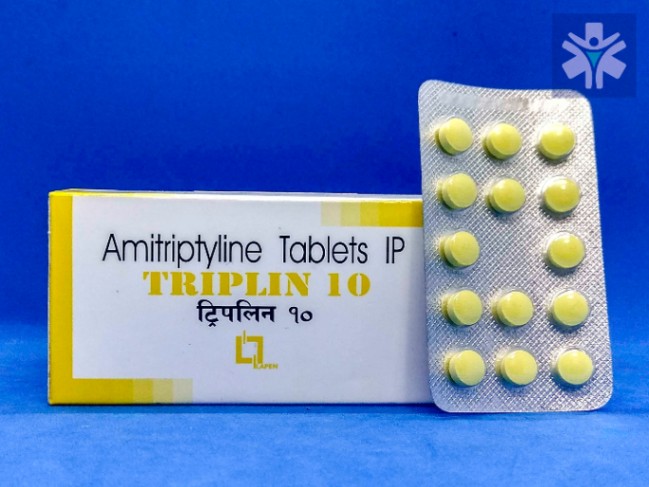
Price: Rs.33.00
15% off
In stock
Loose stock: 0
Description
TRIPLIN 10 TAB 14
Details
Composition
AMITRIPTYLINE HYDROCHLORIDE 10MG
# AMITRIPTYLINE HYDROCHLORIDE 10 MG
## SHORT DESCRIPTION
**Amitriptyline Hydrochloride 10 mg** is a prescription medicine belonging to the **tricyclic antidepressant (TCA)** class. Although it is an antidepressant, low doses are commonly used for certain types of **nerve pain, chronic pain, and prevention of migraine or tension-type headaches**.
Amitriptyline affects chemical messengers such as **serotonin and norepinephrine** in the nervous system, helping modify pain signaling and mood.
---
## KEY BENEFITS
* Helps manage certain types of **neuropathic (nerve) pain**.
* May be prescribed for chronic pain conditions.
* Can help prevent certain recurrent headaches, including migraine, when prescribed.
* May help relieve symptoms of depression at appropriately prescribed doses.
* Can have a sedating effect, which may be useful when pain or depression is associated with sleep disturbance.
* Available in a low **10 mg strength**, which is commonly used when treatment is initiated for pain-related conditions.
---
## USES / INDICATIONS
Amitriptyline 10 mg may be prescribed for:
* **Neuropathic pain**
* Diabetic nerve pain
* Certain chronic pain conditions
* Fibromyalgia-related pain in some patients
* Prevention of migraine or tension-type headaches
* Depression, although depression generally requires individualized dosing and may require higher doses
* Certain sleep disturbances associated with chronic pain, when specifically prescribed
> Amitriptyline is **not simply a sleeping pill**. Its sedative effect is a consequence of its action on the nervous system.
---
## HOW IT WORKS
Amitriptyline primarily works by reducing the reuptake of **serotonin and norepinephrine** in the nervous system.
This increases the availability of these neurotransmitters and influences pathways involved in **mood regulation and pain processing**.
Amitriptyline also acts on several other receptors, including muscarinic, histamine, and alpha-adrenergic receptors. These additional actions contribute to some of its effects and side effects, such as drowsiness, dry mouth, constipation, and dizziness.
**Amitriptyline → increases serotonin & norepinephrine activity → modifies pain signaling and mood pathways → helps reduce certain types of pain and depressive symptoms.**
---
## DOSAGE & ADMINISTRATION
> **Take Amitriptyline 10 mg exactly as prescribed by your doctor.**
### For Nerve Pain / Chronic Pain
A common starting dose is **10 mg once daily**, often taken in the evening because it can cause drowsiness.
Your doctor may gradually increase the dose depending on:
* Response to treatment
* Severity of symptoms
* Age
* Other medical conditions
* Side effects and tolerability
### For Depression
The dosage used for depression may be higher than 10 mg and should be individually determined by a healthcare professional.
### How to Take
* Take by mouth with water.
* It can generally be taken with or without food.
* If prescribed once daily, it is often taken in the evening or at bedtime.
* Take it at approximately the same time each day.
* Do not change the dose without medical advice.
### Missed Dose
Take the missed dose when remembered unless it is close to the next dose.
**Do not take two doses together.**
If you take amitriptyline at bedtime and remember the missed dose during the night or the following morning, ask your healthcare professional how to handle missed doses rather than taking a dose that could cause excessive daytime drowsiness.
### Stopping Treatment
Do not stop amitriptyline suddenly after prolonged use. Your doctor may gradually reduce the dose to minimize withdrawal symptoms.
---
## SIDE EFFECTS
### Common Side Effects
Possible side effects include:
* Drowsiness
* Dry mouth
* Constipation
* Dizziness
* Blurred vision
* Headache
* Increased sweating
* Nausea
* Fatigue
* Difficulty urinating
* Increased appetite
These effects may be more noticeable when treatment is first started.
### Weight Changes
Some patients may experience:
* Increased appetite
* Weight gain
### Serious Side Effects
Seek medical attention if you develop:
* Fast or irregular heartbeat
* Fainting
* Severe dizziness
* Seizures
* Severe confusion
* Significant difficulty urinating
* Severe allergic reaction
* Eye pain with sudden vision changes
Amitriptyline overdose can be **life-threatening**, particularly because of serious effects on the heart and nervous system.
---
## PRECAUTIONS & WARNINGS
### Drowsiness and Driving
Amitriptyline can cause significant drowsiness, dizziness, and impaired alertness.
Avoid driving, cycling, operating machinery, or other activities requiring alertness until you know how the medicine affects you.
### Alcohol
Avoid or minimize alcohol while taking amitriptyline because alcohol can increase:
* Drowsiness
* Dizziness
* Impaired coordination
* Other central nervous system effects
### Heart Conditions
Tell your doctor if you have:
* Heart disease
* Abnormal heart rhythm
* Previous heart attack
* A history of fainting
Amitriptyline can affect cardiac conduction and heart rhythm.
### Glaucoma
Amitriptyline can increase pressure inside the eye and should be used cautiously in people with **narrow-angle glaucoma**.
### Urinary Retention
Tell your doctor if you have difficulty urinating or prostate enlargement because amitriptyline can worsen urinary retention.
### Seizure Disorders
Amitriptyline may lower the seizure threshold and should be used cautiously in people with epilepsy or other seizure disorders.
### Bipolar Disorder
Antidepressants can sometimes trigger mania or hypomania in susceptible individuals. Tell your doctor if you have a history of bipolar disorder or episodes of unusually elevated mood.
### Older Adults
Older adults may be more sensitive to:
* Dizziness
* Confusion
* Low blood pressure
* Constipation
* Urinary retention
* Falls
### Suicidal Thoughts
Antidepressants can be associated with an increased risk of suicidal thoughts or behavior in some children, adolescents, and young adults, particularly when treatment is started or the dose is changed.
Any new or worsening suicidal thoughts, severe mood changes, or unusual behavioral changes require immediate medical attention.
### Pregnancy
Tell your doctor if you are pregnant, planning pregnancy, or become pregnant while taking amitriptyline. The potential benefits and risks should be evaluated individually.
### Breastfeeding
Amitriptyline can pass into breast milk in small amounts. Discuss breastfeeding with your healthcare professional before using the medicine.
---
## DRUG INTERACTIONS
Tell your doctor or pharmacist about all prescription medicines, OTC medicines, vitamins, and herbal supplements you use.
### MAO Inhibitors
Amitriptyline should **not be used with MAO inhibitors** or within the required interval after stopping an MAOI because serious and potentially life-threatening reactions can occur.
### SSRIs and Other Antidepressants
Medicines such as:
* Fluoxetine
* Paroxetine
* Sertraline
* Citalopram
* Other antidepressants
may interact with amitriptyline and can increase the risk of adverse effects or **serotonin toxicity** in some combinations.
### Opioids
Certain opioids, particularly tramadol, may increase the risk of:
* Seizures
* Serotonin toxicity
* Excessive sedation
### Sleeping Pills and Sedatives
Medicines that cause drowsiness can increase the sedative effects of amitriptyline.
### Antihistamines
Some sedating antihistamines can increase drowsiness and anticholinergic side effects.
### Anticholinergic Medicines
Combining amitriptyline with other medicines having anticholinergic effects may increase:
* Dry mouth
* Constipation
* Blurred vision
* Urinary retention
* Confusion
### Medicines Affecting Heart Rhythm
Some medicines can increase the risk of abnormal heart rhythms when combined with amitriptyline. Your healthcare professional should review your medication list.
### CYP2D6 Inhibitors
Certain medicines can increase amitriptyline concentrations by affecting its metabolism, potentially increasing adverse effects.
---
## STORAGE INFORMATION
* Store according to the manufacturer's instructions.
* Keep at room temperature unless otherwise specified.
* Protect from excessive heat, moisture, and direct sunlight.
* Keep the medicine in its original packaging.
* Keep out of reach and sight of children.
* Do not use after the expiry date.
* Do not use tablets from damaged or tampered packaging.
**Keep amitriptyline securely stored because accidental overdose can be dangerous.**
---
## PRESCRIPTION STATUS
**Prescription Medicine**
Amitriptyline Hydrochloride 10 mg should be used under the supervision of a qualified healthcare professional.
The appropriate dose depends on the condition being treated, age, medical history, other medicines, and individual response.
---
## GENUINE MEDICINE ASSURANCE
For safe treatment, purchase **Amitriptyline Hydrochloride 10 mg** only from a licensed pharmacy or authorized medicine supplier.
Before using the medicine, check:
* Correct medicine name and strength
* Active ingredient
* Manufacturer
* Batch/lot number
* Manufacturing and expiry dates
* Packaging and security seal
* Regulatory information where applicable
Do not use the medicine if the packaging is damaged, tampered with, expired, or the tablets appear unusual.
If you suspect a counterfeit or defective medicine, consult a licensed pharmacist or the appropriate medicine regulatory authority.
---
# FAQ – AMITRIPTYLINE HYDROCHLORIDE 10 MG
### 1. What is Amitriptyline 10 mg used for?
Amitriptyline 10 mg may be used for **nerve pain, chronic pain, migraine prevention, tension-type headache prevention**, and other conditions as determined by a healthcare professional.
### 2. Is Amitriptyline a painkiller?
It is not a conventional painkiller like paracetamol or ibuprofen. Amitriptyline is a **tricyclic antidepressant** that can be particularly useful for certain types of nerve and chronic pain.
### 3. Is Amitriptyline an antidepressant?
Yes. Amitriptyline belongs to the **tricyclic antidepressant** class.
### 4. How does Amitriptyline help nerve pain?
It increases the activity of serotonin and norepinephrine in pathways that regulate pain signals, which can reduce abnormal pain signaling.
### 5. Does Amitriptyline 10 mg make you sleepy?
Yes. **Drowsiness is common**, particularly when treatment is started. For this reason, low doses are often taken in the evening.
### 6. Can Amitriptyline be used as a sleeping medicine?
Amitriptyline is not primarily a sleeping medicine. Its sedative properties may improve sleep in some people, particularly when sleep problems are associated with pain.
### 7. How long does Amitriptyline take to work for nerve pain?
Pain relief may take several days to a few weeks to become noticeable, and the full benefit can take longer. Your doctor may gradually adjust the dose.
### 8. Can Amitriptyline be used for migraine prevention?
Yes. Amitriptyline is commonly prescribed in some patients to **prevent recurrent migraine or tension-type headaches**.
### 9. What is the usual starting dose for nerve pain?
A common starting dose is **10 mg once daily**, often in the evening. The dose may be gradually adjusted by the doctor.
### 10. Can I take Amitriptyline 10 mg during the day?
It can be taken during the day if prescribed that way, but it may cause drowsiness. Follow your doctor's instructions.
### 11. Can I take Amitriptyline with food?
Yes. Amitriptyline can generally be taken **with or without food**.
### 12. Can Amitriptyline cause dry mouth?
Yes. Dry mouth is one of the common effects of amitriptyline because of its anticholinergic activity.
### 13. Can Amitriptyline cause constipation?
Yes. Constipation can occur. Maintaining adequate fluid intake and dietary fiber may help when appropriate.
### 14. Can Amitriptyline cause weight gain?
Yes. Increased appetite and weight gain can occur in some patients.
### 15. Can I drink alcohol while taking Amitriptyline?
It is best to avoid or minimize alcohol because alcohol can significantly increase **drowsiness and impaired coordination**.
### 16. Can Amitriptyline be taken with Fluoxetine?
Fluoxetine can interact with amitriptyline and may increase amitriptyline exposure and the risk of adverse effects. Use the combination only under appropriate medical supervision.
### 17. Can Amitriptyline be taken with Tramadol?
The combination may increase the risk of **serotonin toxicity and seizures**. Consult your healthcare professional before using them together.
### 18. Can Amitriptyline be stopped suddenly?
It is generally preferable to **gradually reduce the dose** under medical supervision, particularly after long-term treatment. Sudden discontinuation may cause withdrawal symptoms.
### 19. What happens if I miss a dose of Amitriptyline?
Take the missed dose when remembered unless it is close to the next dose. **Do not take two doses together.**
### 20. Can Amitriptyline affect the heart?
Yes. Amitriptyline can affect heart rhythm and cardiac conduction, particularly at high doses or in susceptible individuals. Tell your doctor about any history of heart disease or abnormal heart rhythm.
### 21. Is Amitriptyline safe during pregnancy?
Discuss its use with your doctor if you are pregnant or planning pregnancy. The benefits and potential risks should be assessed individually.
### 22. Can Amitriptyline be used while breastfeeding?
Amitriptyline can pass into breast milk. Speak with your healthcare professional before using it while breastfeeding.
### 23. Is Amitriptyline addictive?
Amitriptyline is **not considered an addictive medicine in the way opioid painkillers or benzodiazepines are**. However, stopping it suddenly after regular use can cause discontinuation symptoms, so tapering may be recommended.
### 24. Is Amitriptyline 10 mg available without a prescription?
Amitriptyline is generally a **prescription medicine** and should be used under medical supervision.
### 25. Can Amitriptyline cure nerve damage?
No. Amitriptyline does not repair damaged nerves. It can help **reduce the pain signals associated with certain nerve conditions**.
### 26. Can Amitriptyline be used for anxiety?
Amitriptyline is not usually a first-choice medicine for anxiety. Your doctor will determine whether it is appropriate for your particular symptoms.
### 27. Does Amitriptyline affect memory?
It can cause drowsiness, confusion, or difficulty concentrating in some people, particularly older adults. Report significant cognitive changes to your healthcare professional.
### 28. What should I do if I accidentally take too much Amitriptyline?
**Seek emergency medical attention immediately.** Amitriptyline overdose can cause serious heart rhythm abnormalities, seizures, loss of consciousness, and other potentially life-threatening complications.
### 29. How long should I take Amitriptyline 10 mg?
Treatment duration depends on the condition being treated and your response. Do not discontinue long-term treatment without discussing it with your doctor.
### 30. Can Amitriptyline 10 mg be taken every night?
It may be prescribed once daily, often in the evening, particularly for nerve pain or headache prevention. Follow the specific dosing schedule provided by your healthcare professional.
---
## MEDICAL DISCLAIMER
This information about **Amitriptyline Hydrochloride 10 mg** is provided for general educational purposes only and is **not a substitute for professional medical advice, diagnosis, or treatment**.
Amitriptyline is a prescription medicine with significant effects on the nervous system and heart. The appropriate dose and duration depend on the condition being treated, age, medical history, and other medicines being used.
**Do not start, stop, or change the dose without consulting a qualified healthcare professional.** Avoid alcohol and activities requiring alertness until you know how the medicine affects you.
Seek immediate medical attention following an overdose or for severe symptoms such as fainting, seizures, severe heart palpitations, serious allergic reactions, or suicidal thoughts or behavior.
Always read the manufacturer's package insert and follow the instructions provided by your doctor or pharmacist.