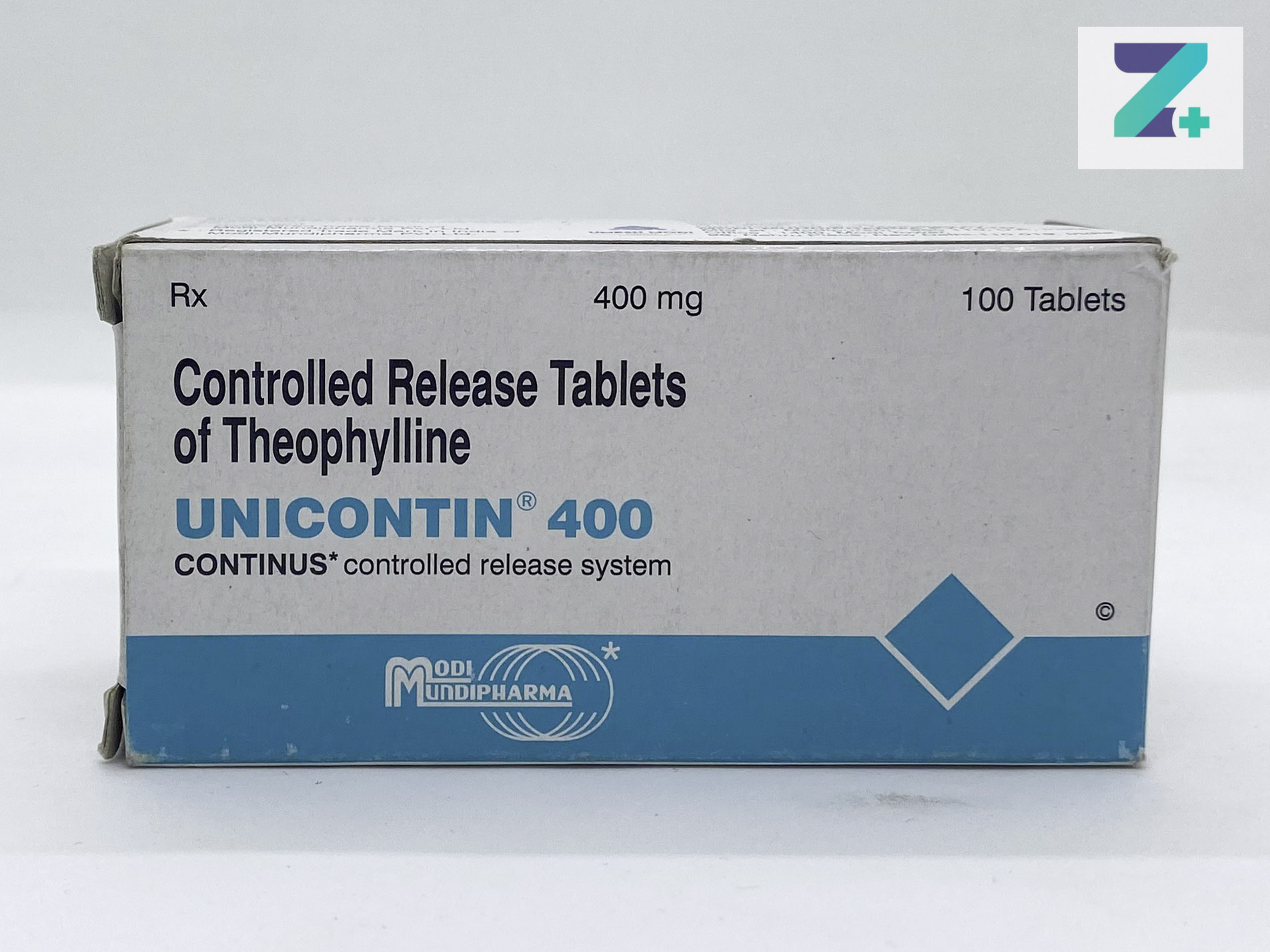
UNICONTIN 400
Price: Rs.156.48
10% off
In stock
Loose stock: 0
Description
UNICONTIN 400 TAB 10
Details
Composition
THEOPHYLLINE 400 MG
# Theophylline 400 mg
## Short Description
**Theophylline 400 mg** is a bronchodilator belonging to the **methylxanthine** class. It is used in selected patients with respiratory conditions such as **asthma and chronic obstructive pulmonary disease (COPD)** to help improve airflow and relieve breathing difficulties.
Theophylline has a **narrow therapeutic range**, meaning the difference between an effective dose and a potentially toxic dose can be small. Blood-level monitoring may therefore be required, particularly when doses are changed or interacting medicines are introduced.
---
## Key Benefits
* Helps **relax airway smooth muscles**
* May improve airflow in patients with obstructive airway disease
* Can help reduce symptoms such as **wheezing and shortness of breath**
* May be used as an additional or alternative bronchodilator in selected patients
* Can provide prolonged bronchodilator activity with appropriate modified-release formulations
* May be used as part of a treatment plan for **asthma or COPD**
> Theophylline is **not generally considered a first-choice rapid-relief medicine for an acute asthma attack**.
---
## Uses / Indications
Theophylline may be prescribed for:
### Asthma
It may be used as an additional treatment in selected patients with asthma when other therapies are insufficient or unsuitable.
### Chronic Obstructive Pulmonary Disease (COPD)
Theophylline may help improve airflow and reduce respiratory symptoms in some patients with COPD.
### Other Obstructive Airway Conditions
Depending on local clinical guidelines and the patient's condition, it may occasionally be used for other chronic respiratory disorders involving reversible airway narrowing.
> Theophylline should be used according to a healthcare professional's assessment because newer inhaled treatments are often preferred when appropriate.
---
## How It Works
Theophylline is a **methylxanthine bronchodilator**.
Its effects are thought to involve several mechanisms, including:
* Inhibition of phosphodiesterase enzymes
* Increased intracellular cyclic AMP
* Relaxation of airway smooth muscle
* Antagonism of adenosine receptors
These effects can help **relax and widen the airways**, making it easier for air to move in and out of the lungs.
**Theophylline → bronchodilator activity → airway smooth-muscle relaxation → improved airflow.**
---
## Dosage & Administration
> **Theophylline dosing must be individualized. The 400 mg strength does not necessarily mean that 400 mg should be taken once daily or at any particular frequency.**
The appropriate dose depends on:
* Age
* Body weight
* Smoking status
* Liver function
* Kidney and heart conditions
* Other medicines
* The formulation being used
* Blood theophylline concentration
### General Administration
* Take exactly as prescribed.
* If using an extended-release/modified-release product, swallow the tablet whole unless the manufacturer specifically permits splitting.
* Do not crush or chew modified-release tablets.
* Take consistently at approximately the same time each day.
* Follow the manufacturer's instructions regarding food because food can affect absorption of some formulations.
### Blood-Level Monitoring
Because theophylline has a narrow therapeutic range, your doctor may order **serum theophylline level tests**.
Monitoring may be especially important after:
* Starting treatment
* Changing the dose
* Changing smoking habits
* Starting or stopping interacting medicines
* Developing an acute illness
### Missed Dose
Take the missed dose when remembered unless it is close to the next scheduled dose.
**Do not double the dose.**
### Acute Asthma Attack
Theophylline should **not be relied upon as a rapid-relief rescue medicine** for a sudden severe asthma attack.
Use your prescribed rescue inhaler and seek emergency medical care when necessary.
---
## Side Effects
### Common Side Effects
Possible side effects include:
* Nausea
* Vomiting
* Stomach discomfort
* Abdominal pain
* Headache
* Restlessness
* Irritability
* Tremor
* Difficulty sleeping
* Increased urination
* Fast heartbeat
Some side effects may become more likely when blood levels are elevated.
### Serious Side Effects
High theophylline concentrations can cause serious toxicity, including:
* Persistent vomiting
* Severe tremor
* Severe agitation
* Rapid or irregular heartbeat
* Palpitations
* Low blood pressure
* Seizures
* Confusion
* Dangerous cardiac arrhythmias
**Theophylline toxicity can be life-threatening.** Seek urgent medical attention if severe symptoms occur.
---
## Precautions & Warnings
### Narrow Therapeutic Range
Theophylline has a relatively narrow safety margin.
Do not increase the dose yourself, even if breathing symptoms worsen.
### Heart Disease
Use caution if you have:
* Arrhythmias
* Heart failure
* Other significant cardiovascular disease
Theophylline can increase heart rate and may worsen certain rhythm problems.
### Seizure Disorders
Theophylline may increase the risk of seizures, particularly at high blood concentrations.
Tell your doctor if you have epilepsy or a history of seizures.
### Liver Disease
Liver impairment can reduce the elimination of theophylline and increase blood concentrations.
Dose adjustment and monitoring may be necessary.
### Fever
Persistent fever can affect theophylline clearance and may increase blood concentrations, particularly in some patients.
### Smoking
Smoking can increase the body's metabolism of theophylline.
**Stopping smoking can therefore increase theophylline levels**, potentially causing toxicity if the dose is not reassessed.
Tell your healthcare professional if you start or stop smoking.
### Caffeine
Caffeine is also a methylxanthine. Large amounts of coffee, tea, energy drinks, cola, or other caffeine-containing products may increase stimulant-related effects such as:
* Tremor
* Insomnia
* Palpitations
* Nervousness
Discuss caffeine intake with your healthcare professional.
### Pregnancy
Tell your doctor if you are pregnant or planning pregnancy. Theophylline may be used in pregnancy when clinically necessary, with appropriate medical supervision.
### Breastfeeding
Theophylline passes into breast milk. Discuss its use with your healthcare professional, particularly if high doses are required or the infant is premature or medically vulnerable.
### Older Adults
Older adults may be more sensitive to the effects of theophylline and may require careful dosing and monitoring.
---
## Drug Interactions
Theophylline has **many clinically important drug interactions**.
### Medicines That May Increase Theophylline Levels
Examples include:
* Ciprofloxacin
* Erythromycin
* Clarithromycin
* Fluvoxamine
* Cimetidine
* Some other medicines that inhibit theophylline metabolism
Increased blood concentrations can increase the risk of toxicity.
### Medicines That May Decrease Theophylline Levels
Examples include:
* Rifampicin
* Carbamazepine
* Phenytoin
* Phenobarbital
* Some other enzyme-inducing medicines
This may reduce the effectiveness of theophylline.
### Other Stimulants
Large amounts of caffeine or stimulant medicines may increase side effects such as:
* Nervousness
* Tremor
* Insomnia
* Palpitations
### Beta-Agonist Bronchodilators
Medicines such as salbutamol may be used with theophylline, but combined stimulant effects can increase the risk of:
* Fast heartbeat
* Tremor
* Low potassium
Your doctor should determine whether the combination is appropriate.
### Other Medicines
Tell your doctor or pharmacist about all medicines you take, including:
* Prescription medicines
* OTC medicines
* Asthma/COPD medicines
* Antibiotics
* Antiepileptic medicines
* Herbal products
* Vitamins
* Supplements
**Do not start or stop a medicine without checking for potential theophylline interactions.**
---
## Storage Information
* Store according to the manufacturer's recommended temperature.
* Keep in the original packaging.
* Protect from excessive heat and moisture.
* Keep away from direct sunlight.
* Keep the container tightly closed.
* Keep out of reach and sight of children.
* Do not use after the expiry date.
* Do not use tablets from damaged or tampered packaging.
---
## Prescription Status
**Theophylline 400 mg is generally a prescription medicine.**
Because theophylline has a narrow therapeutic range and numerous drug interactions, treatment should be supervised by a qualified healthcare professional.
---
## Genuine Medicine Assurance
When purchasing **Theophylline 400 mg**:
* Purchase from a **licensed pharmacy or authorized medicine supplier**.
* Verify the medicine name, strength, and formulation.
* Check the manufacturer's name.
* Check the batch/lot number and expiry date.
* Ensure the packaging and seal are intact.
* Confirm whether the product is immediate-release or modified/extended-release.
* Avoid products with damaged, altered, or suspicious packaging.
* Do not purchase prescription medicines from unauthorized sources.
* Store the medicine according to the manufacturer's instructions.
* If authenticity is uncertain, consult a pharmacist or contact the manufacturer using the details printed on the package.
---
# FAQ – Theophylline 400 mg
### 1. What is Theophylline 400 mg used for?
Theophylline is used in selected patients with respiratory conditions such as **asthma and COPD** to help relax the airways and improve airflow.
### 2. Is theophylline a bronchodilator?
Yes. Theophylline is a **methylxanthine bronchodilator** that can relax airway smooth muscle.
### 3. Is theophylline a steroid?
**No.** Theophylline is not a corticosteroid. It is a methylxanthine bronchodilator.
### 4. Can theophylline treat an acute asthma attack?
Theophylline is **not generally used as a rapid-relief rescue medicine** for a sudden asthma attack. Follow your prescribed emergency/rescue treatment plan.
### 5. Is 400 mg a high dose of theophylline?
The appropriate dose varies considerably between individuals. Because theophylline has a narrow therapeutic range, **400 mg should only be taken according to the specific prescription and formulation**.
### 6. Does theophylline require blood tests?
Blood-level monitoring may be required because theophylline has a narrow therapeutic range. Monitoring is particularly important when doses or interacting medicines change.
### 7. What are common theophylline side effects?
Common effects include **nausea, vomiting, headache, tremor, nervousness, insomnia, stomach discomfort, and increased heart rate**.
### 8. What are signs of theophylline toxicity?
Warning signs include **persistent vomiting, severe tremor, severe agitation, rapid or irregular heartbeat, confusion, and seizures**.
### 9. Can theophylline cause a fast heartbeat?
Yes. Increased heart rate and palpitations can occur, especially when blood levels become too high.
### 10. Can I drink coffee while taking theophylline?
Caffeine may increase stimulant-related side effects. Moderate caffeine intake may be acceptable for some people, but discuss your caffeine consumption with your healthcare professional.
### 11. Can I smoke while taking theophylline?
Smoking can increase the metabolism of theophylline. Importantly, **stopping smoking can cause theophylline levels to rise**, so your dose may need reassessment.
### 12. Can I take theophylline with antibiotics?
Some antibiotics, including **ciprofloxacin, erythromycin, and clarithromycin**, can interact with theophylline. Always tell your doctor that you take theophylline before starting an antibiotic.
### 13. Can theophylline be taken with salbutamol?
These medicines may sometimes be prescribed together, but the combination can increase stimulant-related adverse effects. Use them together only under medical supervision.
### 14. Can theophylline be used during pregnancy?
It may be used when clinically necessary, but pregnancy should always be discussed with your doctor before starting or changing treatment.
### 15. Can I take theophylline while breastfeeding?
Theophylline passes into breast milk. Discuss the dose and formulation with your healthcare professional before breastfeeding while taking it.
### 16. What happens if I miss a dose of theophylline?
Take the missed dose when remembered unless it is nearly time for the next dose. **Do not double the next dose.**
### 17. Can I crush Theophylline 400 mg tablets?
If the product is modified-release or extended-release, **do not crush or chew it** unless the manufacturer specifically states that it can be altered.
### 18. Can theophylline cause insomnia?
Yes. Difficulty sleeping is a recognized side effect because theophylline has stimulant-like properties.
### 19. Can theophylline cause nausea?
Yes. Nausea and stomach discomfort are relatively common, especially when blood levels are elevated.
### 20. Is theophylline addictive?
Theophylline is **not considered an addictive medicine**. However, it requires careful dosing because excessive blood concentrations can cause toxicity.
### 21. Can theophylline be taken with other asthma medicines?
It may be combined with other respiratory medicines when prescribed. However, interactions and additive side effects need to be considered.
### 22. What should I do if I take too much theophylline?
Seek **urgent medical attention**. Theophylline overdose can cause serious heart rhythm abnormalities and seizures.
### 23. How long does theophylline take to work?
The onset depends on the formulation and individual patient factors. Immediate-release products generally act sooner than extended-release formulations.
### 24. Is Theophylline 400 mg available without a prescription?
Theophylline 400 mg is generally a **prescription medicine**, although legal requirements vary by country.
### 25. How should Theophylline 400 mg be stored?
Keep it in its original packaging, protected from excessive heat, moisture, and direct sunlight, and out of reach of children.
---
## Medical Disclaimer
This information about **Theophylline 400 mg** is provided for educational and informational purposes only and is **not a substitute for professional medical advice, diagnosis, or treatment**.
Theophylline has a **narrow therapeutic range** and numerous clinically significant drug interactions. The appropriate dose depends on the formulation and individual patient factors, and blood-level monitoring may be necessary.
Do not increase the dose if breathing symptoms worsen and do not use theophylline as a substitute for prescribed rescue treatment during an acute asthma attack. Seek emergency medical care for severe breathing difficulty.
Inform your healthcare professional about changes in smoking habits, caffeine intake, other medicines, pregnancy, and medical conditions such as heart disease, liver disease, or seizure disorders.
Always follow the specific product label and the instructions of your doctor or pharmacist.