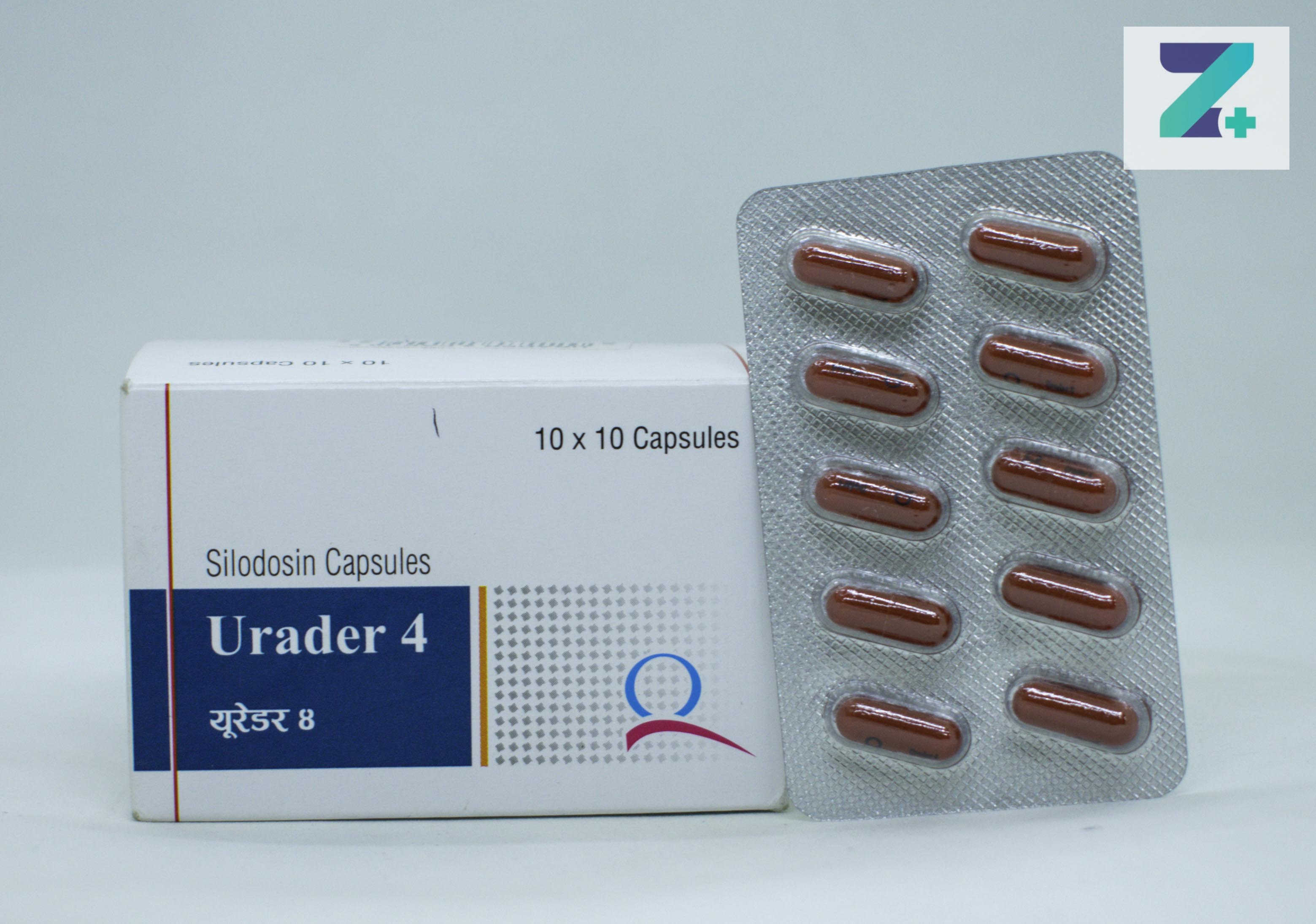
URADER 4
Price: Rs.200.00
10% off
In stock
Loose stock: 0
Description
URADER 4 CAP 10
Details
Composition
SILODOSIN 4 MG
# Silodosin 4 mg
## SHORT DESCRIPTION
**Silodosin 4 mg** is a prescription medicine belonging to the **alpha-1 adrenergic receptor blocker** class. It is primarily used to relieve urinary symptoms associated with **benign prostatic hyperplasia (BPH)**, a non-cancerous enlargement of the prostate.
Silodosin relaxes the smooth muscles in the prostate and bladder outlet, helping urine flow more easily and reducing symptoms such as difficulty starting urination, weak urine flow, and frequent or urgent urination.
---
## KEY BENEFITS
* Helps improve **urine flow**
* Relieves symptoms associated with **enlarged prostate (BPH)**
* May reduce difficulty starting urination
* Helps reduce weak or interrupted urine stream
* May decrease urinary frequency and urgency
* Helps reduce the sensation of incomplete bladder emptying
* Relaxes muscles around the prostate and bladder outlet
* Can improve overall urinary symptom control
> **Important:** Silodosin improves urinary symptoms but does **not shrink the prostate** or cure prostate enlargement.
---
## USES / INDICATIONS
### Benign Prostatic Hyperplasia (BPH)
Silodosin is primarily used to treat **lower urinary tract symptoms (LUTS) associated with benign prostatic hyperplasia**.
Symptoms may include:
* Difficulty starting urination
* Weak urine stream
* Interrupted urine flow
* Straining to urinate
* Frequent urination
* Urinary urgency
* Increased nighttime urination
* Feeling that the bladder has not completely emptied
Silodosin may be prescribed when relaxation of the prostate and bladder outlet muscles is needed to improve urinary flow.
### What Silodosin Does Not Treat
Silodosin is **not a treatment for prostate cancer** and does not reduce prostate size. Men with urinary symptoms may require evaluation to determine the underlying cause.
---
## HOW IT WORKS
Silodosin is a relatively selective **alpha-1A adrenergic receptor antagonist**.
Alpha-1A receptors are found in high concentrations in the smooth muscle of the:
* Prostate
* Prostatic urethra
* Bladder neck
By blocking these receptors, silodosin relaxes these muscles.
**Silodosin → blocks alpha-1A receptors → relaxes prostate/bladder outlet muscles → reduces resistance to urine flow → improves urinary symptoms.**
Because silodosin is relatively selective for alpha-1A receptors, it is designed to primarily affect the lower urinary tract, although side effects such as dizziness and low blood pressure can still occur.
---
## DOSAGE & ADMINISTRATION
> **Use Silodosin 4 mg only according to your doctor's prescription.** The appropriate dose depends particularly on kidney function and the formulation being used.
### Usual Adult Dosing
The commonly recommended silodosin dose for BPH is **8 mg once daily with a meal** in adults with normal kidney function.
**Silodosin 4 mg once daily** may be used in patients with **moderate renal impairment** or when specifically prescribed.
> Do not increase the dose from 4 mg to 8 mg on your own.
### How to Take
* Take once daily as prescribed.
* Take **with a meal**.
* Try to take it at approximately the same time each day.
* Swallow the capsule/tablet as directed with water.
* Do not crush or alter a modified-release formulation unless the product instructions specifically allow it.
### Kidney Impairment
For moderate renal impairment, a lower dose may be required.
Silodosin is generally **not recommended in severe renal impairment**.
### Liver Impairment
Silodosin should be used cautiously or avoided in severe liver impairment depending on the clinical situation and product information.
### Missed Dose
Take the missed dose when remembered with food unless it is nearly time for the next dose.
**Do not take two doses at once.**
---
## SIDE EFFECTS
### Common Side Effects
The most characteristic side effect of silodosin is:
* **Reduced or absent ejaculation**
Other possible side effects include:
* Dizziness
* Low blood pressure, particularly when standing
* Headache
* Nasal congestion
* Diarrhea
* Orthostatic hypotension
* Fatigue
### Ejaculatory Changes
Silodosin commonly reduces the amount of semen released during ejaculation or may cause **retrograde ejaculation**.
This effect is generally reversible after stopping treatment.
It does not necessarily mean loss of sexual desire or erectile function.
### Serious Side Effects
Seek medical attention if you experience:
* Severe dizziness or fainting
* Severe allergic reaction
* Facial, lip, tongue, or throat swelling
* Difficulty breathing
* Prolonged painful erection (**priapism**)
* Severe weakness or symptoms of very low blood pressure
---
## PRECAUTIONS & WARNINGS
### Low Blood Pressure
Silodosin can cause **orthostatic hypotension**, especially when treatment is started.
Symptoms may include:
* Dizziness
* Lightheadedness
* Weakness
* Fainting
Rise slowly from sitting or lying down.
### Fall Risk
Dizziness or low blood pressure can increase the risk of falls, particularly in older adults.
### Cataract Surgery
Tell your ophthalmologist if you are taking or have previously taken silodosin before undergoing **cataract surgery**.
Alpha-blockers have been associated with **intraoperative floppy iris syndrome (IFIS)** during cataract surgery.
### Kidney Disease
Tell your doctor if you have kidney disease. A reduced dose may be required, and severe renal impairment may make silodosin unsuitable.
### Liver Disease
Tell your healthcare professional about liver disease, particularly severe liver impairment.
### Prostate Cancer
BPH and prostate cancer can produce similar urinary symptoms. Silodosin does not treat prostate cancer.
Your doctor may recommend appropriate prostate evaluation, including tests such as PSA where clinically appropriate.
### Acute Urinary Retention
Silodosin is not an emergency treatment for acute urinary retention. If you suddenly cannot urinate, seek **urgent medical attention**.
### Sexual Function
Silodosin can cause ejaculatory disorders. Discuss this with your doctor if the effect is troublesome or affects fertility planning.
### Driving and Machinery
Dizziness may occur, particularly when starting treatment. Avoid driving or operating machinery until you know how silodosin affects you.
---
## DRUG INTERACTIONS
### Strong CYP3A4 Inhibitors
Medicines such as **ketoconazole, clarithromycin, itraconazole, and ritonavir** can significantly increase silodosin concentrations.
Strong CYP3A4 inhibitors are generally **contraindicated or should be avoided** with silodosin.
### Other Alpha-Blockers
Combining silodosin with other alpha-blockers may increase the risk of excessive blood-pressure reduction.
Do not combine them unless specifically prescribed.
### Blood Pressure Medicines
Silodosin may increase the blood-pressure-lowering effect of antihypertensive medicines in some patients.
Examples include:
* Amlodipine
* Losartan
* Telmisartan
* Enalapril
* Beta-blockers
* Diuretics
Your doctor may monitor your blood pressure when starting treatment.
### PDE-5 Inhibitors
Medicines used for erectile dysfunction, such as:
* Sildenafil
* Tadalafil
* Vardenafil
may increase the risk of **symptomatic low blood pressure** when combined with silodosin.
### Moderate CYP3A4 Inhibitors
Medicines such as **diltiazem** may increase silodosin exposure and may require medical consideration.
### Other Medicines
Always tell your doctor or pharmacist about all prescription medicines, OTC medicines, vitamins, and supplements you take.
---
## STORAGE INFORMATION
* Store at room temperature according to the manufacturer's instructions.
* Keep in the original packaging.
* Protect from excessive heat and moisture.
* Keep away from direct sunlight.
* Keep the container tightly closed.
* Keep out of reach and sight of children.
* Do not use after the expiry date.
* Do not use capsules/tablets that are damaged or significantly altered.
---
## PRESCRIPTION STATUS
**Silodosin 4 mg is generally a prescription medicine.**
It should be used under medical supervision because urinary symptoms can have several causes and the medicine can affect blood pressure and interact with other medicines.
Prescription requirements may vary by country.
---
## GENUINE MEDICINE ASSURANCE
When purchasing **Silodosin 4 mg**:
* Purchase from a **licensed pharmacy or authorized medicine supplier**.
* Verify the medicine name and strength.
* Check the manufacturer's name.
* Check the batch/lot number and expiry date.
* Ensure the packaging and seal are intact.
* Avoid products with suspicious or altered packaging.
* Do not use expired medicine.
* Store according to the manufacturer's instructions.
* If you suspect a counterfeit product, consult a pharmacist or contact the manufacturer using the information printed on the package.
---
# FAQ – Silodosin 4 mg
### 1. What is Silodosin 4 mg used for?
Silodosin 4 mg is used to relieve urinary symptoms associated with **benign prostatic hyperplasia (BPH)**, also known as an enlarged prostate.
### 2. How does Silodosin work?
Silodosin blocks **alpha-1A receptors** in the prostate and bladder outlet, relaxing the muscles and allowing urine to flow more easily.
### 3. Does Silodosin shrink the prostate?
No. Silodosin **relaxes the muscles around the prostate** and improves urine flow but does not significantly reduce prostate size.
### 4. Is Silodosin a prostate medicine?
Yes. It is primarily used to treat urinary symptoms associated with **BPH**.
### 5. What is the usual dose of Silodosin?
The commonly recommended adult dose is **8 mg once daily with a meal**. A 4 mg once-daily dose may be prescribed in patients with moderate kidney impairment or for other specific clinical reasons.
### 6. Why is Silodosin 4 mg prescribed?
Silodosin 4 mg may be prescribed when a lower dose is appropriate, particularly in patients with **moderate renal impairment**.
### 7. Should Silodosin be taken with food?
Yes. Silodosin should generally be taken **with a meal**, as food improves and stabilizes its absorption.
### 8. Does Silodosin improve urine flow?
Yes. By relaxing the smooth muscles around the prostate and bladder outlet, silodosin can **improve urinary flow and reduce BPH symptoms**.
### 9. How long does Silodosin take to work?
Some urinary symptoms may begin improving relatively soon after treatment starts, although the degree and timing of improvement vary between individuals.
### 10. Does Silodosin cause ejaculation problems?
Yes. **Reduced or absent ejaculation is one of the most common effects** of silodosin. It is usually reversible after stopping the medicine.
### 11. Does Silodosin cause erectile dysfunction?
Silodosin is not primarily associated with erectile dysfunction, although sexual side effects can occur. Its most characteristic sexual side effect is a change in ejaculation.
### 12. Can Silodosin cause infertility?
Silodosin can reduce or eliminate the amount of semen ejaculated, which may temporarily affect fertility while taking the medicine. Discuss fertility concerns with your doctor.
### 13. Can Silodosin cause dizziness?
Yes. Dizziness and **orthostatic hypotension** can occur, particularly when starting treatment or changing doses.
### 14. Can I take Silodosin with blood pressure medicine?
It may be possible, but combining silodosin with antihypertensive medicines can increase the risk of low blood pressure. Your doctor may monitor your blood pressure.
### 15. Can Silodosin be taken with sildenafil or tadalafil?
These medicines may have additive blood-pressure-lowering effects. Consult your doctor before combining **silodosin with PDE-5 inhibitors**.
### 16. Can Silodosin be taken with tadalafil for BPH?
Some patients may receive both medicines, but the combination can increase the risk of low blood pressure. It should only be used under medical supervision.
### 17. Can I take Silodosin with alcohol?
Alcohol may increase dizziness or low blood pressure. It is advisable to limit or avoid alcohol, particularly when beginning treatment.
### 18. Can Silodosin be used in kidney disease?
A lower dose may be required in moderate kidney impairment. Silodosin is generally **not recommended in severe renal impairment**.
### 19. Can women take Silodosin?
Silodosin is primarily indicated for **men with BPH** and is not routinely used in women.
### 20. Can Silodosin treat prostate cancer?
No. Silodosin treats urinary symptoms associated with BPH and **does not treat prostate cancer**.
### 21. Can Silodosin be stopped suddenly?
Unlike some medicines, silodosin does not usually require a prolonged taper when stopped. However, do not discontinue prescribed treatment without discussing it with your healthcare professional.
### 22. What should I do if I miss a dose?
Take the missed dose when remembered with food unless it is close to the next scheduled dose. **Do not double the dose.**
### 23. Can Silodosin affect cataract surgery?
Yes. Tell your eye surgeon if you are currently taking or have previously taken silodosin because alpha-blockers can be associated with **intraoperative floppy iris syndrome (IFIS)**.
### 24. Is Silodosin 4 mg available without a prescription?
Silodosin 4 mg is generally a **prescription medicine**. Availability and prescription requirements vary by country.
### 25. What should I do if I suddenly cannot urinate?
Sudden inability to urinate can be **acute urinary retention**, which is a medical emergency. Seek urgent medical attention rather than taking an extra dose of silodosin.
---
## MEDICAL DISCLAIMER
This information about **Silodosin 4 mg** is provided for educational and informational purposes only. It is **not a substitute for professional medical advice, diagnosis, or treatment**.
Silodosin is primarily used for urinary symptoms associated with benign prostatic hyperplasia. It does not shrink the prostate or treat prostate cancer. Urinary symptoms should be appropriately evaluated because they may have causes other than BPH.
Silodosin can cause dizziness, orthostatic hypotension, and ejaculation disorders and can interact with medicines that lower blood pressure or affect its metabolism. Patients with kidney or liver disease should consult a healthcare professional before use.
**Always follow the specific product label and the dose prescribed by your doctor or pharmacist.**