VENLIFT OD 37.5MG
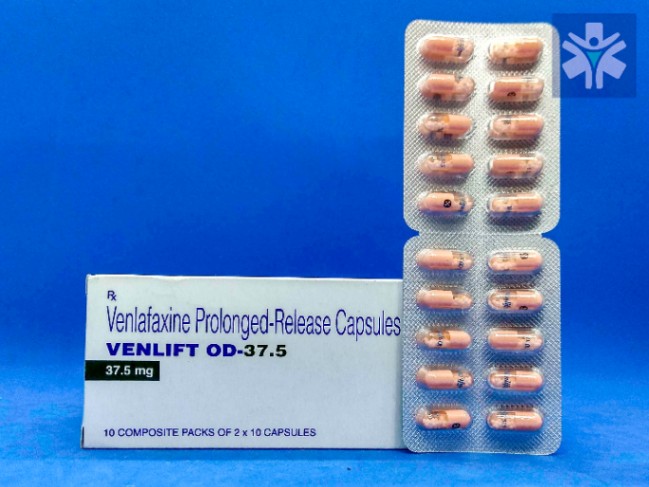
Price: Rs.88.48
13% off
In stock
Loose stock: 0
Description
VENLIFT OD 37.5MG CAP 10
Details
Composition
VENLAFAXINE 37.5 MG
# VENLAFAXINE 37.5 MG
## Short Description
**Venlafaxine 37.5 mg** is a prescription antidepressant belonging to the **serotonin-norepinephrine reuptake inhibitor (SNRI)** class. It is primarily used to treat **major depressive disorder (MDD)** and may also be prescribed for certain anxiety disorders.
Venlafaxine helps increase the availability of **serotonin and norepinephrine** in the brain, neurotransmitters involved in mood, anxiety, and emotional regulation.
> **Important:** Venlafaxine 37.5 mg may be supplied as an immediate-release tablet or as an extended-release formulation. Dosing and administration can differ between formulations. Always follow the specific product label and your healthcare professional's instructions.
## Key Benefits
* Helps relieve symptoms of **depression**.
* Can help reduce persistent sadness and loss of interest.
* May improve anxiety symptoms in approved anxiety disorders.
* Can help improve sleep, energy, concentration, and daily functioning when these symptoms are related to depression or anxiety.
* Provides dual-action effects on **serotonin and norepinephrine** at therapeutic doses.
* May be used as part of a longer-term treatment plan under medical supervision.
## Uses / Indications
Venlafaxine may be prescribed for:
* **Major depressive disorder (MDD)**.
* **Generalized anxiety disorder (GAD)**.
* **Social anxiety disorder (social phobia)**.
* **Panic disorder**, depending on the formulation and local approval.
* Other conditions may sometimes be treated off-label by a qualified healthcare professional.
Venlafaxine is **not intended to provide immediate relief from an acute panic attack or severe emotional crisis**.
## How It Works
Venlafaxine is an **SNRI antidepressant**.
It inhibits the reuptake of:
* **Serotonin (5-HT)**.
* **Norepinephrine (noradrenaline)**.
This increases the availability of these neurotransmitters in the brain and helps regulate mood, anxiety, and emotional responses.
At lower doses, venlafaxine has a stronger serotonergic effect, while norepinephrine reuptake inhibition becomes more prominent as the dose increases.
## Dosage & Administration
The appropriate dose depends on the condition being treated, formulation, response, and tolerability.
For many adults, treatment may be initiated at:
* **37.5 mg per day**, particularly to help improve tolerability.
* The dose may subsequently be increased by the prescribing clinician depending on response.
* Some extended-release formulations are taken **once daily with food**.
* Immediate-release formulations may require divided doses.
* Swallow extended-release capsules/tablets whole unless the specific product instructions state otherwise.
* Take the medicine at approximately the same time each day.
* Do not increase, decrease, or stop the dose without medical advice.
### If You Miss a Dose
Take the missed dose when remembered unless it is nearly time for the next dose. **Do not take two doses together** to compensate for a missed dose.
### Important
Venlafaxine may take **several weeks** to provide its full antidepressant or anxiolytic benefit. Continue treatment as prescribed even if improvement is not immediate.
## Side Effects
Common side effects may include:
* Nausea.
* Headache.
* Dizziness.
* Dry mouth.
* Sweating.
* Constipation.
* Reduced appetite.
* Sleepiness or insomnia.
* Fatigue.
* Nervousness or restlessness.
* Sexual dysfunction.
* Increased heart rate.
* Changes in blood pressure.
Many side effects may become less noticeable as the body adjusts to treatment.
### Serious Side Effects
Seek medical attention for:
* Severe or persistent increase in blood pressure.
* Severe agitation, confusion, fever, sweating, muscle rigidity, or rapid heartbeat.
* Unusual bleeding or bruising.
* Severe allergic reaction.
* Seizures.
* Significant changes in mood or behavior.
* Symptoms of mania, such as unusually elevated mood, decreased need for sleep, or extreme impulsivity.
* Severe eye pain or sudden visual changes.
## Precautions & Warnings
### Suicidal Thoughts and Behavioral Changes
Antidepressants can increase the risk of **suicidal thoughts or behaviors in some children, adolescents, and young adults**, particularly during the early stages of treatment or after dose changes.
Seek immediate professional help if there are new or worsening thoughts of self-harm, severe agitation, unusual behavioral changes, or suicidal thoughts.
### Blood Pressure
Venlafaxine can increase **blood pressure**, particularly at higher doses. Blood pressure should be monitored periodically.
### Serotonin Syndrome
Combining venlafaxine with other medicines that increase serotonin can rarely cause **serotonin syndrome**, a potentially serious condition.
Symptoms can include:
* Agitation or confusion.
* Fever.
* Excessive sweating.
* Rapid heartbeat.
* Muscle rigidity or twitching.
* Tremor.
* Diarrhea.
Seek urgent medical attention if these symptoms occur.
### Withdrawal / Discontinuation
Do **not stop venlafaxine suddenly**. Abrupt discontinuation can cause withdrawal symptoms such as:
* Dizziness.
* Nausea.
* Irritability.
* Anxiety.
* Headache.
* Sleep disturbances.
* Sweating.
* Electric-shock-like sensations.
* Flu-like feelings.
The dose is generally reduced gradually under medical supervision.
### Other Precautions
Tell your doctor if you have:
* High blood pressure.
* Heart disease.
* Seizure disorders.
* Bipolar disorder or a history of mania.
* Glaucoma or increased eye pressure.
* Liver or kidney disease.
* A bleeding disorder.
* Low sodium levels.
* A history of significant alcohol or substance use.
## Drug Interactions
Venlafaxine can interact with several medicines.
### MAO Inhibitors
Do **not** combine venlafaxine with MAO inhibitors such as:
* Phenelzine.
* Tranylcypromine.
* Isocarboxazid.
* Selegiline in certain formulations.
* Linezolid or intravenous methylene blue may also require special consideration.
Appropriate washout periods are required when switching between venlafaxine and an MAOI.
### Other Serotonergic Medicines
The risk of serotonin syndrome may increase with:
* SSRIs.
* Other SNRIs.
* Tricyclic antidepressants.
* Tramadol.
* Certain migraine medicines such as triptans.
* Lithium.
* Dextromethorphan.
* St John's wort.
* Other serotonergic medicines.
### Medicines Affecting Bleeding
Venlafaxine may increase bleeding risk when combined with:
* Aspirin.
* NSAIDs such as ibuprofen or naproxen.
* Anticoagulants such as warfarin, apixaban, rivaroxaban, or other blood thinners.
### Other Interactions
Tell your healthcare professional about all medicines because venlafaxine may interact with medicines affecting its metabolism or those that influence blood pressure, heart rhythm, or the central nervous system.
## Storage Information
* Store at room temperature according to the manufacturer's instructions.
* Keep the medicine in its original packaging.
* Protect from excessive heat, moisture, and direct sunlight.
* Keep the container tightly closed.
* Keep out of reach of children.
* Do not use after the expiry date.
* Dispose of expired or unused medicine according to local pharmacy guidance.
## Prescription Status
**Venlafaxine 37.5 mg is a prescription-only medicine in many countries.**
It should be used under medical supervision because treatment may require monitoring of **mood, blood pressure, interactions, side effects, and withdrawal symptoms**.
Prescription requirements may vary by country.
## Genuine Medicine Assurance
When purchasing Venlafaxine 37.5 mg, obtain it from a **licensed pharmacy or authorized medicine supplier**.
Before use, verify:
* Correct medicine name and **37.5 mg strength**.
* Whether the product is immediate-release or extended-release.
* Manufacturer information.
* Batch or lot number.
* Manufacturing and expiry dates.
* Intact packaging and seals.
* Clear dosage instructions.
Do not use the medicine if the packaging appears damaged, tampered with, incorrectly labeled, or suspicious.
## Frequently Asked Questions (FAQ)
### 1. What is Venlafaxine 37.5 mg used for?
Venlafaxine 37.5 mg is an antidepressant commonly used to treat **major depressive disorder**. Depending on the formulation and local approvals, it may also be used for generalized anxiety disorder, social anxiety disorder, and panic disorder.
### 2. Is venlafaxine an SSRI?
No. Venlafaxine is an **SNRI (serotonin-norepinephrine reuptake inhibitor)**. It affects both serotonin and norepinephrine.
### 3. Is Venlafaxine 37.5 mg a strong dose?
37.5 mg is commonly used as a **low starting dose** for some patients. The appropriate dose depends on the condition, formulation, response, and tolerability.
### 4. How long does venlafaxine take to work?
Some symptoms may begin improving within the first few weeks, but the **full therapeutic effect can take several weeks or longer**. Continue taking it as prescribed.
### 5. Does venlafaxine help with anxiety?
Yes. Venlafaxine is used for certain anxiety disorders, including **generalized anxiety disorder, social anxiety disorder, and panic disorder**, depending on the formulation and local approval.
### 6. Can venlafaxine cause sleepiness?
Yes. Some people experience **drowsiness**, while others may experience insomnia or increased alertness.
### 7. Can venlafaxine cause nausea?
Yes. **Nausea is one of the common early side effects** and may improve as treatment continues.
### 8. Does venlafaxine increase blood pressure?
It can. Venlafaxine may cause an increase in **blood pressure**, particularly at higher doses. Regular monitoring may be recommended.
### 9. Can venlafaxine cause sexual side effects?
Yes. Some people experience decreased libido, difficulty reaching orgasm, erectile difficulties, or other sexual side effects.
### 10. Can I stop venlafaxine suddenly?
**No.** Stopping venlafaxine suddenly can cause significant discontinuation symptoms. Your healthcare professional will generally reduce the dose gradually when stopping treatment.
### 11. What are venlafaxine withdrawal symptoms?
Possible discontinuation symptoms include:
* Dizziness.
* Nausea.
* Anxiety.
* Irritability.
* Headache.
* Sweating.
* Sleep problems.
* Electric-shock-like sensations.
* Flu-like symptoms.
### 12. Can I take venlafaxine with alcohol?
Alcohol may worsen **drowsiness, impaired judgment, and other central nervous system effects**. It is best to discuss alcohol use with your healthcare professional.
### 13. Can venlafaxine be taken with ibuprofen?
Venlafaxine and NSAIDs such as ibuprofen may together increase the risk of **bleeding**. Ask your doctor or pharmacist before using NSAIDs regularly.
### 14. Can venlafaxine be taken with tramadol?
Combining venlafaxine with tramadol can increase the risk of **serotonin syndrome and seizures**. Such combinations should only be used under appropriate medical supervision.
### 15. Can venlafaxine be taken with other antidepressants?
Sometimes antidepressants are switched or combined under specialist supervision, but combining serotonergic antidepressants can increase the risk of **serotonin syndrome and other adverse effects**.
### 16. Is venlafaxine addictive?
Venlafaxine is **not considered an addictive drug in the same way as opioid or benzodiazepine medicines**. However, physical dependence can develop, meaning abrupt discontinuation may cause withdrawal symptoms.
### 17. Does venlafaxine cause weight gain?
Weight changes vary between individuals. Some people may experience decreased appetite or weight loss initially, while others may experience weight gain during longer-term treatment.
### 18. Can venlafaxine be used during pregnancy?
Venlafaxine should be used during pregnancy only after discussing the potential benefits and risks with a healthcare professional. **Do not stop it suddenly if you become pregnant.**
### 19. Can venlafaxine be used while breastfeeding?
Venlafaxine can pass into breast milk. Your healthcare professional should assess the potential benefits and risks before deciding whether treatment should continue during breastfeeding.
### 20. What should I do if I miss a dose of venlafaxine?
Take the missed dose when remembered unless it is nearly time for the next dose. **Do not double the next dose.**
### 21. What happens if I take too much venlafaxine?
An overdose can be serious and may cause excessive sleepiness, vomiting, rapid heartbeat, changes in blood pressure, seizures, abnormal heart rhythms, or serotonin toxicity. **Seek urgent medical attention if an overdose is suspected.**
### 22. Can venlafaxine cure depression?
Venlafaxine does not permanently cure depression, but it can **effectively manage symptoms and reduce the risk of recurrence** when used as part of an appropriate treatment plan.
### 23. Is Venlafaxine 37.5 mg available without a prescription?
Venlafaxine is generally a **prescription-only medicine**. It should be obtained from an authorized pharmacy and used under medical supervision.
### 24. Can venlafaxine make anxiety worse initially?
Some people may temporarily experience **increased anxiety, nervousness, or restlessness** when starting treatment or changing the dose. Inform your healthcare professional if these symptoms are severe or persistent.
### 25. What is the difference between venlafaxine immediate-release and extended-release?
Immediate-release venlafaxine may require more than one dose per day, while **extended-release (XR/ER)** formulations are generally designed for once-daily administration. Follow the instructions for the specific formulation prescribed.
## Medical Disclaimer
This information about **Venlafaxine 37.5 mg** is provided for general educational and informational purposes only. It is not a substitute for professional medical advice, diagnosis, or treatment.
Venlafaxine is a prescription antidepressant that can cause clinically important effects, including **increased blood pressure, serotonin syndrome, bleeding risk, mood changes, and discontinuation symptoms**. It should not be stopped abruptly.
Always take venlafaxine exactly as prescribed and inform your healthcare professional about all medicines and supplements you use. Seek urgent medical attention for suicidal thoughts, severe agitation or confusion, seizures, severe allergic reactions, symptoms of serotonin syndrome, or suspected overdose.