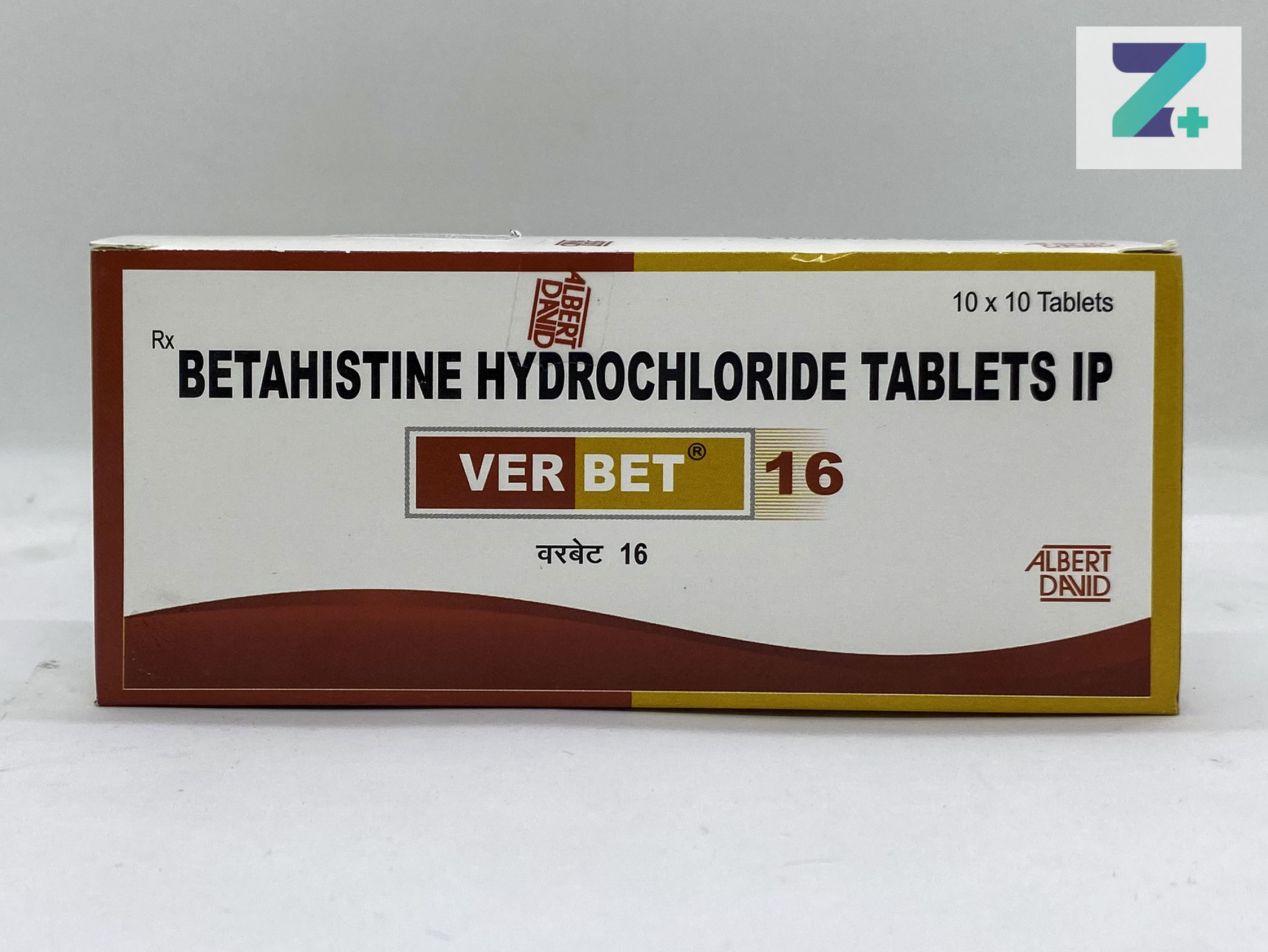
VERBET 16MG
Price: Rs.306.74
10% off
In stock
Loose stock: 0
Description
VERBET 16MG TAB 10
Details
Composition
BETAHISTINE DI 16 MG
# Betahistine 16 mg
## Short Description
Betahistine 16 mg is a **medicine commonly used to manage symptoms associated with Ménière's disease and vestibular disorders**, particularly vertigo (a spinning sensation), dizziness and related balance problems. It may help reduce the frequency and severity of vertigo episodes in appropriate patients.
## Key Benefits
* Helps manage symptoms of vertigo
* May reduce the frequency and severity of dizziness episodes
* May help relieve balance disturbances associated with vestibular disorders
* Commonly used as part of the treatment of Ménière's disease
* May help manage associated ear symptoms such as tinnitus in some patients
## Uses / Indications
Betahistine 16 mg may be prescribed for:
* Ménière's disease
* Recurrent vertigo
* Vestibular dizziness
* Dizziness associated with inner-ear disorders
* Tinnitus associated with Ménière's disease, when prescribed by a healthcare professional
* Other vestibular conditions according to medical assessment
Betahistine is not appropriate for every cause of dizziness, so persistent or unexplained vertigo should be medically evaluated.
## How It Works
Betahistine is structurally related to histamine and primarily acts on **histamine H1 and H3 receptors**.
It is thought to improve blood flow and pressure regulation within the inner ear and influence vestibular signaling. These effects may help reduce the symptoms and recurrence of vertigo associated with Ménière's disease.
## Dosage & Administration
* Take Betahistine 16 mg exactly as prescribed by your doctor
* The usual adult dosage varies according to the condition and individual response
* A commonly used regimen is **16 mg taken two or three times daily**, but your doctor will determine the appropriate dose
* Take the tablets with or after food if they cause stomach discomfort
* Swallow the tablet with water
* Take doses at evenly spaced times when possible
* Do not increase or decrease the dose without medical advice
* Treatment may need to continue for several weeks before the full benefit becomes noticeable
* If you miss a dose, take it when remembered unless it is nearly time for the next dose
* Do not take two doses together to make up for a missed dose
## Side Effects
Common side effects may include:
* Headache
* Nausea
* Indigestion
* Stomach discomfort
* Bloating
* Mild abdominal pain
Taking Betahistine with food may help reduce gastrointestinal discomfort.
Rarely, allergic reactions can occur, including:
* Skin rash
* Itching
* Swelling of the face, lips or throat
* Difficulty breathing
Seek urgent medical attention if you experience signs of a serious allergic reaction.
## Precautions & Warnings
* Do not use Betahistine if you have a known allergy to betahistine or any of its ingredients
* Tell your doctor if you have or have had a **peptic ulcer**
* Inform your doctor if you have **asthma**, as betahistine may require additional monitoring
* Tell your doctor if you have low blood pressure or other significant medical conditions
* Betahistine is not generally recommended for children unless specifically prescribed by a specialist
* Tell your doctor if you are pregnant, planning pregnancy or breastfeeding
* Persistent, sudden or severe dizziness should be medically evaluated because it may have causes other than inner-ear disorders
* Seek urgent medical attention for vertigo accompanied by weakness, difficulty speaking, severe headache, fainting, chest pain or other neurological symptoms
* Keep out of reach of children
## Drug Interactions
Betahistine may interact with:
* **Antihistamines** — may potentially reduce the effects of betahistine
* **MAO inhibitors** — may affect the metabolism or effects of betahistine and require medical supervision
* Other medicines affecting histamine pathways
Tell your doctor or pharmacist about all prescription medicines, OTC medicines, vitamins and herbal supplements you use.
## Storage Information
* Store according to the manufacturer's instructions
* Keep tablets in their original packaging
* Protect from excessive heat, moisture and direct sunlight
* Keep the container tightly closed
* Store at the temperature specified on the product label
* Keep out of reach and sight of children
* Do not use after the expiry date
## Prescription Status
Betahistine 16 mg is generally a **prescription medicine** in many countries, although dispensing requirements vary by location.
Use it according to the advice of a qualified healthcare professional.
## Genuine Medicine Assurance
* Purchase Betahistine 16 mg only from a licensed and reputable pharmacy
* Verify the medicine name and strength on the packaging
* Check the manufacturer, batch number and expiry date
* Ensure the packaging and seal are intact
* Confirm that the strength matches your prescription
* Do not use tablets from damaged or suspicious packaging
* Purchase medicines from authorized sources
* If you suspect the medicine is counterfeit, consult a pharmacist or the appropriate medicine regulatory authority
## Frequently Asked Questions
### What is Betahistine 16 mg used for?
Betahistine 16 mg is commonly used to manage **vertigo and other vestibular symptoms**, particularly those associated with Ménière's disease.
### Is Betahistine a medicine for dizziness?
Yes. Betahistine is commonly prescribed to help manage dizziness and vertigo related to inner-ear and vestibular disorders.
### Is Betahistine used for Ménière's disease?
Yes. Betahistine is commonly used to manage symptoms of Ménière's disease, including recurrent vertigo and associated ear symptoms.
### How does Betahistine 16 mg work?
Betahistine affects histamine receptors and is thought to improve inner-ear circulation and influence vestibular signaling, helping reduce vertigo symptoms.
### How long does Betahistine take to work?
Some people may notice improvement within days, while others require several weeks of regular treatment. The response varies between individuals.
### Can Betahistine cure vertigo?
Betahistine generally helps **control symptoms rather than permanently cure every cause of vertigo**. The underlying cause of dizziness should be identified and treated when possible.
### Can Betahistine be taken with food?
Yes. Betahistine can generally be taken with or after food. Taking it with food may help reduce stomach discomfort.
### Can Betahistine 16 mg be taken twice a day?
The appropriate dosing schedule depends on your condition and doctor's instructions. Betahistine 16 mg may be prescribed two or three times daily in some adults, but do not change the schedule without medical advice.
### Can Betahistine cause sleepiness?
Sleepiness is not generally one of the main side effects of betahistine. However, individual responses vary, so use caution if you feel dizzy or unwell.
### Does Betahistine lower blood pressure?
Betahistine is not primarily a blood-pressure medicine. It should not be used to treat high or low blood pressure.
### Can Betahistine be taken with antihistamines?
Antihistamines may potentially reduce the effect of betahistine because they act on related histamine pathways. Tell your doctor or pharmacist if you take antihistamines.
### Can Betahistine be taken with alcohol?
There is no specific universal prohibition, but alcohol may worsen dizziness or balance problems. It is advisable to discuss alcohol consumption with your healthcare professional, particularly if vertigo is active.
### Can Betahistine be used during pregnancy?
Consult your doctor before using Betahistine during pregnancy. It should only be used when the expected benefit justifies any potential risk.
### Can Betahistine be used while breastfeeding?
Consult your healthcare professional before taking Betahistine while breastfeeding because there is limited information regarding its use during lactation.
### Can Betahistine cause stomach problems?
Yes. Nausea, indigestion and abdominal discomfort can occur. Taking the medicine with or after food may help.
### Who should not take Betahistine?
People with a known allergy to betahistine should not take it. People with certain conditions, including peptic ulcers or asthma, may require additional medical supervision.
### Is Betahistine an antihistamine?
No. Betahistine is a **histamine analogue** with activity at histamine receptors. It is not used as a conventional antihistamine for allergies.
### Is Betahistine a sleeping tablet?
No. Betahistine is not a sleeping medicine. It is primarily used for vertigo and vestibular symptoms.
### Does Betahistine help tinnitus?
Betahistine may be prescribed for tinnitus associated with Ménière's disease, but its effectiveness for tinnitus varies and it is not a universal treatment for all types of tinnitus.
### Can Betahistine be stopped suddenly?
Betahistine generally does not require the same type of gradual withdrawal used with certain other medicines, but you should follow your doctor's treatment plan and discuss stopping treatment if symptoms persist.
### What should I do if I miss a Betahistine dose?
Take the missed dose when you remember unless it is almost time for your next dose. Do not take two doses together.
### Can Betahistine be used for all types of dizziness?
No. Dizziness can have many causes, including cardiovascular, neurological, medication-related and inner-ear conditions. A healthcare professional should determine the cause before long-term treatment.
### When should I seek urgent medical help for dizziness?
Seek urgent medical attention if dizziness or vertigo occurs suddenly with **weakness, facial drooping, difficulty speaking, severe headache, fainting, chest pain, vision changes or difficulty walking**, as these may indicate a serious condition.
## Medical Disclaimer
This information is provided for general educational purposes only and is not a substitute for professional medical advice, diagnosis or treatment. **Betahistine 16 mg should be used under the guidance of a qualified healthcare professional**, particularly when treating recurrent or unexplained vertigo. The appropriate dose and duration depend on the individual's condition and response to treatment. Do not self-diagnose persistent dizziness or vertigo. Seek urgent medical attention for sudden or severe neurological symptoms, difficulty breathing or signs of a serious allergic reaction.