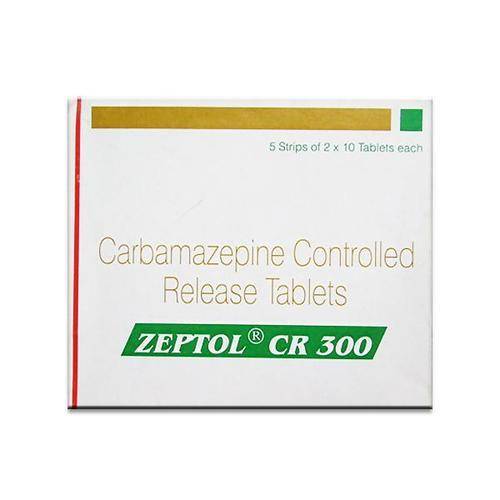
ZEPTOL CR 300MG
Price: Rs.53.60
13% off
In stock
Loose stock: 0
Description
ZEPTOL CR 300MG TAB 10
Details
Composition
CARBAMAZEPINE 300 MG
# Carbamazepine 300 mg
## Short Description
**Carbamazepine 300 mg** is a prescription medicine primarily used to treat **certain types of seizures (epilepsy)** and **trigeminal neuralgia (severe facial nerve pain)**. It may also be used for other neurological or psychiatric conditions in selected patients under specialist supervision.
Carbamazepine works mainly by reducing excessive electrical activity in nerve cells. Because it can interact with many medicines and may require blood tests and dose adjustments, it should be taken strictly according to medical advice.
---
## Key Benefits
* Helps control certain types of **epileptic seizures**
* Reduces abnormal electrical activity in the brain
* Effective for **trigeminal neuralgia** in appropriate patients
* Can reduce the frequency and severity of certain seizure episodes
* May provide sustained seizure control when taken regularly
* Available in different formulations and strengths for individualized dosing
---
## Uses / Indications
### **Epilepsy / Seizure Disorders**
Carbamazepine may be prescribed for:
* Focal (partial) seizures
* Focal seizures that become bilateral tonic-clonic seizures
* Certain generalized tonic-clonic seizures
It is **not appropriate for every type of seizure**, and your doctor will select treatment according to your seizure type.
### **Trigeminal Neuralgia**
Carbamazepine is commonly used as a first-line medicine for **trigeminal neuralgia**, a condition characterized by sudden, severe, electric-shock-like facial pain.
### Other Uses
Depending on local approvals and specialist judgment, carbamazepine may sometimes be used for other conditions, such as certain mood disorders.
---
## How It Works
Carbamazepine is an **anticonvulsant (antiepileptic) medicine**.
It primarily works by blocking **voltage-gated sodium channels** in nerve cells.
This reduces the ability of neurons to repeatedly fire excessive electrical signals.
**Carbamazepine → stabilizes sodium channels → reduces excessive nerve firing → helps control seizures and abnormal nerve pain**
In trigeminal neuralgia, this reduction in abnormal nerve signaling helps decrease episodes of severe facial pain.
---
## Dosage & Administration
> **Important:** Carbamazepine dosage must be individualized. The 300 mg strength does not mean that every patient should take 300 mg at once or at the same frequency.
### General Administration
* Take carbamazepine exactly as prescribed.
* Dosing is usually **started at a lower dose and gradually increased** to reduce side effects.
* The total daily dose may be divided into multiple doses depending on the formulation.
* Extended-release formulations may have different dosing schedules from immediate-release formulations.
* Swallow extended-release tablets whole unless the product specifically states that they may be divided.
* Take doses at approximately the same times each day.
* Carbamazepine may be taken with or without food, but take it consistently in relation to meals.
### Do Not Stop Suddenly
**Do not abruptly discontinue carbamazepine**, particularly when taking it for epilepsy.
Sudden withdrawal can increase the risk of serious or prolonged seizures.
### Missed Dose
Take the missed dose when remembered unless it is nearly time for the next dose.
**Do not take a double dose** to compensate for a missed dose.
### Monitoring
Your doctor may monitor:
* Carbamazepine blood concentration when appropriate
* Complete blood count
* Liver function
* Kidney function
* Sodium levels
* Other laboratory parameters depending on your condition
---
## Side Effects
### Common Side Effects
Possible side effects include:
* Dizziness
* Drowsiness
* Fatigue
* Unsteadiness
* Nausea
* Vomiting
* Headache
* Blurred or double vision
* Difficulty coordinating movements
These effects may be more noticeable when treatment is first started or when the dose is increased.
### Other Possible Effects
Carbamazepine may cause:
* Low sodium levels (**hyponatremia**)
* Skin rash
* Changes in liver enzymes
* Swelling
* Weight changes in some patients
### Serious Side Effects
Seek urgent medical attention for:
* Severe or widespread skin rash
* Blistering or peeling skin
* Mouth or eye sores
* Fever associated with a rash
* Unusual bruising or bleeding
* Persistent sore throat or fever
* Severe weakness
* Yellowing of the skin or eyes
* Severe abdominal pain
* Confusion or severe drowsiness
* Suicidal thoughts or significant mood changes
Rare but serious reactions include **Stevens-Johnson syndrome/toxic epidermal necrolysis, serious blood disorders, liver injury, and severe allergic reactions**.
---
## Precautions & Warnings
### Serious Skin Reactions
Carbamazepine can rarely cause severe, potentially life-threatening skin reactions such as **Stevens-Johnson syndrome (SJS) and toxic epidermal necrolysis (TEN)**.
Seek immediate medical attention for:
* Skin rash with fever
* Blistering
* Peeling skin
* Mouth ulcers
* Eye involvement
* Facial swelling
Do not ignore a new rash after starting carbamazepine.
### Genetic Testing
Certain genetic variants increase the risk of serious carbamazepine-related skin reactions.
Testing for **HLA-B*1502** is recommended for individuals from populations in which this allele is more common, particularly people with ancestry from parts of East and Southeast Asia, before starting carbamazepine when appropriate.
Your healthcare professional can determine whether genetic testing is appropriate.
### Blood Disorders
Rarely, carbamazepine can cause serious blood abnormalities.
Contact your doctor if you develop:
* Persistent fever
* Sore throat
* Unusual bruising
* Unexplained bleeding
* Pale skin
* Severe weakness
### Liver Problems
Carbamazepine can affect liver function.
Tell your doctor if you have existing liver disease.
Seek medical attention for:
* Yellow skin or eyes
* Dark urine
* Severe nausea
* Significant abdominal pain
* Unusual fatigue
### Low Sodium
Carbamazepine can cause **hyponatremia**, particularly in older adults or people taking other medicines that lower sodium.
Symptoms may include:
* Headache
* Confusion
* Weakness
* Nausea
* Seizures
### Pregnancy
If you are pregnant, planning pregnancy, or could become pregnant, discuss carbamazepine treatment with your healthcare professional.
Carbamazepine can increase the risk of certain **birth defects**, but stopping effective seizure treatment suddenly can also be dangerous.
Do not stop the medicine without medical supervision.
### Oral Contraceptives
Carbamazepine can reduce the effectiveness of **hormonal contraceptives**, increasing the risk of unintended pregnancy.
Discuss reliable alternative or additional contraception with your healthcare professional.
### Dizziness and Drowsiness
Carbamazepine can impair coordination, concentration, and alertness.
Avoid driving or operating machinery until you know how the medicine affects you.
### Alcohol
Alcohol may increase drowsiness and dizziness and may worsen coordination.
Avoid or limit alcohol as advised by your healthcare professional.
### Suicidal Thoughts
Like some other antiepileptic medicines, carbamazepine may be associated with changes in mood or suicidal thoughts in a small number of patients.
Report significant mood changes, depression, unusual behavior, or suicidal thoughts promptly.
---
## Drug Interactions
Carbamazepine has **many clinically important drug interactions** because it strongly affects the metabolism of numerous medicines.
Tell your doctor and pharmacist about every medicine, supplement, and herbal product you use.
### Important Interactions Include:
* **Hormonal contraceptives** — carbamazepine can reduce contraceptive effectiveness.
* **Warfarin and other anticoagulants** — may alter anticoagulant effects.
* **Macrolide antibiotics such as erythromycin and clarithromycin** — can substantially increase carbamazepine levels and toxicity risk.
* **Azole antifungals** such as ketoconazole — may increase carbamazepine concentrations.
* **Grapefruit/grapefruit juice** — may increase carbamazepine concentrations.
* **Phenytoin, phenobarbital, and other antiepileptic medicines** — may alter carbamazepine levels and vice versa.
* **Valproate** — can affect carbamazepine metabolism and increase the risk of adverse effects.
* **Lithium** — may increase neurological adverse effects when combined.
* **Some antidepressants and antipsychotics** — may interact with carbamazepine or affect seizure control.
* **Certain HIV medicines** — significant interactions can occur.
* **St. John's wort** — may reduce carbamazepine effectiveness and should generally be avoided unless specifically approved by a healthcare professional.
Never start or stop another medicine without checking with your doctor or pharmacist.
---
## Storage Information
* Store at **room temperature** according to the manufacturer's instructions.
* Protect from excessive heat, moisture, and direct sunlight.
* Keep the medicine in its original packaging.
* Keep the container tightly closed.
* Keep out of reach and sight of children.
* Do not use after the expiry date.
* Do not use tablets that are damaged, discolored, or otherwise altered.
---
## Prescription Status
**Carbamazepine 300 mg is a prescription medicine.**
It should be used under medical supervision because it requires individualized dosing and can cause significant drug interactions, blood abnormalities, liver problems, and serious skin reactions.
---
## Genuine Medicine Assurance
When purchasing **Carbamazepine 300 mg**:
* Purchase only from a **licensed pharmacy or authorized medicine supplier**.
* Verify the medicine name, strength, and formulation.
* Check the manufacturer's information.
* Check the batch/lot number and expiry date.
* Ensure the packaging and seal are intact.
* Be particularly careful with extended-release formulations, as they are not necessarily interchangeable with immediate-release products.
* Avoid medicines from unauthorized or suspicious sources.
* If authenticity is uncertain, ask a pharmacist or contact the manufacturer using the information printed on the packaging.
---
# FAQ – Carbamazepine 300 mg
### 1. What is Carbamazepine 300 mg used for?
Carbamazepine 300 mg is used primarily to treat **certain types of epilepsy/seizures and trigeminal neuralgia**. It may have other specialist uses depending on local approvals.
### 2. Is Carbamazepine an anticonvulsant?
Yes. Carbamazepine is an **antiepileptic/anticonvulsant medicine** that reduces abnormal electrical activity in the nervous system.
### 3. Can Carbamazepine treat epilepsy?
Yes. It is effective for several types of seizures, particularly **focal seizures** and certain generalized tonic-clonic seizures.
### 4. Can Carbamazepine treat trigeminal neuralgia?
Yes. Carbamazepine is an established treatment for **trigeminal neuralgia**, where it can reduce the frequency and intensity of severe facial pain attacks.
### 5. How does Carbamazepine work?
It primarily blocks voltage-gated sodium channels, helping stabilize nerve membranes and reduce repetitive abnormal nerve firing.
### 6. Is Carbamazepine 300 mg a high dose?
The appropriate dose varies greatly between patients. **300 mg refers to the tablet/capsule strength, not necessarily the total daily dose.** Your doctor determines the appropriate regimen.
### 7. Can I take Carbamazepine once a day?
The dosing schedule depends on the formulation. Some preparations are taken several times daily, while certain extended-release formulations may be taken less frequently.
Follow the instructions for your specific product.
### 8. Can I stop Carbamazepine suddenly?
No. Suddenly stopping carbamazepine can cause **seizures or worsening seizure control**. Dose reduction should generally be supervised by a healthcare professional.
### 9. What happens if I miss a dose?
Take it when remembered unless it is almost time for your next dose. **Do not take two doses together** unless specifically instructed by your healthcare professional.
### 10. Does Carbamazepine cause drowsiness?
Yes. Drowsiness, dizziness, and impaired coordination can occur, particularly when treatment begins or the dose is increased.
### 11. Can I drive while taking Carbamazepine?
Do not drive or operate machinery until you know how carbamazepine affects your alertness, vision, coordination, and reaction time.
### 12. Can I drink alcohol while taking Carbamazepine?
Alcohol can increase dizziness and drowsiness and may impair coordination. It is generally best to avoid or limit alcohol according to your doctor's advice.
### 13. Can Carbamazepine affect sodium levels?
Yes. Carbamazepine can cause **low blood sodium (hyponatremia)**. Symptoms such as confusion, severe weakness, headache, or worsening seizures require medical attention.
### 14. Does Carbamazepine affect liver function?
Yes. It can affect liver enzymes and, rarely, cause serious liver injury. Liver function may be monitored during treatment.
### 15. Can Carbamazepine cause a skin rash?
Yes. Mild rashes can occur, but a new rash can occasionally indicate a serious reaction such as **Stevens-Johnson syndrome or toxic epidermal necrolysis**.
Seek urgent medical attention for blistering, peeling skin, mouth sores, fever, or a rapidly spreading rash.
### 16. Who should be tested for HLA-B*1502 before taking Carbamazepine?
Testing is particularly relevant for people with ancestry from populations where **HLA-B*1502** is more common, because this variant is associated with an increased risk of serious carbamazepine-related skin reactions.
Your healthcare professional can determine whether testing is appropriate.
### 17. Can Carbamazepine affect birth control?
Yes. Carbamazepine can speed up the metabolism of hormonal contraceptives and **reduce their effectiveness**.
Discuss alternative or additional contraception with your healthcare professional.
### 18. Can I take Carbamazepine during pregnancy?
Carbamazepine can increase the risk of certain birth defects. However, uncontrolled seizures can also pose serious risks during pregnancy.
If you are pregnant or planning pregnancy, discuss treatment with your doctor and **do not stop carbamazepine suddenly**.
### 19. Can Carbamazepine be used while breastfeeding?
Carbamazepine can pass into breast milk. Breastfeeding may be possible for some patients, but this should be discussed with a healthcare professional who can monitor the mother and infant.
### 20. Can I take Carbamazepine with other epilepsy medicines?
Yes, combinations may sometimes be prescribed, but carbamazepine interacts with many antiepileptic medicines and may change their blood levels.
### 21. Can I take Carbamazepine with antibiotics?
Some antibiotics, particularly **erythromycin and clarithromycin**, can substantially increase carbamazepine levels. Always tell your doctor that you take carbamazepine before starting an antibiotic.
### 22. Should I avoid grapefruit while taking Carbamazepine?
Yes. **Grapefruit and grapefruit juice can increase carbamazepine levels** and may increase side effects.
### 23. Does Carbamazepine require blood tests?
Your healthcare professional may order blood tests to monitor **blood counts, liver function, sodium, and sometimes carbamazepine concentrations**, depending on your treatment and symptoms.
### 24. Can Carbamazepine cause vision problems?
Yes. Blurred or double vision can occur, particularly when starting treatment or after dose increases.
### 25. Can Carbamazepine cause low blood counts?
Rarely, carbamazepine can cause serious blood abnormalities. Persistent fever, sore throat, unusual bruising, or unexplained bleeding should be evaluated promptly.
### 26. Can Carbamazepine be used for nerve pain?
Yes. It is particularly well established for **trigeminal neuralgia** and may be used for certain other nerve-pain conditions under specialist supervision.
### 27. How long does Carbamazepine take to work for nerve pain?
Some patients experience improvement relatively soon after an effective dose is reached, but the response varies. Your doctor may gradually adjust the dose based on pain control and side effects.
### 28. Is Carbamazepine addictive?
Carbamazepine is **not generally considered an addictive medicine**. However, it should not be stopped abruptly because sudden withdrawal can worsen seizures or other symptoms.
### 29. What should I do if I develop a severe rash while taking Carbamazepine?
Seek **urgent medical attention**, especially if the rash is accompanied by fever, facial swelling, blistering, peeling skin, or sores in the mouth or eyes.
### 30. What should I do if I accidentally take too much Carbamazepine?
An overdose can cause severe dizziness, drowsiness, vomiting, abnormal movements, impaired consciousness, seizures, or heart abnormalities. Seek **urgent medical attention** if an overdose is suspected.
---
## Medical Disclaimer
This information is provided for **educational and informational purposes only** and is not a substitute for professional medical advice, diagnosis, or treatment.
**Carbamazepine 300 mg is a prescription medicine that requires individualized dosing and medical supervision.** Do not start, stop, or change the dose without consulting your healthcare professional.
Carbamazepine has numerous drug interactions and can rarely cause serious **skin reactions, blood disorders, liver injury, and low sodium levels**. A new or worsening rash, particularly one accompanied by fever, blistering, peeling skin, or mouth/eye sores, requires urgent medical assessment.
If you are pregnant, planning pregnancy, or taking hormonal contraception, discuss carbamazepine treatment with your healthcare professional. **Do not discontinue carbamazepine abruptly**, especially if it is being used to control epilepsy.
Seek immediate medical attention for suspected overdose, severe allergic reaction, severe skin reaction, loss of consciousness, severe confusion, significant breathing problems, or uncontrolled seizures.