ZOLAMIDE
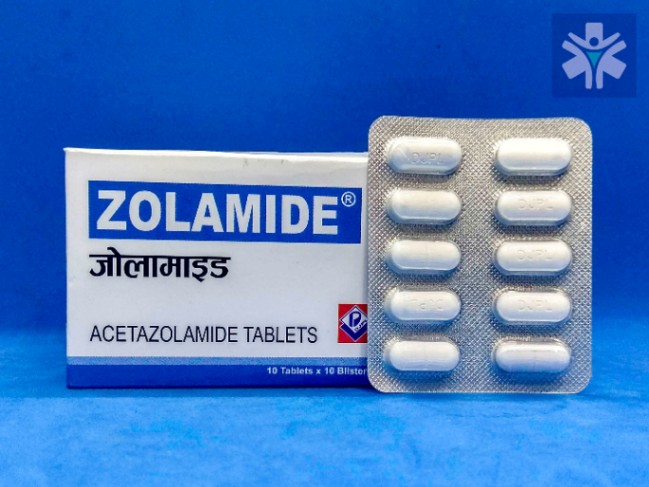
Price: Rs.100.00
10% off
In stock
Loose stock: 0
Description
ZOLAMIDE TAB 10
Details
Composition
ACETAZOLAMIDE 250 MG
# ACETAZOLAMIDE 250 MG
## Short Description
**Acetazolamide 250 mg** is a prescription medicine belonging to the **carbonic anhydrase inhibitor** class. It is used for conditions such as **glaucoma, altitude sickness, certain types of edema, and some seizure disorders**. It works primarily by reducing the activity of the enzyme carbonic anhydrase, which changes fluid and electrolyte balance in the body and can reduce the production of certain body fluids, including aqueous humor in the eye.
## Key Benefits
* Helps reduce **increased pressure inside the eye** in certain types of glaucoma.
* May help prevent and reduce symptoms of **acute mountain sickness (altitude sickness)**.
* Can be used as an adjunctive treatment for certain **seizure disorders**.
* May help manage certain types of **fluid retention (edema)**.
* Promotes increased excretion of **bicarbonate, sodium, water, and potassium** through the kidneys.
* Available as a **250 mg oral dose** for conditions requiring systemic carbonic anhydrase inhibition.
## Uses / Indications
Acetazolamide 250 mg may be prescribed for:
* **Glaucoma**, including certain forms of open-angle or secondary glaucoma.
* **Acute mountain sickness (AMS)** prevention and treatment.
* Certain types of **edema**, usually as part of a broader treatment plan.
* **Certain seizure disorders**, generally as an adjunctive therapy.
* Other conditions where a healthcare professional specifically recommends carbonic anhydrase inhibition.
The exact indication and dose depend on the patient's condition and medical history.
## How It Works
Acetazolamide blocks the enzyme **carbonic anhydrase**.
This reduces the formation of bicarbonate and alters the movement of sodium and fluids in the kidneys. The resulting increase in urinary bicarbonate and fluid excretion can produce a mild diuretic effect.
In glaucoma, acetazolamide reduces the production of **aqueous humor**, helping lower intraocular pressure.
At high altitude, the medicine promotes bicarbonate loss through the urine, producing a mild metabolic acidosis that stimulates breathing. This can help the body adapt to reduced oxygen availability at high altitude.
## Dosage & Administration
The appropriate dose depends on the condition being treated.
### General adult dosing examples
* **Glaucoma:** Dosing may vary considerably according to the type and severity of glaucoma and may involve divided doses throughout the day.
* **Altitude sickness:** Acetazolamide is commonly used at **125–250 mg twice daily** for prevention or treatment, depending on individual circumstances and medical advice.
* **Edema:** Dosing is individualized and may be given intermittently rather than continuously.
* **Seizure disorders:** Doses vary and are determined by the prescribing healthcare professional.
### Administration instructions
* Take exactly as prescribed.
* Tablets may generally be taken **with or without food**.
* Swallow with water.
* Do not take more or more frequently than prescribed.
* If being used for altitude sickness prevention, it is generally most effective when started before or at the beginning of ascent, according to medical advice.
* If a dose is missed, take it when remembered unless it is nearly time for the next dose. Do not double the dose.
**Do not change the dose or stop long-term treatment without consulting a healthcare professional.**
## Side Effects
Common side effects may include:
* Tingling or numbness, especially in the hands, feet, or face.
* Increased urination.
* Nausea or vomiting.
* Loss of appetite.
* Diarrhea.
* Taste changes, particularly a metallic taste.
* Fatigue or weakness.
* Dizziness.
* Headache.
* Drowsiness.
### Serious side effects
Seek medical attention promptly if you develop:
* Severe skin rash, blistering, or peeling.
* Difficulty breathing or facial/throat swelling.
* Severe weakness or confusion.
* Significant changes in urination.
* Blood in the urine.
* Severe abdominal or flank pain.
* Persistent vomiting.
* Signs of severe electrolyte imbalance or dehydration.
## Precautions & Warnings
* Tell your healthcare professional if you have **kidney or liver disease**.
* Use caution if you have a history of **kidney stones**.
* Inform your doctor if you have **low sodium or potassium levels**.
* Acetazolamide can cause metabolic and electrolyte disturbances, particularly with prolonged use or in susceptible individuals.
* Maintain adequate fluid intake unless your healthcare professional has advised fluid restriction.
* The medicine may cause dizziness or drowsiness in some people. Avoid driving or operating machinery if affected.
* People with a history of serious reactions to **sulfonamide medicines** should inform their healthcare professional before treatment.
* Long-term therapy may require monitoring of electrolytes and other laboratory parameters.
* Tell your doctor if you are pregnant, planning pregnancy, or breastfeeding.
* Acetazolamide may increase the risk of kidney stones in susceptible individuals.
* Seek medical advice if symptoms of severe dehydration, unusual weakness, or persistent vomiting occur.
## Drug Interactions
Acetazolamide can interact with several medicines. Important examples include:
* **High-dose aspirin/salicylates:** May increase the risk of toxicity.
* **Other diuretics:** May increase fluid or electrolyte disturbances.
* **Lithium:** Acetazolamide may affect lithium elimination and alter lithium levels.
* **Phenytoin and other antiseizure medicines:** Acetazolamide may affect their levels or effects.
* **Sodium bicarbonate:** May increase the risk of kidney stone formation.
* **Corticosteroids:** May increase the risk of low potassium levels when used together.
* **Digoxin:** Electrolyte changes may increase the risk of digoxin-related problems.
* **Certain diabetes medicines:** Blood glucose control may potentially be affected.
Tell your healthcare professional about **all prescription medicines, over-the-counter medicines, vitamins, and herbal supplements** you use before starting acetazolamide.
## Storage Information
* Store at room temperature according to the manufacturer's instructions.
* Keep the tablets in their original packaging.
* Protect from excessive heat, moisture, and direct sunlight.
* Keep the container tightly closed.
* Keep out of reach and sight of children.
* Do not use after the expiry date printed on the package.
* Dispose of unused medicine appropriately according to local pharmacy or healthcare guidance.
## Prescription Status
**Acetazolamide 250 mg is generally a prescription medicine.** It should be used under the supervision of a qualified healthcare professional because the appropriate dose depends on the indication and because the medicine can affect fluid, electrolyte, and acid-base balance.
Prescription requirements may vary by country and jurisdiction.
## Genuine Medicine Assurance
When purchasing Acetazolamide 250 mg, obtain it from a **licensed pharmacy or authorized medicine supplier**.
Before using the medicine, check:
* Correct medicine name and strength.
* Manufacturer details.
* Batch or lot number.
* Manufacturing and expiry dates.
* Intact packaging and seals.
* Clear labeling and dosage instructions.
Do not use tablets if the packaging is damaged, the labeling appears suspicious, or the medicine has changed in appearance.
## Frequently Asked Questions (FAQ)
### 1. What is Acetazolamide 250 mg used for?
Acetazolamide 250 mg is used for several conditions, including **certain types of glaucoma, altitude sickness, some forms of edema, and certain seizure disorders**.
### 2. What type of medicine is acetazolamide?
Acetazolamide is a **carbonic anhydrase inhibitor**. It changes bicarbonate and fluid handling in the kidneys and reduces aqueous humor production in the eye.
### 3. How does acetazolamide work for altitude sickness?
It increases the excretion of bicarbonate, causing a mild change in blood acidity that stimulates breathing. This helps the body acclimatize to high altitude more quickly.
### 4. What is the usual acetazolamide dose for altitude sickness?
A commonly used adult regimen is **125–250 mg twice daily**, although the appropriate dose varies according to individual circumstances and medical advice.
### 5. Can acetazolamide be used for glaucoma?
Yes. Acetazolamide can reduce the production of aqueous humor and therefore **lower intraocular pressure**. It may be used when additional pressure reduction is needed.
### 6. Does acetazolamide make you urinate more?
Yes. Increased urination is a common effect because acetazolamide alters kidney handling of sodium, bicarbonate, and water.
### 7. Why does acetazolamide cause tingling?
Tingling or **paresthesia**, particularly in the fingers, toes, or around the mouth, is a common effect of acetazolamide and is related to its effects on carbonic anhydrase and electrolyte/acid-base balance.
### 8. Can acetazolamide cause kidney stones?
Yes. Acetazolamide can increase the risk of **kidney stone formation**, particularly in susceptible individuals or with prolonged use.
### 9. Can acetazolamide be taken with food?
Acetazolamide tablets can generally be taken with or without food. Follow the specific instructions provided with your medicine.
### 10. Can acetazolamide be used every day?
It can be prescribed for daily use for certain conditions, but the duration and dosing schedule depend on the indication. **Do not use it continuously unless directed by a healthcare professional.**
### 11. Can acetazolamide lower potassium levels?
Yes. Acetazolamide can contribute to electrolyte abnormalities, including changes in potassium and sodium levels. Monitoring may be necessary during prolonged or high-dose treatment.
### 12. Is acetazolamide a diuretic?
Acetazolamide has a **mild diuretic effect**, but it is primarily classified as a carbonic anhydrase inhibitor.
### 13. Can acetazolamide be used for headaches?
Acetazolamide is not a general-purpose headache medicine. It may be prescribed for specific conditions associated with increased intracranial pressure or for altitude-related illness, depending on medical assessment.
### 14. What happens if I miss an acetazolamide dose?
Take the missed dose when remembered unless it is close to the next scheduled dose. In that case, skip the missed dose and continue with the regular schedule. **Do not take two doses together** unless specifically instructed.
### 15. Can acetazolamide be taken during pregnancy?
Pregnancy use should be discussed with a healthcare professional. The potential benefits and risks should be assessed based on the specific medical condition and stage of pregnancy.
### 16. Does acetazolamide require a prescription?
In many countries, **acetazolamide 250 mg is prescription-only**. Regulations can vary by country, so local requirements should be followed.
### 17. How long does acetazolamide take to work for altitude sickness?
Acetazolamide begins affecting the body's acid-base balance relatively quickly, but the overall benefit for altitude acclimatization depends on the timing of treatment, ascent profile, and individual response.
### 18. Should I drink more water while taking acetazolamide?
Acetazolamide can increase urination and fluid loss. Maintain adequate hydration unless a healthcare professional has instructed you to restrict fluids, particularly if you are traveling at high altitude.
## Medical Disclaimer
This information about **Acetazolamide 250 mg** is provided for general educational and informational purposes only. It does not replace professional medical advice, diagnosis, or treatment.
Acetazolamide can affect **electrolytes, kidney function, and acid-base balance** and may not be appropriate for everyone. Always use this medicine according to the prescription and instructions provided by your doctor or pharmacist.
If you experience severe allergic reactions, significant weakness, confusion, severe rash, difficulty breathing, or other serious symptoms, seek immediate medical attention.